Bengaluru Metro is set for a major safety upgrade as BMRCL proposes installing Platform Screen Doors at 177 stations across the network. The ₹1,274 crore project aims to prevent track accidents, improve passenger safety and support future driverless Metro operations.
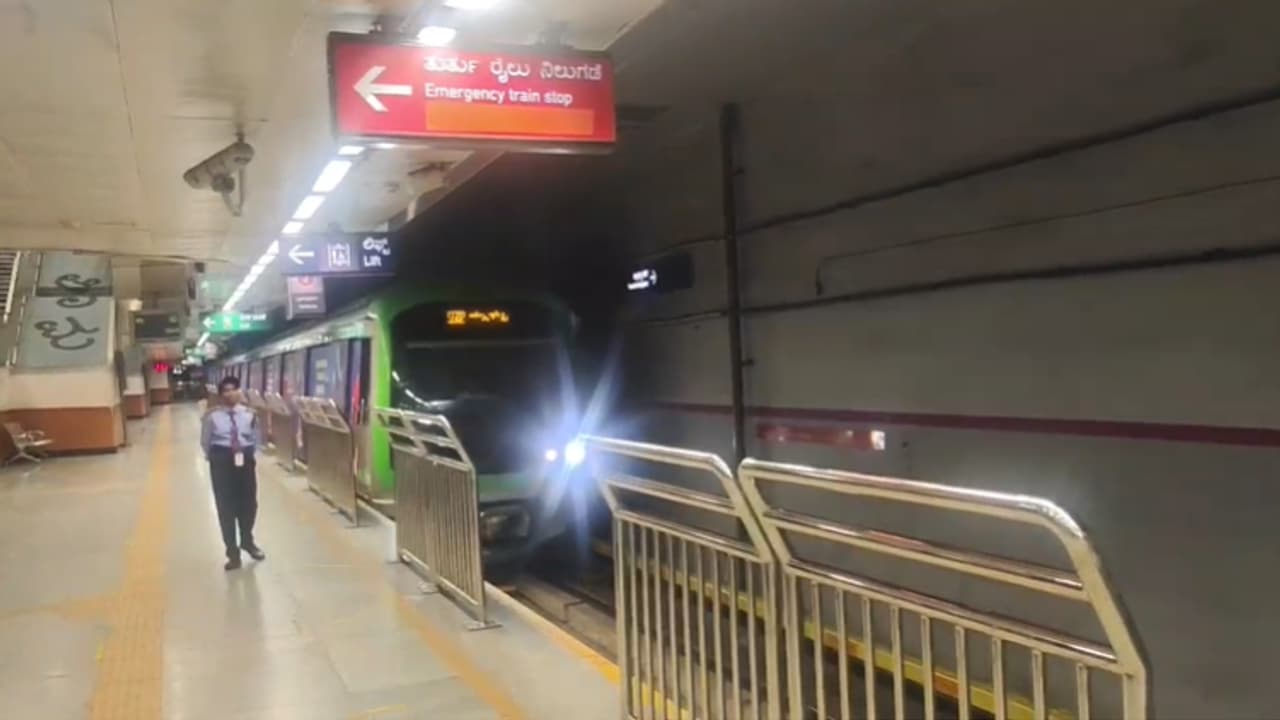
In a major move to improve passenger safety and reduce track-related accidents, the Bangalore Metro Rail Corporation Limited (BMRCL) has proposed installing Platform Screen Doors (PSDs) at 177 existing and upcoming Metro stations across Bengaluru. Estimated to cost around ₹1,274 crore, the project aims to prevent unauthorised access to tracks, accidental falls and suicide attempts while also preparing the Metro network for future driverless train operations. The proposal forms part of the Detailed Project Report (DPR) for the Metro's Phase 3A (Hebbal-Sarjapur) corridor.
Proposal Covers Existing And Upcoming Metro Stations
According to the proposal, Platform Screen Doors will be installed at 177 of the Metro network's 191 existing and upcoming stations. BMRCL has already made provisions for PSD installation at 14 stations, including 12 underground stations on the Pink Line and two stations on the Airport Line.
The project will cover stations under Phase 1, Phase 2, Phase 2A, Phase 2B, Phase 3 and Phase 3A of the Bengaluru Metro network.
Related Articles

Rising Track Incidents Prompt Safety Measures
With more than 10 lakh passengers using the Bengaluru Metro every day, BMRCL has cited the growing number of track-related incidents as a key reason for the proposal.
According to the DPR, the past two years have witnessed a significant increase in cases involving unauthorised entry onto tracks, accidental falls and suicide attempts, highlighting the need for enhanced passenger safety measures.
Track Incident Statistics
According to BMRCL's DPR, there were eight cases of unauthorised track entry, seven deaths by suicide, two suicide attempts and two accidental falls in 2024.
In 2025, up to the period covered by the report, there have been five cases of unauthorised track entry, five deaths by suicide, two suicide attempts, two accidental falls and one electrocution fatality.
Metro Enthusiasts Welcome The Proposal
Reacting to the proposal, the X account Bengaluru Metro Tracker, which closely follows Metro operations, stated:
"Platform Screen Doors are essential for passenger safety. Looking at recent incidents, they should be installed as soon as possible. This is also mandatory for future driverless metro operations."
Safety And Operational Benefits
BMRCL said the Metro's operating environment presents significant safety challenges because of the live 750V DC third rail, short train headways and increasing passenger numbers.
Whenever a person enters the tracks or falls onto them, train services in both directions must be suspended to carry out rescue operations, resulting in network-wide disruptions.
The installation of Platform Screen Doors is expected to minimise such incidents by preventing passengers from accessing the tracks.
Supports Future Driverless Metro Services
The proposed safety upgrade will also facilitate the introduction of Grade of Automation 4 (GoA4), or unattended train operations, in the future.
As the doors will operate in sync with the Metro's signalling system, BMRCL expects improvements in operational efficiency, train punctuality and passenger safety.
The corporation also plans to generate additional non-fare revenue by displaying digital advertisements on the Platform Screen Doors.
Project Cost And Implementation Plan
The total estimated cost of the project is ₹1,274 crore, including ₹747 crore for the procurement of Platform Screen Doors, ₹317 crore for civil works, and ₹210 crore for signalling, telecommunications and electrical modifications.
Half-height Platform Screen Doors will be installed at elevated stations, while full-height doors will be used at underground stations.
Installation To Be Carried Out In Phases
BMRCL noted that installing Platform Screen Doors at operational stations is a technically complex process. Most of the work can only be carried out during limited night-time maintenance hours and will require platform modifications, signalling integration and extensive safety testing.
The project will be implemented in accordance with the Ministry of Housing and Urban Affairs' indigenous procurement guidelines. BMRCL has already held technical and commercial discussions with Bharat Electronics Limited (BEL). If approved, the project is expected to significantly enhance passenger safety while supporting Bengaluru Metro's transition to a fully automated rail network.