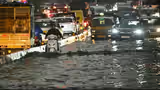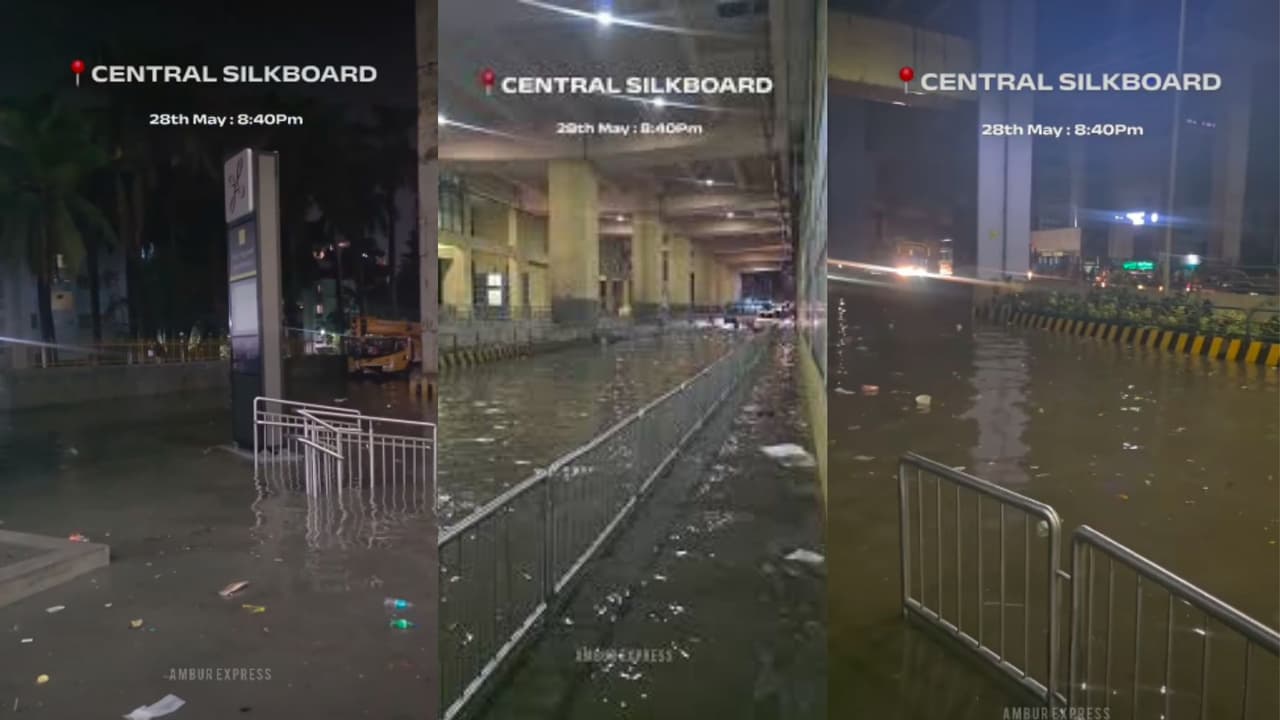
Heavy rains once again flooded Bengaluru’s Silk Board Junction, turning the busy IT corridor into a traffic nightmare. Commuters faced severe waterlogging, slow-moving traffic and long delays as the stretch near the metro station was submerged.
For commuters driving or walking through Bengaluru’s Silicon Hub, Silk Board Junction has once again turned into a flood-prone nightmare whenever it rains. The newly inaugurated ‘double-decker flyover’, launched with much fanfare, was expected to ease traffic congestion in the city’s busiest IT corridor. However, with every spell of heavy rain, severe waterlogging continues to disrupt movement, leaving commuters frustrated.
On Friday evening, heavy rainfall turned the stretch near Silk Board Metro Station into a slushy and muddy zone. During peak hours, vehicles were forced to crawl through waterlogged roads, while pedestrians struggled to navigate knee-deep water. A similar situation was witnessed on Thursday evening as well, causing long traffic snarls and delays for several hours.
Recurring Monsoon Woes At Silk Board Junction
This is not a new problem for Bengaluru residents, as Silk Board Junction has become a recurring trouble spot every monsoon. Last year, pre-monsoon showers flooded the junction and nearby roads, with water even entering the metro station. At that time, BBMP, now renamed the Greater Bengaluru Authority (GBA), attributed the flooding to Metro construction work and blocked stormwater drains. Officials also assured that desilting and corrective measures would be completed before the next monsoon. However, commuters say the situation remains largely unchanged.
Related Articles

Drain Capacity And Ongoing Infrastructure Work
According to officials, rainwater from more than 20 lakes, including Madiwala Lake, flows towards Silk Board Junction. The existing stormwater drainage system is unable to handle this large volume of water. To address the issue, the GBA has initiated a project to widen the drain from 1.5 metres to 3.5 metres using steel girders. The project began in April and is expected to be completed by the end of June.
GBA Chief Engineer (Project Implementation) S.V. Rajesh said, “Tons of garbage clogging the stormwater drains is worsening the flooding. We have removed more than 40 tonnes of waste, including plastic bottles, clothes and solid waste, from the drains near Silk Board.”
He also added that an L-shaped culvert is being constructed to divert water towards HSR Layout. However, ongoing work has led to traffic diversions and road closures, further adding to commuter frustration.
Construction Activity Alters Natural Drainage
Officials from Bengaluru South City Corporation stated that multiple infrastructure projects over the past few years have disrupted the natural drainage pattern around Silk Board. First, the NHAI flyover construction altered water flow, followed by Metro works. Now, the pillars of the double-decker flyover have further obstructed drainage channels around the junction.
Pedestrians Forced To Risk Their Safety
The ongoing drainage and construction work has also created serious difficulties for pedestrians using the Yellow Line Metro station and BMTC bus stops in the area. With no dedicated walkway, commuters are forced to walk through slush, garbage and moving traffic, posing significant safety risks.
“After getting off at the metro station, I have to walk nearly 300 metres to reach the BMTC bus stop. The stretch is extremely unsafe and unhygienic. Waste removed from drains is often dumped by the roadside and during rains it spreads back onto the road,” said a commuter.
Another IT professional said that a lack of civic sense among the public and negligence by authorities have worsened the condition of Silk Board Junction.