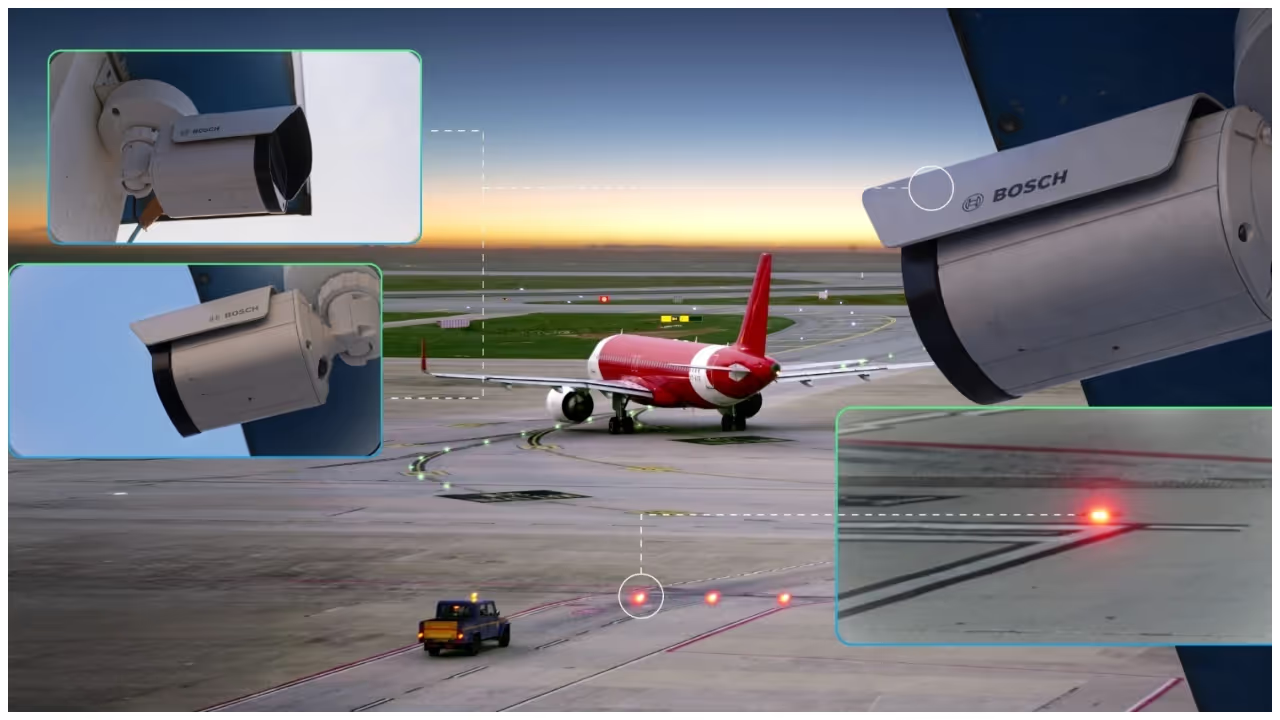
Bengaluru airport has launched AI-based Smart Airside Safety System to improve aircraft and vehicle safety in high-risk airport zones. It uses computer vision, smart traffic signals and real-time monitoring to reduce human error and improve airport ops, even during fog or low visibility. The airport recorded over 4.18 crore passengers in 2024-25.
Bengaluru: With growing concerns about flight-related accidents in India and abroad, Bengaluru's Kempegowda International Airport (KIA) has taken a major tech-savvy step to boost passenger safety and operational security. Bengaluru International Airport Limited (BIAL), the operator, has now launched a state-of-the-art ‘Smart Airside Safety System’. This new system is set to take safety in the airport's airside area to a whole new level.
New Safety System in a High-Risk Zone
The 'airside' is the area where planes get ready for takeoff and landing. This zone is extremely sensitive and risky, so every activity here needs precise monitoring. The 'cross service roads', where aircraft and ground vehicles move at the same time, are particularly tricky. Until now, traffic management on these roads was handled manually. Staff used to control the signals by hand, which sometimes led to human errors, causing delays or even dangerous situations.
To tackle these challenges, BIAL has introduced this new AI-based smart safety system. It uses computer vision technology to accurately track and analyse the movement of all vehicles in the airside area. If any vehicle speeds, breaks a rule, or creates a risky situation, the system immediately sends an automatic alert. It also uses intelligent automation to manage traffic signals on its own. This will not only reduce the chances of human error but also make operations much more efficient.
Related Articles

AI Cameras on Watch
Another great feature of this new system is its real-time monitoring capability. Every activity in the airside is digitally recorded and tracked through a central control centre. This will allow for data-based analysis in the future to further improve traffic management. The technology will bring more transparency and accuracy to the airport's internal traffic control.
Additionally, this smart system is designed to work effectively even in foggy weather, low visibility, or at night. It will help reduce risks caused by darkness or bad weather, ensuring a safe distance is maintained between aircraft and vehicles. As a result, it will also help keep flights on schedule, balancing both speed and safety.
According to a BIAL statement, this system is not just a safety measure but also a significant step towards the future of airport management. With this, KIA has taken another leap in adopting global safety standards through cutting-edge technology.
BIAL Serves a Record Number of Passengers
Meanwhile, Bengaluru airport has also set a new record in passenger service. In the financial year 2024–25, BIAL served over 4.18 crore passengers, becoming the first airport in South India to achieve this milestone. As India's third-largest airport, KIA has served more than 35 crore passengers to date.
KIA has also received the prestigious global 'ACI 5-star Airport Rating' for its excellent customer service. For the fourth year in a row, it has been recognised as India's No. 1 airport for handling perishable goods, including fruits and vegetables. By constantly innovating in technology, safety, and passenger experience, Bengaluru airport is transforming into an even smarter and safer aviation hub.