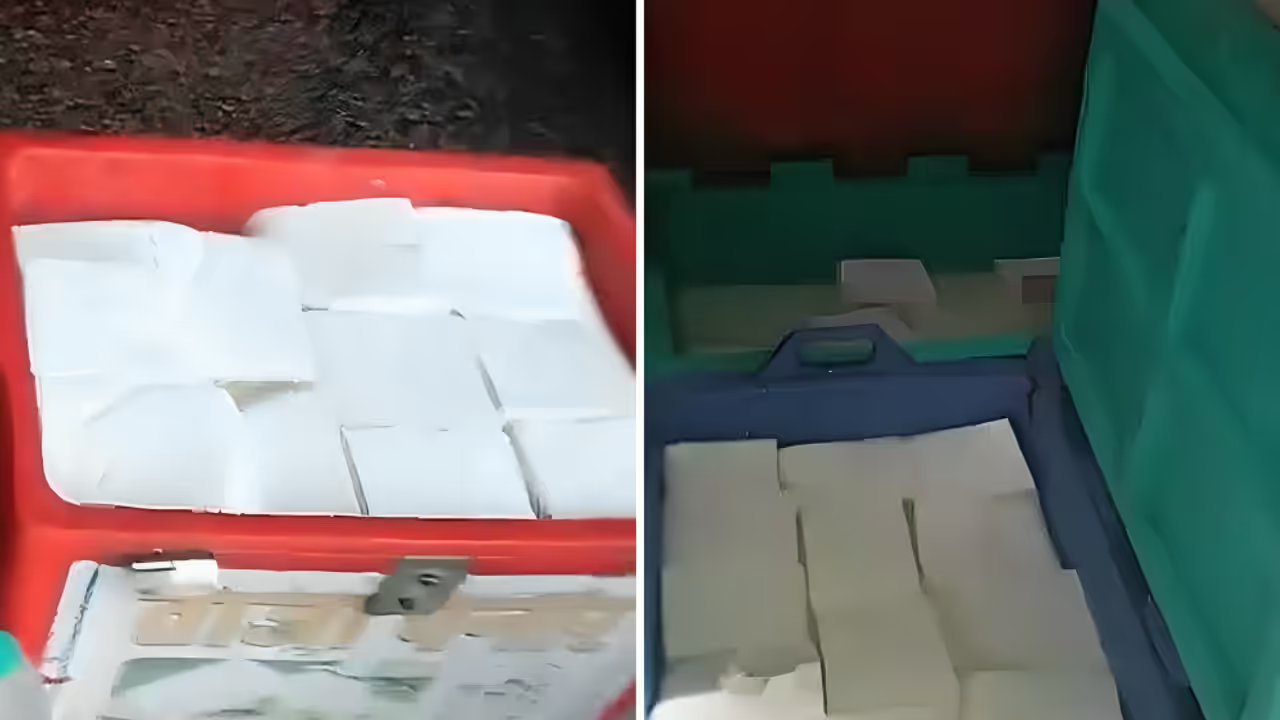
Food safety officials in Jaipur destroyed around 500 kg of suspected adulterated paneer during an inspection at a seller's premises in Pratap Nagar. The paneer reportedly had a strong, unpleasant oil-like smell, raising concerns over its quality. Officials collected a sample for lab testing and action will follow if sample fails safety standards.
Food safety officials in Jaipur, Rajasthan have destroyed around 500 kg of suspected adulterated paneer stock at a seller's premises in the Pratap Nagar area. The action was carried out on Monday by the Central team of the Food Safety and Drug Control Department as part of the Rajasthan government's 'Shuddh Aahar-Milawat Par Waar' campaign against food adulteration. The department said the paneer was being kept for supply to different parts of Jaipur. Officials inspected the stock and found its quality suspicious during an initial check, according to a report by ETV Bharat.
Uttarakhand Singer Nikhil Saklani's Jaagar Performance in Italy Leaves Foreigners Mesmerised (WATCH)
Paneer had strong oil-like smell
According to Dr Vijay Prakash Sharma, Joint Commissioner of the Food Safety and Drug Control Department, officials noticed a strong and unpleasant smell similar to rancid oil when they examined the paneer, the ETV Bharat report added.
The stock was considered suspicious at first inspection. A sample was therefore collected under the provisions of the Food Safety and Standards Act for further testing.
Related Articles

However, instead of allowing the entire stock to enter the market, officials destroyed around 500 kg of the suspected paneer at the spot.
The move was aimed at ensuring that the product could not be supplied to consumers while the investigation was under way.
The department has not yet confirmed that the paneer was definitely adulterated. The final result will depend on laboratory testing.
Sample sent for laboratory testing
The collected sample will be sent to a state-authorised food laboratory for detailed examination.
If the laboratory report finds that the sample does not meet the required food safety and quality standards, the department said legal action will be taken against the seller concerned.
The officials' initial observations, including the unusual smell, are not in themselves a final finding of adulteration. The laboratory report will establish whether the paneer failed the prescribed standards and what further action should follow.
The department said its campaign against adulterated and poor-quality food products would continue.
It also warned that strict action would be taken against those found putting public health at risk.
Cats Panic Moments Before Japan's 7.1 Earthquake, Viral Videos Leave Internet Stunned (WATCH)
Video of inspection sparks online reaction
A video showing officials inspecting the suspected paneer stock has also attracted attention online.
Many social media users expressed concern about the safety of food being sold to the public. Some said they had become hesitant about ordering paneer dishes from restaurants or buying paneer from shops because they feared that consumers may not always know where the product came from.
Others called for stronger action against those who manufacture or sell adulterated food.
Some comments also questioned whether food safety checks are strong enough to prevent such products from reaching consumers.
However, some social media replies included unverified claims and offensive remarks targeting particular communities. Such claims are not supported by the official information released about the Jaipur action.
Department says checks will continue
The Jaipur action comes as food safety authorities continue efforts to check the quality of food products sold to consumers.
Paneer is widely used in Indian homes, restaurants and catering businesses, making food safety checks important when concerns are raised about its quality.
In this case, the department acted before the suspected stock could be supplied further, according to officials.
The next key step will be the laboratory examination of the collected sample. If it fails the required standards, the seller could face action under food safety laws.