NSA Ajit Doval strongly criticised foreign media for spreading false narratives about Operation Sindoor. He highlighted India’s precision strikes on Pakistan's 9 terror targets and emphasised operation's success using indigenous defence technology.
India's National Security Advisor (NSA) Ajit Doval on Friday revealed key details about Operation Sindoor, a major military strike launched on May 7 in response to the deadly terror attack in Pahalgam on April 22.
Doval criticised the false reports in some sections of the foreign media and challenged them to show any image or proof of damage in India. “They claimed Pakistan responded, but where is the evidence? Show me one photo, just one image that shows any harm caused to India,” he said.
India hit nine terror camps in 23 minutes, says NSA
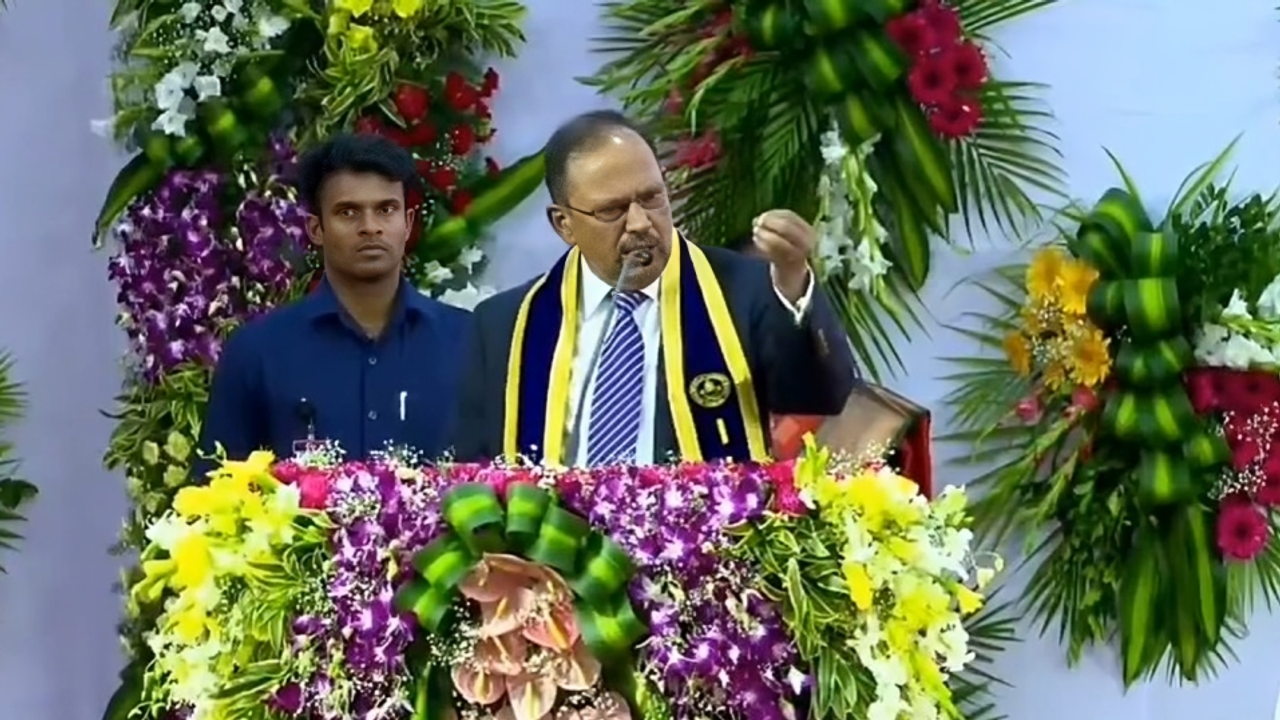
Speaking at the 62nd Convocation of IIT Madras, Doval highlighted India’s growing defence capabilities and proudly described Operation Sindoor as a clear display of technological strength and precision. "We missed none,” he said. “It was precise to the point where we knew who was where."
Related Articles

India struck nine terror targets deep inside Pakistan with pinpoint accuracy and missed none, National Security Advisor (NSA) Ajit Doval said on Friday. "The targets were spread across Pakistan, not just near the border. We knew exactly who was where, and we hit only those spots," Doval said. "The entire operation began shortly after 1 am on May 7 and was completed within 23 minutes, showcasing the military’s readiness and technological strength," he emphasised.
Operation used fully indigenous weapons and systems
Doval praised India’s defence manufacturing, saying that Operation Sindoor relied heavily on indigenous systems, including the BrahMos missile, radars, and other equipment.
“We have to develop our own technology. We are really proud of how much of our content was Indian. That’s the power of Atmanirbhar Bharat,” he said.
Foreign media called out for spreading fake news
In a direct criticism of foreign news outlets, Doval called out their 'false and biased' reporting on the operation. He challenged the press to present any image showing damage in India during the four-day military exchange.
"Tell me one photograph, one image, which shows any damage to any Indian (structure), even a glass pane being broken," he said, referring to claims made by outlets like The New York Times.
He pointed out that the only verified satellite images shown by global media were of 13 Pakistani air bases before and after May 10. "They only showed destruction in places like Sargodha, Rahim Yar Khan and Chaklala," he said. "Where is the Indian damage they claimed," he added.
A proud nation with a long memory, says Doval
Doval also used his speech to remind young Indians of the country’s deep-rooted civilisation and its past suffering. He said India had faced centuries of invasion, humiliation and hardship, but had managed to preserve its civilisation and culture.
“You belong to a nation that has survived a thousand years of pain,” he told the students. “India, as a nation, is ancient. The state may be new. There is a difference.”
He encouraged the graduating students to take pride in their heritage and contribute to building a strong India as it approaches 100 years of independence in 2047.
India's Operation Sindoor against terrorism
India launched Operation Sindoor in the early hours of May 7, 2025, as a direct response to the Pahalgam terror attack on April 22 that killed 26 civilians.
The operation targeted nine terrorist launchpads and camps across the border. According to official estimates, more than 100 terrorists were killed. The strikes led to four days of exchange of missiles, drones and long-range weapons between India and Pakistan.
Both countries halted military action after May 10, following intense back-channel diplomacy and global pressure.