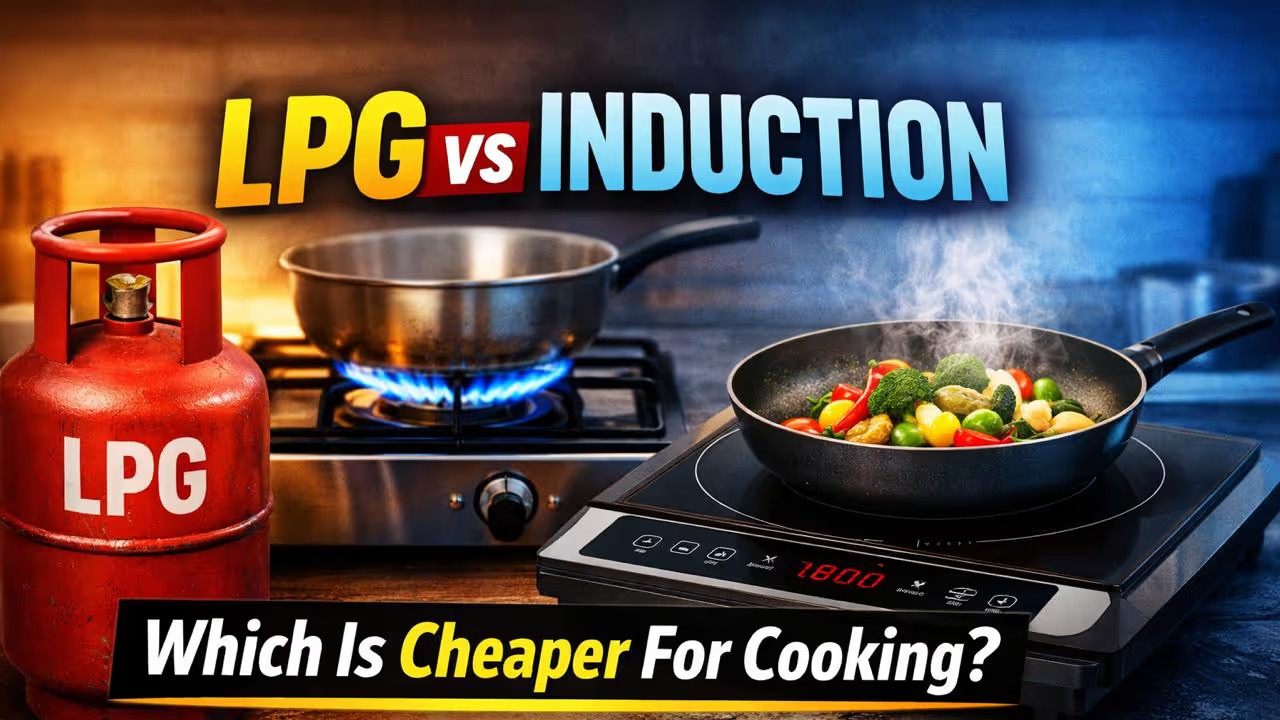
Rising LPG prices and supply issues in India are prompting households to consider induction cooktops. Induction is more energy-efficient (90% vs. LPG's 40%), often making it a cheaper option despite requiring stable electricity and specific cookware.
Rising cooking gas prices and supply concerns are pushing many Indian households to rethink how they cook. With LPG cylinders becoming costlier and sometimes difficult to obtain, induction cooktops are emerging as a popular alternative. But the key question many families are asking is simple: Which is cheaper for cooking — LPG or induction?
The answer depends on several factors such as electricity tariffs, cooking habits, and the efficiency of each technology. However, recent studies and market trends suggest that induction cooking can often be more economical and energy-efficient than LPG, especially in urban households.
Why The LPG Shortage Is Raising Concerns
In recent weeks, concerns about cooking gas availability have increased due to global supply disruptions and geopolitical tensions affecting energy markets. Rising global fuel prices have already pushed domestic LPG costs higher.
Related Articles

For example, the price of a standard 14.2-kg domestic LPG cylinder in many cities is now around ₹913, after a recent price hike of ₹60.
Commercial LPG cylinders used by restaurants and food businesses have also become more expensive, leading to shortages in some regions and forcing businesses to explore alternatives.
The situation has pushed many households and restaurants to consider electric cooking solutions such as induction cooktops, which do not rely on gas supply chains.
Also Read: Karnataka LPG Crisis: Chief Secretary Orders Crackdown on Black Market Cylinder Sales
How LPG Cooking Works
Liquefied Petroleum Gas (LPG) has long been the most common cooking fuel in Indian homes. It burns with an open flame that directly heats cooking vessels.
The biggest advantage of LPG is its familiarity and versatility. Gas stoves work with almost any type of utensil and allow precise control of flame intensity, which is important for traditional Indian cooking techniques like roasting rotis or deep frying.
However, LPG cooking has a drawback: low energy efficiency. Studies show that gas stoves convert only about 40 percent of the fuel’s energy into actual cooking heat, while the rest is lost to the surrounding air.
This means consumers are paying for energy that does not directly contribute to cooking.
How Induction Cooking Works
Induction cooktops use electromagnetic fields to directly heat the base of the cookware rather than heating the surrounding air. This technology transfers heat efficiently and allows food to cook faster.
Because the heat is generated directly in the vessel, induction cooktops have an efficiency of around 90 percent, significantly higher than gas stoves.
This improved efficiency means less energy is wasted and cooking can be faster and cheaper in many cases.
However, induction cooktops require induction-compatible cookware and depend on a stable electricity supply.
Also Read: LPG Crisis: Bengaluru PGs Cut Meals to Twice a Day; Dosa, Poori Off the Menu
Cost Comparison: LPG vs Induction
When comparing cooking costs, the most important factor is the price of fuel or electricity.
LPG Cost
• Domestic LPG cylinder (14.2 kg): about ₹913 in cities like Delhi.
• Many households use roughly one cylinder per month, depending on family size and cooking habits.
This means an average monthly LPG cooking expense can be ₹900–₹1,000 or more.
Induction Cost
Induction cooking consumes electricity rather than fuel. To match the heat output of one LPG cylinder, an induction cooktop typically needs around 78 units of electricity.
If electricity costs around ₹8 per unit, the monthly cooking expense would be roughly ₹624.
This creates a potential monthly saving of around ₹300 compared to LPG cooking.
Another calculation suggests that boiling water on an induction cooktop costs about ₹4.8, compared with ₹5.7–₹7.6 using LPG, depending on subsidy levels.
Overall, electricity-based cooking can be significantly cheaper.
Research Findings On Electric Cooking
Energy experts also support the economic advantage of electric cooking.
A study by the Institute for Energy Economics and Financial Analysis found that electric cooking can be 37 percent cheaper than non-subsidised LPG and about 14 percent cheaper than piped natural gas (PNG).
These findings suggest that as electricity infrastructure improves, electric cooking could become a major alternative to LPG.
Also Read: Chhattisgarh steel industry braces for impact of LPG shortage crisis
Why Induction Cooktops Are Suddenly In Demand
The rising cost of LPG and supply uncertainty have already changed consumer behaviour.
Sales of induction cooktops have surged across India as households look for reliable alternatives. Online marketplaces have reported sharp increases in demand, with many models selling out quickly.
Restaurants and commercial kitchens are also adopting induction appliances to cope with gas shortages and maintain operations.
This shift reflects a broader trend toward electric cooking in Indian kitchens.
Advantages Of Induction Cooking
Induction cooking offers several benefits:
Higher energy efficiency: Nearly 90 percent of energy is converted into heat.
Lower long-term cost: Electricity cooking can be cheaper than LPG.
Faster cooking: Heat transfers directly to the utensil.
Better safety: No open flame, reducing fire risks.
Cleaner kitchens: No soot or gas residue.
These factors make induction cooktops attractive for modern urban households.
Advantages Of LPG Cooking
Despite its costs, LPG still has advantages:
Works during power cuts: Unlike induction, it does not depend on electricity.
Compatible with all cookware: No need for special utensils.
Better for traditional cooking: Open flames are useful for rotis, tandoor-style cooking and heavy frying.
For many households, LPG remains the primary cooking fuel because of its flexibility.
The Hybrid Cooking Trend
Instead of fully replacing LPG, many households are adopting a hybrid cooking approach.
For example:
• Induction cooktops are used for boiling water, making tea, or cooking rice.
• LPG stoves are used for frying, roasting, and making rotis.
This combination allows families to reduce LPG usage while maintaining traditional cooking methods.
Also Read: Hyderabad restaurants forced to use wood amid severe gas shortage crisis
The Future Of Cooking In India
India’s cooking fuel landscape is evolving rapidly. With the government expanding piped natural gas networks and encouraging electric cooking, the dominance of LPG may gradually decline.
Electric cooking is also being promoted for environmental and energy security reasons, as it reduces dependence on imported fuel.
As electricity infrastructure improves and renewable energy expands, induction cooking could become an increasingly common feature in Indian kitchens.
Final Verdict: Which Is Cheaper?
In most cases, induction cooking is cheaper than LPG due to higher efficiency and lower operating costs.
However, the best choice depends on household needs. Homes with stable electricity supply may benefit from induction cooking, while areas with frequent power cuts may still prefer LPG.
For now, the smartest solution for many families may be using both systems together —combining the efficiency of induction with the reliability and flexibility of LPG.