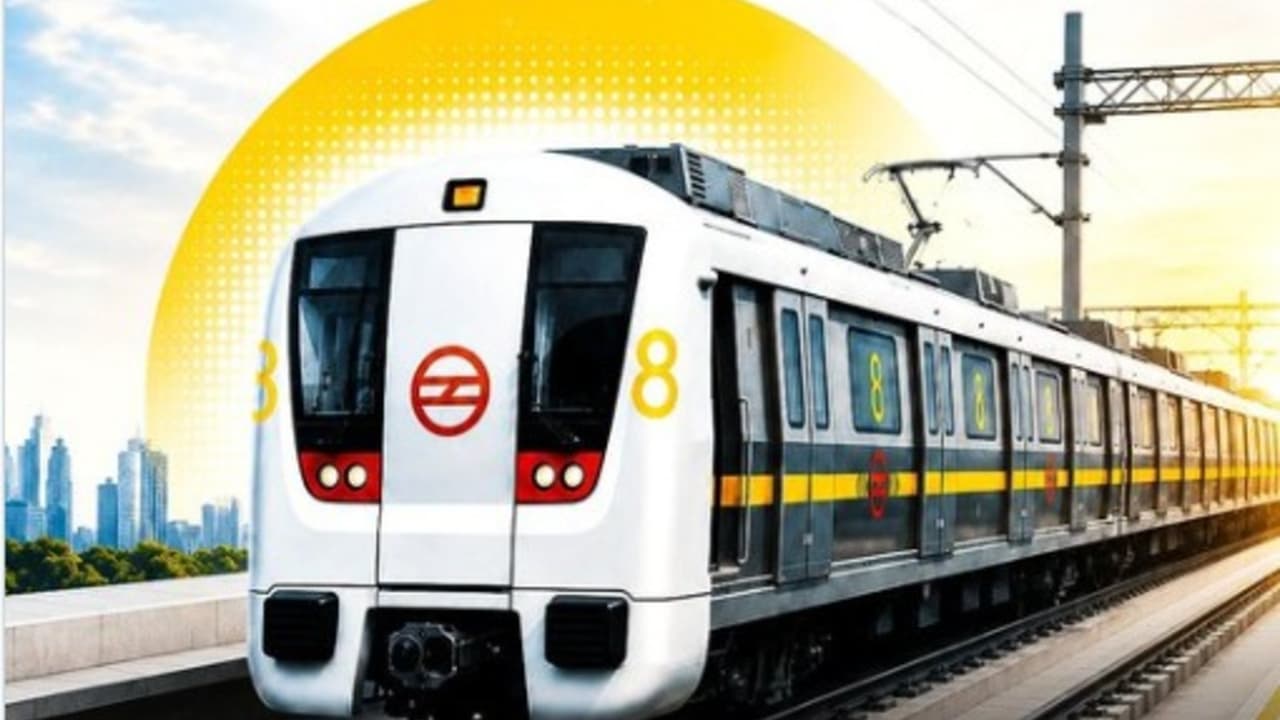
Delhi Metro is gearing up for its largest-ever expansion, with plans to add nearly 217 km of new tracks and 123 stations under Phases 4 and 5. The ambitious project aims to improve connectivity across Delhi-NCR, reduce travel time and ease road congestion.
The Delhi Metro Rail Corporation (DMRC) is expanding its network in the most significant way since the metro first opened over two decades ago. Under Phases 4, 5A, and 5B, the metro network is scheduled to expand by about 217 km, adding 16 new corridors and 123 stations throughout Delhi and the National Capital Region (NCR). The extension aims to improve public transport, alleviate traffic congestion, and connect developing residential and business clusters.
Phase 4: Six Major Corridors Under Development
Phase 4 includes six important metro corridors, several of which are under construction. Key routes include:
Janakpuri West–RK Ashram Marg
Related Articles

Tughlakabad–Aerocity
Majlis Park–Maujpur
Inderlok–Indraprastha
Lajpat Nagar–Saket G Block
Rithala–Narela–Kundli
These corridors would improve access to the airport, Faridabad, Sonipat, and other rapidly rising districts, as well as communication between West, North, and South Delhi. Some segments are planned to become operational in stages starting in 2026.
Phase 5 will expand connectivity even further.
The projected Phase 5 extension will connect underserved communities, increase interchange stations, and expand metro services to fast growing areas of Delhi-NCR. Routes are planned to connect Central Secretariat, Kishangarh, Narela, Najafgarh, Rohini, Nangloi, and Palam, making travel throughout the capital faster and more seamless.
Benefits for daily commuters:
The extended network is projected to dramatically cut travel time, enhance last-mile connection, and encourage more people to switch from personal automobiles to public transportation. Improved connection between residential areas, commercial districts, airports, and transportation hubs is projected to boost economic growth while lowering pollution and road congestion. Experts believe the initiative will play an important role in encouraging sustainable urban mobility throughout the NCR.