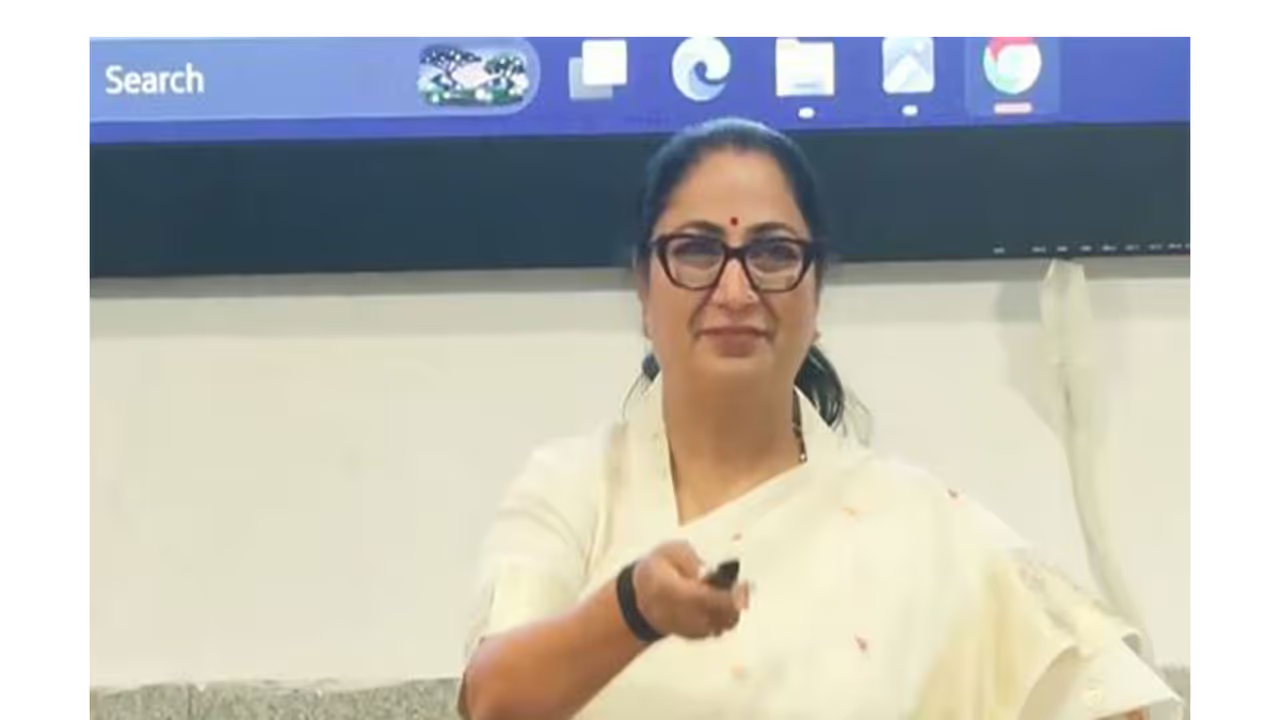
Delhi Chief Minister Rekha Gupta has launched the Delhi EV Subsidy Portal under the EV Policy 2026 to promote cleaner transport and tackle pollution. The policy offers subsidies of up to ₹1 lakh for eligible electric vehicles, road tax and registration fee exemptions for electric cars priced below ₹30 lakh, and scrappage benefits.
In a significant move to curb rising pollution levels in the national capital, Delhi Chief Minister Rekha Gupta on Friday launched the Delhi Electric Vehicle (EV) subsidy portal. Under the city's new EV Policy, the government has announced substantial financial incentives across various vehicle categories to encourage a faster transition to clean energy.
According to the policy, buyers of electric two-wheelers will receive a subsidy of ₹30,000, while electric three-wheelers are eligible for ₹50,000. For the N1 category (light commercial vehicles), the government has earmarked a subsidy of ₹1 lakh.
Furthermore, all electric cars priced below ₹30 lakh will be fully exempt from Road Tax and Registration Fees. To further incentivise the shift, the government is also offering scrappage benefits for those replacing old internal combustion engine (ICE) vehicles with new EVs
Speaking at the launch, Chief Minister Rekha Gupta emphasised that the policy was a long-overdue necessity for the city.
Related Articles

"This EV policy was absolutely essential for this city. For years, there were discussions about how to solve the pollution problem, yet no clear solution emerged. Had that solution been found--or had this EV policy been introduced in this form earlier--neither the government nor the public would be facing the immense pressure we face today," the CM said.
She further noted that given the "constantly rising pollution levels," it was imperative to implement aggressive measures.
"In just over a year of our tenure, our government didn't merely take one or two isolated steps; we addressed every segment contributing to pollution. Whether it was dust mitigation, vehicular emissions, or tree plantation--we undertook every measure necessary to improve Delhi's environment. I am delighted that a comprehensive policy has been introduced to tackle vehicular emissions--the single largest contributor, accounting for 23% of total pollution," Gupta added.
Highlighting the foresight of the policy, the Chief Minister described it as an "end-to-end approach" that looks beyond just sales and into waste management.
"This policy offers an end-to-end approach--mapping out the entire journey from today's portal launch to the ultimate objectives we aim to achieve. Considering the massive EV infrastructure and the large number of EV vehicles that will exist in the future--and the resulting volume of EV waste--an e-waste plant needs to be set up today. Preparations for this have already been made; it is an end-to-end solution," she said.
How the portal will help citizens
The portal will allow citizens and institutions to apply online from home for electric vehicle purchase incentives and other benefits. Applicants will be able to track the status of their applications in real time at every stage, ensuring complete transparency. Essential documents such as Aadhaar, the vehicle Registration Certificate (RC) and Voter ID can be securely uploaded online, while institutions will also be able to upload GSTIN, PAN and bank account details, according to the release.
The entire system will be digital and paperless. Approved incentives will be transferred directly to eligible beneficiaries' bank accounts through Aadhaar-authenticated Direct Benefit Transfer (DBT). After verification of all required documents, the incentive amount will be released within the prescribed timeline, with a maximum processing period of 60 days. The portal will also serve as a single platform for all key information related to the Delhi Electric Vehicle Policy 2026, including eligibility criteria, subsidies for different vehicle categories, the list of approved EV models, required documents, the application process and other important guidelines.
(Except for the headline, this story has not been edited by Asianetnews Editorial staff and is published from a syndicated feed.)