Bajaj Chetak buyer’s guide: Battery, range, features and price compared
The Bajaj Chetak electric scooter offers various battery and feature configurations. This guide clarifies the differences between the 3001 and 35 Series Chetak models, focusing on battery capacity, range, charging times, features, and pricing.
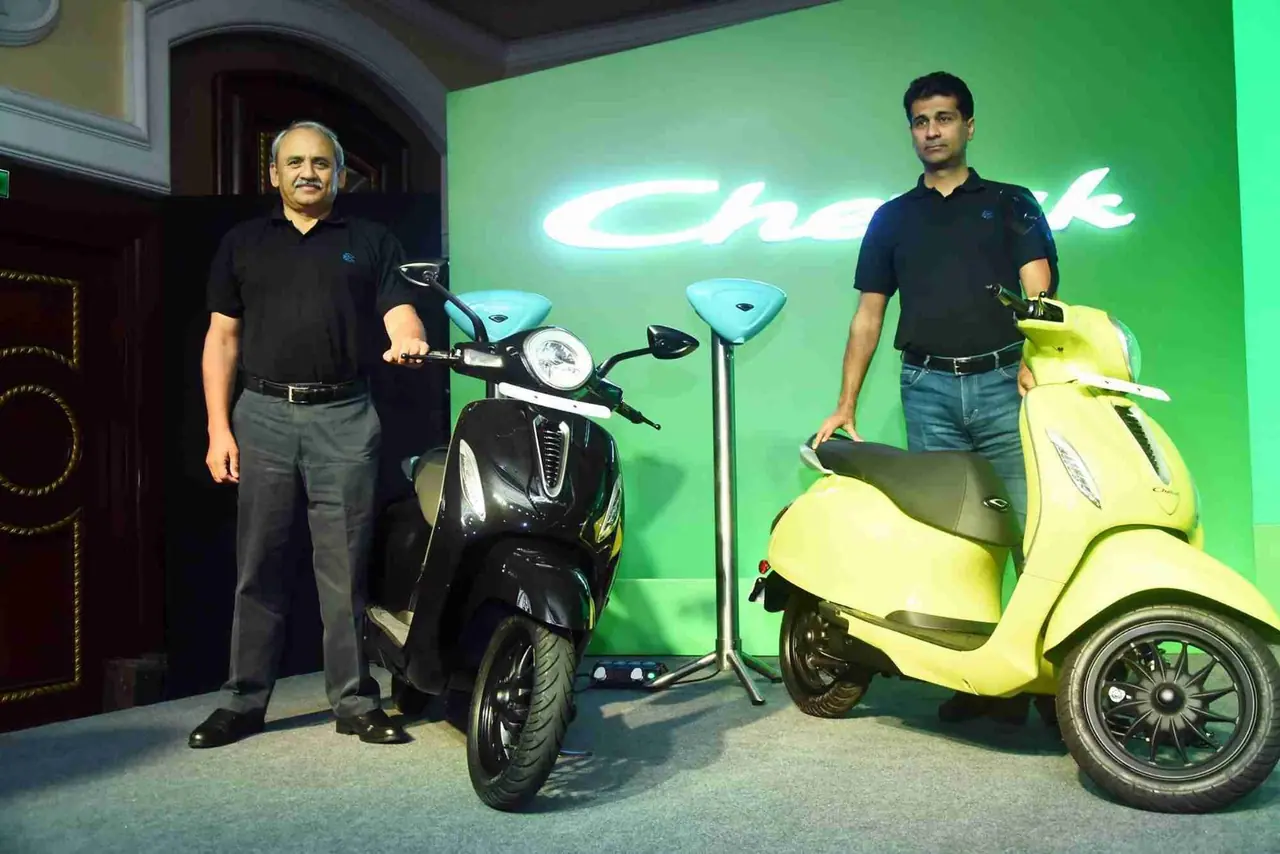
Bajaj Chetak
The Bajaj Chetak electric scooter has been a hit in India, and Bajaj is constantly improving it based on what customers say and what the market needs. But with so many versions now, it's easy to get mixed up. So, here's a clear look at all the battery options for the Chetak, how far they go, and how much they cost.


Bajaj Chetak
Bajaj Chetak: Differences in Battery, Range, and Charging Time
The 35 Series 3.5kWh battery pack can power up to 153 km
Like its nomenclature – 3001 and 35 Series – the Chetak lineup is also split into two battery configurations. The smallest of them is the 3001 variant, which has a 3kWh battery pack and a 127km range. This variant is slated to replace the previous 2903 variant.
Charging time for the 3001 has seen an improvement – the outgoing 2.9kWh pack reached 0-80 percent SOC in 4 hours, while the new 3kWh unit does it slightly quicker in 3 hours 50 minutes. The 3001 comes with a 750W charger.
The larger 3.5kWh battery is available in three variants: 3501, 3502, and 3503. The 3501 and 3502 are both claimed to go up to 153km, while the 3503 is said to go up to 151km. The 3503 can only run at 63kph, while the other two are limited to 73kph.
Interestingly, the larger 3.5kWh pack doesn’t take longer to charge than its smaller 3kWh battery pack – in fact, it’s faster due to the 900W charger supplied with these pricier models. The 3502 and 3503 take 3 hours 25 minutes for a full charge, while the top-spec 3501 is the quickest to charge at 3 hours, thanks to a 950W onboard charger.
Bajaj Chetak
Bajaj Chetak: Differences in Features
The 3501 comes with a touch-operated TFT dashboard
The base 3001 and 3503 variants are similarly equipped, offering essential features like a negative LCD dash with mobile connectivity. These variants also display call/message alerts and get basic music control, reverse mode, hill-hold assist, and guide-me-home lights with the optional TecPac from Rs 4,000. Both models use drum brakes at both ends.
Befitting their higher price, the 3501 and 3502 step up with more premium features, including a TFT dash with app connectivity (it’s a touchscreen unit on the top 3501). Their TecPac adds overspeed alerts, guide-me-home lights, vehicle immobilisation, and music controls. These are also the only variants to get a front disc brake. Of these, the 3501 further distinguishes itself by offering keyless ignition and sequential indicators.
Like every Chetak EV, all variants feature a full-metal body, a rarity in today’s EV landscape.
Bajaj Chetak
Bajaj Chetak: Differences in Price
The 3001 variant is priced slightly higher than the previous 2903 variant
The 3001 is the most affordable variant, priced at Rs 99,900, and it sits between the iQube 2.2kWh at the lower end and the iQube 3.5kWh and Ather Rizta S at the higher end.
The 3503 is now priced at Rs 1.02 lakh, down from its previous price of Rs 1.10 lakh. Stepping up, the 3502 is priced at Rs 1.22 lakh, which pits it against the TVS iQube S 3.5kWh and Ather 450S. At the top of the range, the 3501 is priced at Rs 1.35 lakh, putting it in direct competition with the iQube ST 3.5kWh.
Get all the latest Automobile News, including updates on Electric Vehicles, new car and bike launches, reviews, and auto industry trends. Stay informed about mileage comparisons, performance insights, and expert opinions to guide your next vehicle choice. Download the Asianet News Official App for all the latest updates from the world of automobiles.