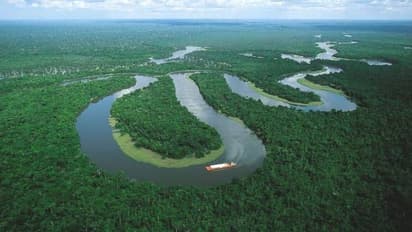
Why is there no major bridge across the 6,400-km Amazon River? Explore the geography, seasonal flooding, remote terrain, sparse road networks and economic challenges that make building a bridge difficult.
South America's Amazon River is more than just a river; it's a global lifeline. It carries more water than any other river on Earth. This mighty river is full of dense forests, rare animals, and amazing natural wonders. It begins its 6,400 km (4,000 miles) journey from the Andes mountains in Peru, crosses Colombia, and empties into the Atlantic Ocean in Brazil. It's shocking to think that a river this huge, carrying 15-20% of the world's river water, has absolutely no bridges.
It's truly surprising that there isn't a single bridge across the thousands of kilometres of the Amazon. The main reason is that there's simply no need for one. The area is covered in dense rainforests, and very few people live along the river's banks. During the rainy season, the river's width expands massively. Plus, the soil on the banks is too soft, which makes building stable bridges a huge engineering challenge. For getting around, local people rely completely on boats and ferries.
When it comes to water discharge, the Amazon River is number one in the world. It pours about 20% of all the fresh water from rivers into the oceans. Every second, around 2,09,000 cubic metres of water flows through it. To put that in perspective, the Amazon alone sends more water into the sea than the next seven largest rivers in the world combined!
People call the Amazon rainforest the 'Lungs of the Earth' for a reason. The river basin is the world's biggest hub for biodiversity. One out of every ten known species on the planet lives right here. Some of its famous residents include:
Pink River Dolphins: Rare, beautiful dolphins that live only in fresh water.
Piranhas: These fish have sharp teeth and are known to attack in groups.
Green Anaconda: One of the world's heaviest and largest snakes lives in these waters.
Electric Eels: These amazing fish can generate a shock of up to 600 volts, stunning tourists and researchers alike.
A river that turns into a 'sea' during the rainy season
On a normal day, the Amazon River is about 2 to 10 kilometres wide. But during the rainy season, its water level rises dramatically, and the width can swell to about 40 to 50 kilometres in some places. At its mouth, where it meets the ocean, the river is a staggering 325 kilometres wide. The flow is so powerful that even 160 kilometres into the Atlantic Ocean, the water is still fresh, not salty. The Amazon is key to our planet's environmental balance, but human activities like deforestation are putting it at risk. We must protect this river and its rainforests to ensure life on Earth continues smoothly.