
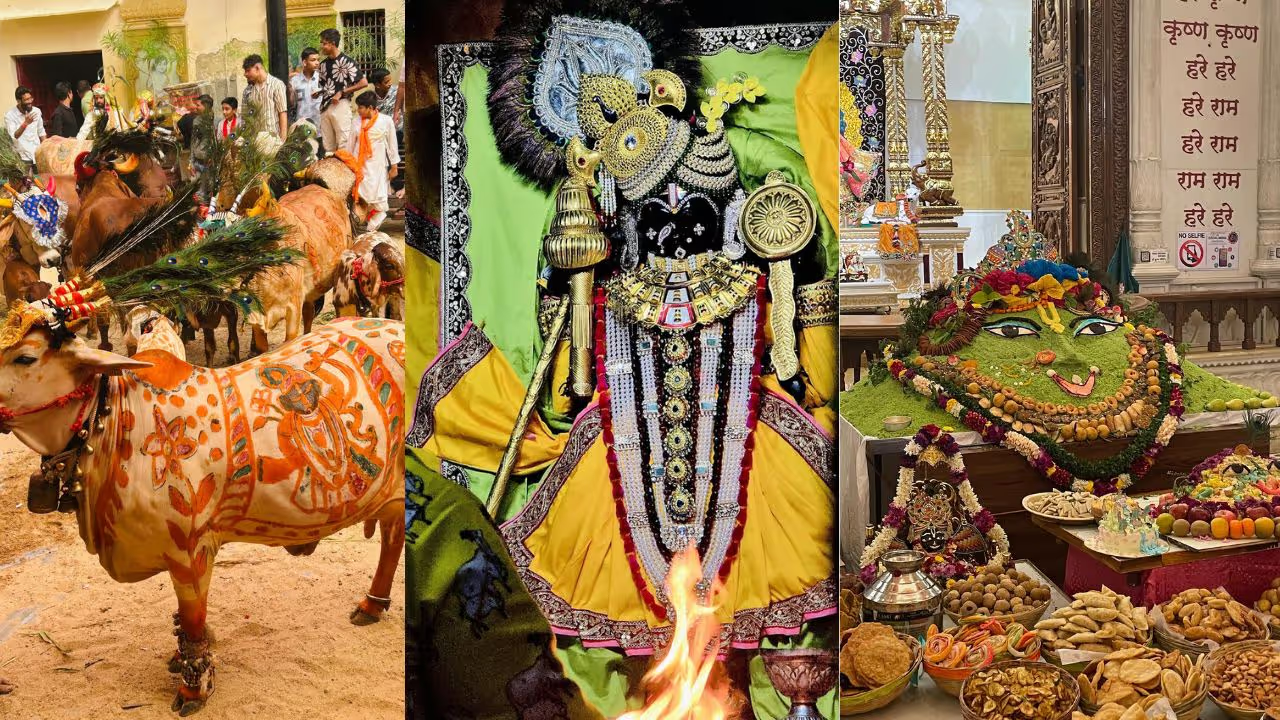
Govardhan Puja 2026 will be observed on November 9 and 10, depending on regional traditions. Know the festival's significance, city-wise shubh muhurat, puja vidhi, essential samagri and the importance of Annakut Bhog.
Govardhan Puja, also known as Annakut Puja, is an important Hindu festival dedicated to Lord Krishna. It is celebrated on Kartik Shukla Pratipada, the first day of the bright lunar fortnight. In 2026, the festival falls on November 9 and 10, depending on regional Panchang calculations and the tradition followed. The Pratipada Tithi begins at 12:31 PM on November 9 and ends at 2:00 PM on November 10 (IST). While several cities observe the festival on November 9 during the evening muhurat, others follow the November 10 morning observance.
Govardhan Puja 2026: City-Wise Date And Shubh Muhurat
According to city-specific Panchang calculations, the observance differs across India. Here are the timings for some major cities:
November 9, Monday (Evening Muhurat):
- Mumbai: 3:46 PM – 6:02 PM
- Pune: 3:43 PM – 5:59 PM
- Nashik: 3:42 PM – 5:57 PM
- Vadodara: 3:42 PM – 5:56 PM
- Rajkot: 3:52 PM – 6:06 PM
- Panaji: 3:45 PM – 6:03 PM
- Kochi: 3:40 PM – 6:00 PM
- Thiruvananthapuram: 3:38 PM – 5:59 PM
- Coimbatore: 3:36 PM – 5:56 PM
November 10, Tuesday (Morning Muhurat):
- Delhi: 6:40 AM – 8:50 AM
- Kolkata: 5:46 AM – 8:00 AM
- Bengaluru: 6:16 AM – 8:35 AM
- Hyderabad: 6:18 AM – 8:35 AM
- Chennai: 6:06 AM – 8:24 AM
- Ahmedabad: 6:50 AM – 9:03 AM
- Jaipur: 6:43 AM – 8:54 AM
- Lucknow: 6:22 AM – 8:33 AM
- Patna: 6:03 AM – 8:15 AM
- Bhopal: 6:31 AM – 8:44 AM
- Guwahati: 5:38 AM – 7:49 AM
These timings are based on local sunrise, sunset and the prevailing Pratipada Tithi. Other Panchang calculations may prescribe November 10 as the festival date across all these cities. Devotees should follow their local temple or family calendar.
Govardhan Puja 2026: Significance
According to Hindu mythology, the festival commemorates the occasion when Lord Krishna lifted Govardhan Hill on his little finger to protect the residents of Vrindavan from torrential rainfall sent by Lord Indra. Krishna encouraged the villagers to worship Govardhan Hill instead, highlighting the importance of nature and the resources that sustain life. The occasion is also associated with Annakut, meaning a mountain of food, offered to Lord Krishna.
Devotees generally begin the day with an early morning bath and wear clean clothes. A symbolic Govardhan Hill is created using cow dung or clay and decorated with flowers, leaves and small diyas. An idol or photograph of Lord Krishna is placed nearby. Devotees apply kumkum, roli and sandalwood paste, offer flowers and Tulsi leaves, light incense sticks and perform the aarti. Cows and calves are also worshipped and offered fresh fodder as part of the traditional rituals. Some devotees observe Govardhan Parikrama, circumambulating the symbolic hill as an expression of devotion.
Govardhan Puja 2026: Samagri List
The following items are commonly used during Govardhan Puja:
- Cow dung or clay for preparing the symbolic Govardhan Hill
- Flowers, garlands and Tulsi leaves
- Roli, kumkum, turmeric and sandalwood paste
- Akshat (uncooked rice)
- Incense sticks, dhoop and camphor
- Ghee, cotton wicks and diyas
- Gangajal or clean water
- Fruits, sweets and dry fruits
- Milk, curd, honey and sugar for Panchamrit
- Betel leaves and betel nuts
- Traditional vegetarian dishes for Annakut Bhog
Annakut Bhog And Chhappan Bhog
One of the major highlights of Govardhan Puja is the preparation of Annakut Bhog. Devotees prepare an assortment of vegetarian dishes, sweets, fruits and other delicacies and offer them to Lord Krishna. Many temples and households also follow the tradition of Chhappan Bhog, which consists of 56 different food preparations. Following the prayers, the offerings are distributed among devotees and family members as prasad. The tradition represents gratitude, abundance and the importance of sharing food.










