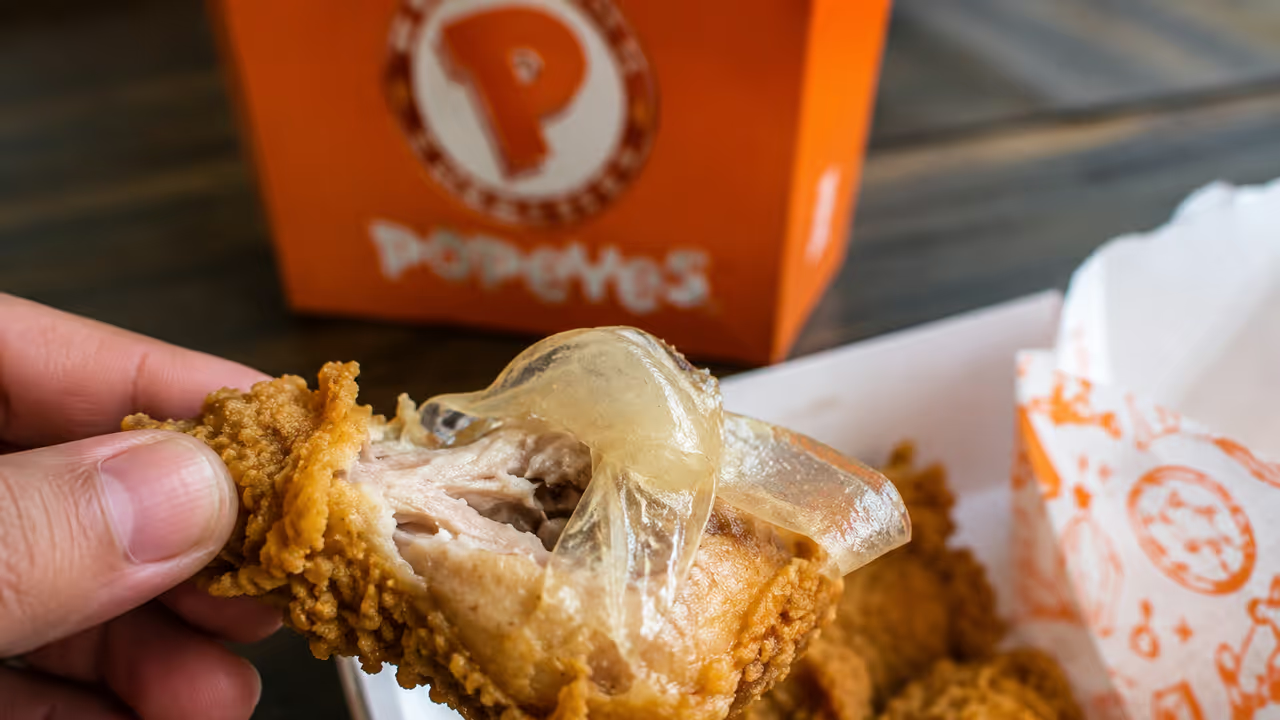
Two Texas customers have filed a lawsuit seeking more than $1.5 million in damages from Popeyes after allegedly discovering a “condom-like foreign object” embedded inside their fried chicken.
Two Texas customers have filed a lawsuit seeking more than $1.5 million in damages from Popeyes after allegedly discovering a “condom-like foreign object" inside their fried chicken. Justin Howard and Danielle McKinnon filed the lawsuit against the fast-food chain and its owner, Restaurant Brands International, after allegedly purchasing chicken from a Popeyes outlet in Houston on July 25, 2026. According to an Aug. 3 petition obtained by PEOPLE, the couple said what began as a routine family meal quickly turned into a disturbing ordeal.
“The meal appeared ordinary. It was not,” they wrote in the petition.
The plaintiffs alleged that Howard bit into a piece of chicken before “immediately discovered what appeared to be a condom-like foreign object embedded within the chicken.”
Related Articles

“The discovery instantly transformed what should have been an ordinary family meal into a deeply disturbing and frightening event,” the petition claimed, adding that Howard and McKinnon stopped eating and “became physically nauseated.”
The customers said they were left terrified that they might have already consumed contaminated food before spotting the object. They alleged concerns about possible exposure to bacteria, bodily fluids, sexually transmitted diseases or other substances.
“They were horrified by the possibility that they had already ingested contaminated food before discovering the object,” the petition alleged, adding that the customers had no way of knowing what the object was, how long it had remained inside the food or whether “contamination had spread throughout the meal.”
The Texas residents accused Popeyes and the restaurant owner of “heinous conduct,” alleging violations of “fundamental safety rules,” including preventing foreign objects from entering food, maintaining sanitary conditions and treating customer complaints “as public health concerns.”
They further alleged that the restaurant failed to properly follow sanitation protocols, employee hygiene standards, supervision requirements, food-handling practices and quality-control measures. According to the petition, the plaintiffs argued that adherence to “any” of these procedures would have prevented the allegedly contaminated food from reaching them.
The customers claimed Popeyes had a duty of “protecting every customer” and accused the chain of exposing them to “preventable danger” from a problem they could not have detected or “guard against themselves.”
Popeyes, however, disputed the allegation.
“We have looked at extensive internal video and saw no evidence to validate this claim,” Popeyes told PEOPLE in a statement over email. “Regardless, it is unacceptable, and the Franchisee immediately issued a refund to the guest and out of an abundance of caution closed the restaurant early for re-training.”
The plaintiffs alleged that their ordeal worsened when they returned to the restaurant and informed employees about the alleged object. According to the petition, employees “laughed and continuously humiliated” the customers, while management “repeatedly” attempted to replace the chicken instead of issuing a refund or investigating the complaint.
The customers were eventually refunded, the petition stated.
Howard and McKinnon are now seeking damages exceeding $1.5 million. Their lawsuit accuses Popeyes of negligence, alleging that the chain failed to adequately train employees, enforce quality-control procedures and maintain a safe food-preparation environment.
They also alleged gross negligence, claiming the incident created an “extreme degree of risk” because the alleged foreign object was impossible to detect before consuming the chicken. The plaintiffs claimed Popeyes “knew, or should have known” that its alleged food-safety failures could create a risk of injury and accused the company of having “acted with conscious indifference to the safety and welfare of customers.”
The lawsuit further alleges negligent hiring, training, supervision and retention of employees involved in food preparation. The plaintiffs claimed the chicken was “unreasonably dangerous for ordinary consumption,” making it subject to strict products liability.
They also accused Popeyes of breaching its implied warranty of merchantability and fitness for human consumption by allegedly representing that it was selling “wholesome” food “fit for consumption.”
Finally, Howard and McKinnon alleged that the company violated the Texas Deceptive Trade Practices—Consumer Protection Act (DTPA) by representing the food as safe.
The plaintiffs are demanding a jury trial and claim they continue to suffer physical and emotional consequences from the alleged incident, including “mental anguish.” Their claimed damages include healthcare expenses, pain, lost wages and other losses.