Bangladesh heads to elections on Feb 12, its first polls since the student-led uprising that ousted Sheikh Hasina. With Awami League barred, BNP, Jamaat, and a new student-backed party battle for power amid rising tensions.
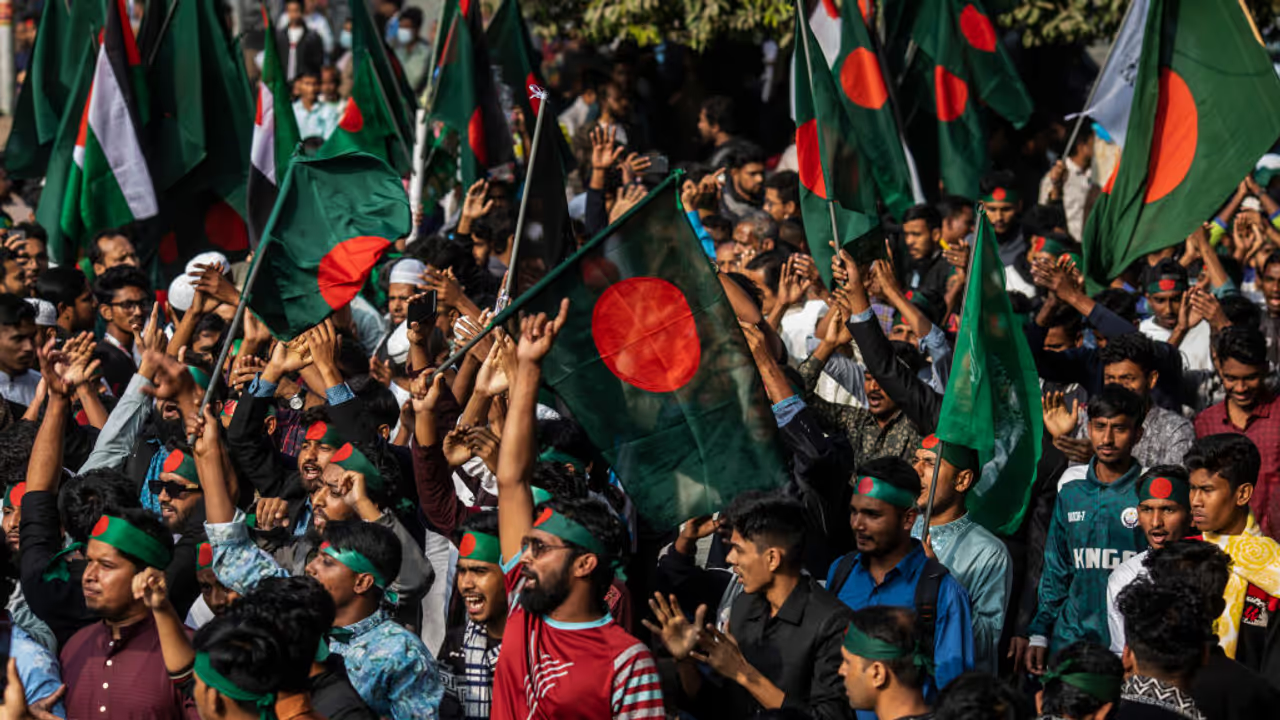
Bangladesh is set to hold general elections on February 12, the first parliamentary polls since a student-led uprising toppled the autocratic rule of former prime minister Sheikh Hasina last year. The Election Commission announced on Thursday the date for the polls, when Bangladesh will also vote in a referendum to approve a landmark democratic reform charter.
The Muslim-majority country of 170 million will choose 300 lawmakers for its unicameral parliament, the Jatiya Sangsad, but without the former ruling party of Hasina taking part.
The last elections, held in January 2024, gave Hasina a fourth straight term and her now-banned Awami League party 222 seats, but were decried by opposition parties as a sham.
Related Articles

In numbers
Voters will elect lawmakers in 300 constituencies.
An additional 50 seats are reserved for women, allocated to political parties in proportion to the number of seats each wins.
There are some 127 million registered voters, nearly equally men and women, and including more than four million first-time voters, according to the Election Commission.
For the first time, expatriate Bangladeshis will take part, casting their ballots in advance.
There are more than 290,000 registered voters abroad, many in Saudi Arabia and Gulf countries as well as the United States.
Key parties
The country's politics has long been dominated by the Bangladesh Nationalist Party (BNP) and the Awami League, which alternated in power from 1991 to 2008.
But the activities of Hasina's Awami League have been suspended, although party loyalists may contest as independent candidates.
Other key players include the largest Islamist party, Jamaat-e-Islami, and the Jatiya Party, a former Hasina ally.
Also vying for seats is the National Citizens Party, formed by the students who spearheaded the protests against Hasina.
Frontrunners
Opinion polls in Bangladeshi media vary wildly, but the BNP is seen as a frontrunner, with Jamaat trailing.
A survey by the BRAC Institute of Governance and Development in August suggested that nearly half of prospective voters were undecided.
"It is unpredictable," said Altaf Parvez, a veteran political analyst, predicting that "faith-based political parties will perform well".
The BNP says it wants to forge a a "rainbow nation" away from politics of revenge, while Jamaat wants a society based on religious principles.
Jamaat struggled to win wider popular support in past elections because of its backing of Islamabad during the 1971 liberation war from Pakistan.
But after years being crushed under Hasina, support for Islamists has been growing, analysts say.
Referendum
Interim leader Muhammad Yunus said he had inherited a "completely broken down" political system after taking over following the uprising last year.
The 85-year-old Nobel Peace Prize laureate has argued that the proposed reform charter, which he has championed as the cornerstone of his legacy, is vital to prevent a return to authoritarian rule.
The reform plan will strengthen checks and balances between the executive, judicial and legislative branches, proposes a two-term limit for prime ministers and expands presidential powers.
Tensions
Yunus insists all will be calm, with the army and other security forces to be deployed in large numbers throughout the election period.
But tensions are high as parties gear up for the polls, and the country remains volatile.
The Election Commission has approved 66 local organisations to observe the polls, with teams of foreign observers also expected.
(Except for the headline, this story has not been edited by Asianet Newsable English staff and is published from a syndicated feed.)