Bangladesh will hold elections on February 12, the first vote since Sheikh Hasina was ousted last year. A referendum on a new democratic reform charter will happen the same day. Nobel laureate Muhammad Yunus will leave office after the polls.
Bangladesh will hold national polls on February 12, the electoral commission announced Thursday, the country's first vote since a student-led uprising toppled former prime minister Sheikh Hasina last year.
A referendum on a landmark democratic reform charter will also be held on the same day, Chief Election Commissioner AMM Nasir Uddin said in a television broadcast to the nation.
The Muslim-majority country of 170 million people has been in political turmoil since Hasina was overthrown in August 2024, ending her 15-year autocratic rule.
Related Articles

Her former ruling party Awami League has been banned from running.
Muhammad Yunus, to step down after polls
The country's interim leader, Nobel Peace Prize winner Muhammad Yunus who returned from exile in August 2024 at the behest of protesters to lead a caretaker government, will step down after the polls.
"In this election process, we expect cordial participation and active cooperation of all political parties and rival candidates and of the voters," said the chief commissioner.
"I urge all to play a historical role in our democratic journey by making the upcoming 13th national parliament election a success."
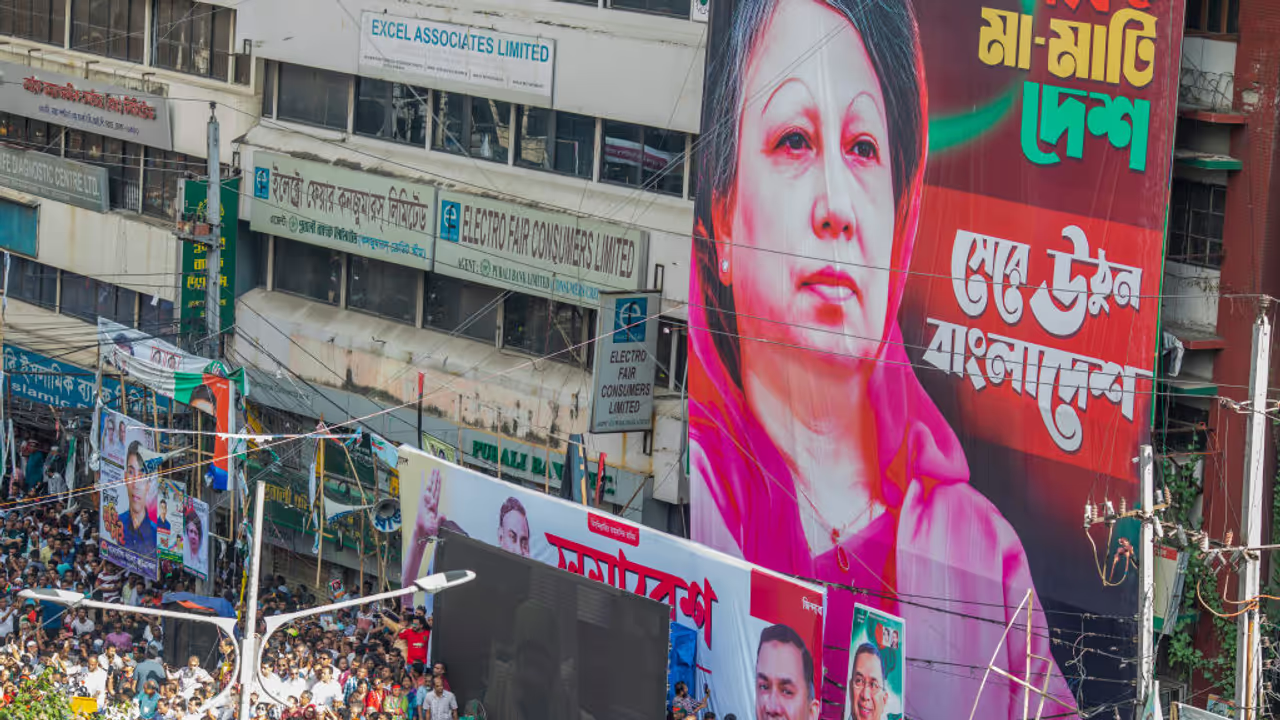
The Bangladesh Nationalist Party (BNP), led by three-time former prime minister Khaleda Zia, is widely tipped to win.
But Zia is in intensive care in Dhaka, while her son and political heir Tarique Rahman has been in exile in Britain for 17 years.
Zia, 80, has suffered from years of ill health, including during her imprisonment under Hasina's rule.
Rahman, 60, known in Bangladesh as Tarique Zia, says he fled to London due to politically-motivated persecution.
He has said he will run in the polls and remains a favourite to be the next prime minister, but has not yet returned to visit his mother in intensive care.
'New future'
Voters will elect parliament members for 300 constituencies. An additional 50 seats are reserved for women, allocated to political parties in proportion to the number of seats each party wins.
There are some 127 million registered voters, including more than four million first-time voters, according to the Election Commission.
Once the country's most popular party, the Awami League still commands core supporters.
Human Rights Watch has condemned the bar on Awami League as "draconian".
Hasina, 78, sentenced to death in absentia in November for crimes against humanity, remains in hiding in her old ally India.
She has warned that holding elections without her party would be "sowing the seeds" of further division.
Other key players in the election include the largest Islamist party, Jamaat-e-Islami, and the Jatiya Party, a former Hasina ally.
Also vying for seats is the National Citizens Party, formed by the students who spearheaded the protests against Hasina.
The last elections were held in January 2024, giving Hasina a fourth straight term with her party taking 222 seats. But that vote was decried by opposition parties as a sham.
Yunus, 85, welcomed the announcement of the election date.
"Bangladesh is standing at the threshold of a new future," he said in a statement.
"I firmly believe that, with your active and responsible participation, we will be able to build a modern, just, and prosperous country."
(Except for the headline, this story has not been edited by Asianet Newsable English staff and is published from a syndicated feed)