
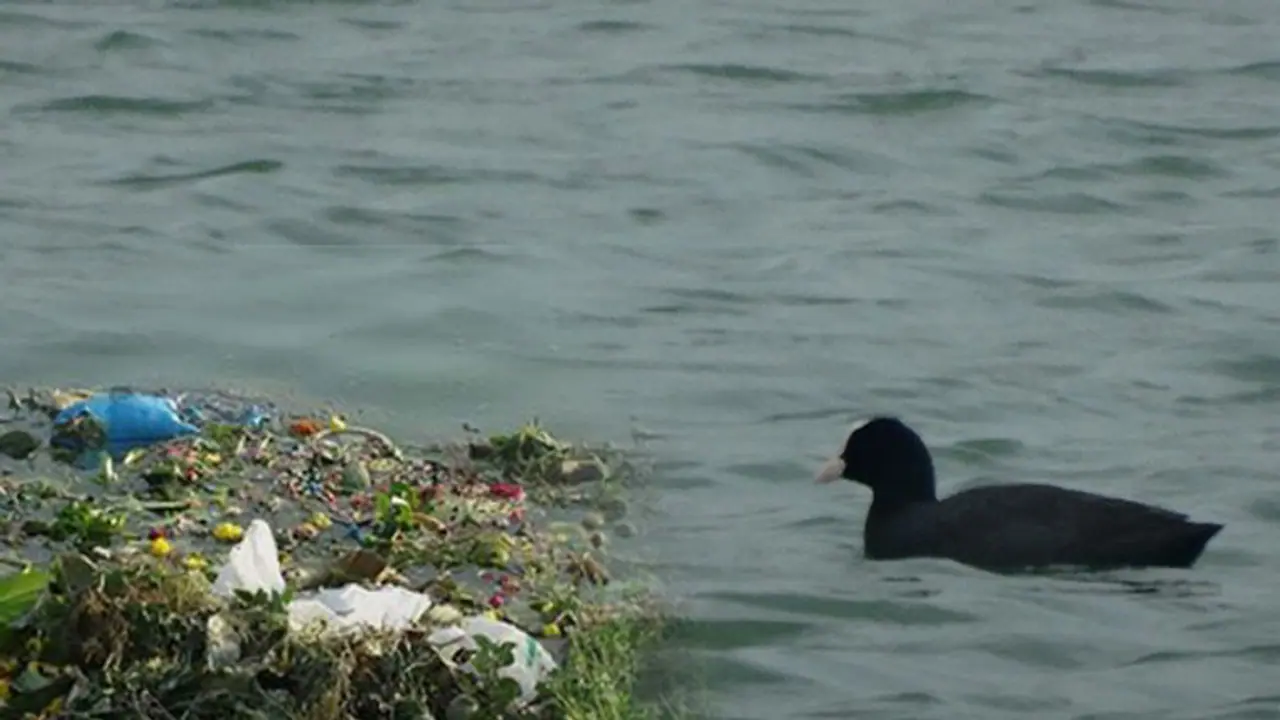
Hyderabad's Neknampur Lake was the drinking water reservoir of the city for centuries The mosquito-infested lake is now a den of diseases, which adds to the industrial waste already being dumped there.
Even 15 years ago, Hyderabad's Neknampur Lake was the drinking water reservoir of the city. But now it has turned into a dumping ground. Located in a historical location, close to the majestic Golkonda Fort, the lake, surprisingly, does not come under the purview of the state government's restoration of lakes under Mission Kakatiya.
Evidently, the situation has worsened over the years. As the 2,000 residents residing around the lake complain of foul odour and garbage dumping in the area, the charm and the beauty of the lake can be seen waning with time. Moreover, the residents too are facing several issues because of the bad odour.
The mosquito-infested lake is now a den of diseases, which adds to the industrial waste already being dumped there.
Recently, the local MLA Prakash Goud and MP Konda Visweswar Reddy along with GHMC and other officials visited the lake. According to a report by the Deccan Chronicle, the ministers have directed officials to take steps for the protection of the lake and save it from pollution. Even the Hyderabad Metropolitan Water Supply and Sewerage Board (HMWSSB) managing director Dana Kishore has written to the state government regarding the issue.
Neknampur lake cleaning by Nasir girls School with Dgruvansh NGO pic.twitter.com/GNsXcwiQoa
— Dhruv ansh (@dhruvansh1320) August 5, 2016
He suggested that a sewage treatment plant be set up to divert the sewage waste from the lake. The plant will also be responsible for the disposal of sewage to prevent pollution. The tentative cost of constructing the plant will be 8.84 crore. Meanwhile, locals and a few NGOs like Dhruvansh have taken the onus of cleaning the lake themselves. They have steered campaigns and state-of-the-art cleaning mechanisms that have changed the surroundings considerably.
For instance, recently, the residents of Manikonda have turned to the phytoremediation technique, which uses plants to contain pollution. For the purpose, small artificial 'floating islands' will be created. These islands will have thermocol on four sides with plastic bottles attached to them to allow flotation.
At the centre, a plastic mesh will be attached to it, on top of which a gunny bag will be placed followed by a layer of soil in which aquatic plants known to absorb pollutants like Indian water lily will be planted. Once these plants start to grow, their roots will reach into the lake water and absorb pollutants like phosphates and nitrates which get into the lake due to illegal dumping of sewage.
