
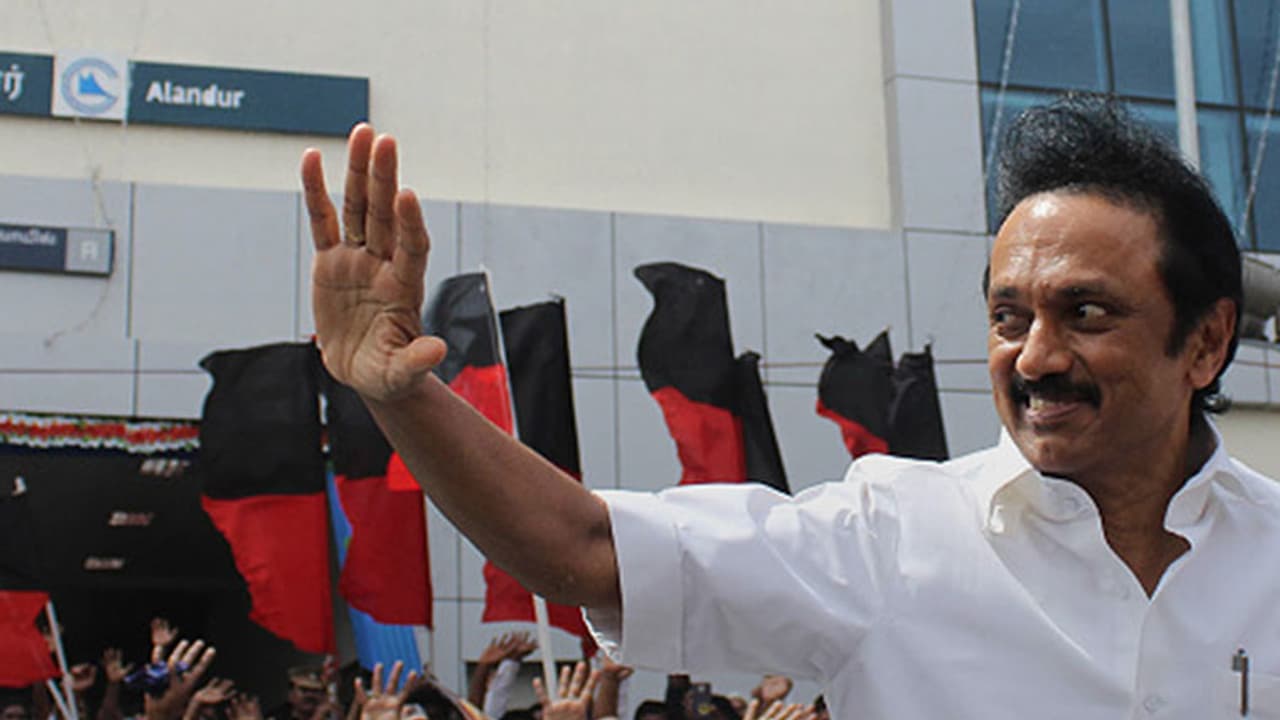
Leaders like Stalin and Anbumani Ramadoss have been detained for protests. With the political climate in TN being fluid, parties are adopting jallikattu as a rallying point. Comparisons to the anti-Hindi agitations ignore key changes in TN’s politics and society.
DMK Acting President MK Stalin was detained in Chennai on January 20 when he was participating in a rail roko organised by the party against the ban on jallikattu. On the previous day, Anbumani Ramadoss, the PMK scion, was detained in Delhi when he was leading a protest to the Prime Minister’s residence on the same issue. Even the BJP, a fringe player in Tamil Nadu, has taken up the cause of jallikattu (see tweet) even as its own Central Government dithers.
The three aforementioned events point to the unprecedented political mobilisation happening around jallikattu in Tamil Nadu. Even the last comparable issue, the protests against the final stage of the Sri Lankan Civil War in 2009, was a muted affair as the Centre refused to indulge the agitators. So why exactly are these parties rallying around jallikattu, as the matter is still pending with the Supreme Court?
First, the death of J Jayalalithaa in December and DMK supremo Karunanidhi’s fading health, in addition to the rumblings of dissent in the ruling AIADMK over succession issues, has meant the political climate in the state is fluid. TN politics is devoid of the larger-than-life leaders who have dominated it for nearly 50 years. And what better way to rally a confused population than to evoke the notion of Tamil pride.
Stalin has confidently adopted a hard-line populist stance, knowing that Chief Minister O Paneerselvam is constrained by his constitutional obligations and lack of complete control over his own party. Others like Ramadoss are fishing in troubled waters to resurrect their parties that were battered in the 2016 Assembly polls. The BJP’s unwillingness to oppose the AIADMK overtly is linked to its attempts to increase its influence on the party given the latter’s hefty numbers in the Rajya Sabha.
Many observers claim the current protests evoke memories of the anti-Hindi agitation of the 1960s that led to the rise of the Dravidian parties. However, there are important differences between 1965 and 2017. If the anti-Hindi agitation happened in a binary environment (DMK versus the ruling Congress), the political fabric of the state is now fragmented. Further, issues of caste identity have become more prominent, which means most political parties can, at best, hope to keep their existing votebanks intact using the jallikattu issue rather than gain new support.
