
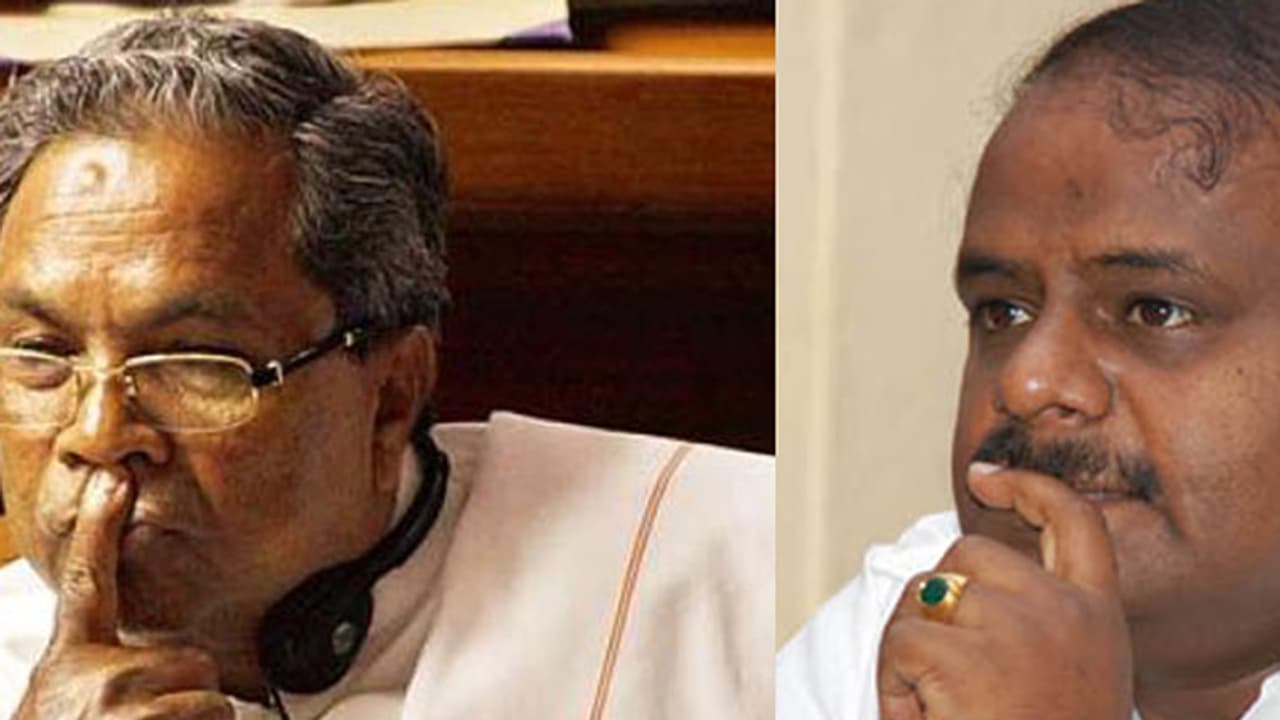
The big Times Now expose of candidates demanding and offering money to the Congress and the JD(S) to get elected to the Rajya Sabha has created a furore in the state.
In the current expose, independents MLAs like Ashok Kheny and Varthur Prakash were caught on hidden camera discussing the huge price tag on offer for supporting major parties. The money, incidentally, would be given under the guise of 'development funds'.
Nowadays, every major party in Karnataka tries to buy independents to retain or gain power. This occurs at every electoral level - whether it is elections for gram or taluk panchayats, polls for city corporations, state assembly elections or, as the recent expose showed, even when electing candidates for the Rajya Sabha.
While the Congress was in the forefront of these efforts this time around, JD(S) leaders were also looking keen to sell their alloted seat to some independents. In such cases, usually the highest bidder gets the seat - easy funds for the party.
This system became widespread in 2008, when words like 'horse trading' and 'resort politics' entered Kannadiga lexicon on a large scale. Back then, the BJP was in power under chief minister Yeddyurappa.
In those days, as part of 'Operation Kamala', BJP leaders funded a resort trip for independent MLAs, where all communication to the outer world was cut off. The 'resort arrest' was a ploy by the BJP to prevent other parties from poaching them via bribes larger than the ones the BJP was offering at the time.
Once all parties saw the effectiveness of this method, the poaching of independents or leaders through large bribes or other political favours has become a common phenomenon in Karnataka.
It looks like BJP is paying a costly price for the trap they had laid six years ago. The trend started by the BJP is being gloriously followed by other parties.
Seats seem to be the only consideration. After all, those who have paid large amounts to be selected will presumably want a return on their investment.
Will the selected candidates, some of whom have little or no connection with the state, even voice the state's problems unless there is a political gain to be had?
The answer is no.
Even then, in the long run, it does not matter, since the only connection these candidates seem to have with the people they are supposed to be serving is the money those citizens pay as taxes, which is eventually used to buy more seats.
All of these does make one wonder - why have the elections at all?
