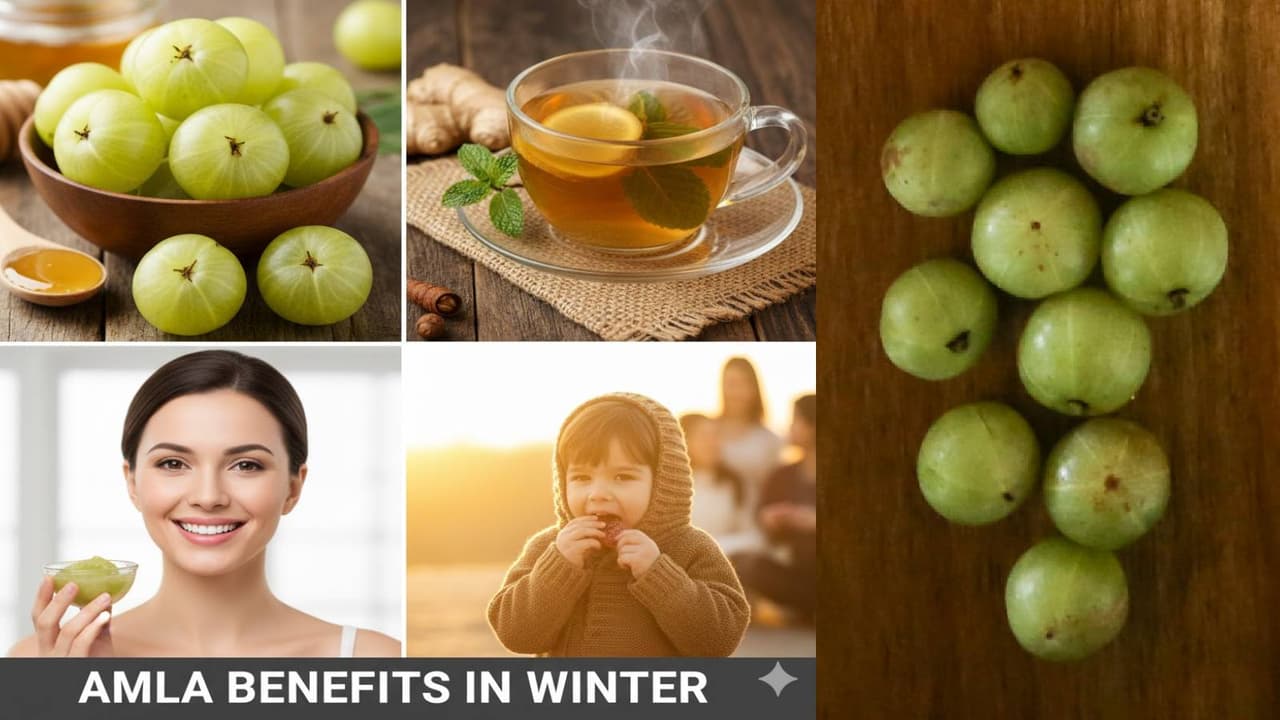
In winter, amla is a powerful superfood that supports immunity, digestion, and overall wellness. This article explores its health benefits and shares the best ways to consume amla for maximum results.
As winter approaches, our immunity often weakens. Cold weather, pollution, and changing lifestyles can lead to common problems like coughs, colds, and fatigue. During this time, amla proves to be a superfood that strengthens the body from within. In Ayurveda, amla is considered equivalent to nectar, thanks to its rich natural Vitamin C content. Consuming amla in winter not only helps prevent illnesses but also supports healthy skin, hair, and digestion.
Why is amla so beneficial in winter?
Amla is rich in Vitamin C, antioxidants, and minerals, which strengthen the immune system in winter. It gives the body the strength to fight the cold and protects against recurring coughs and colds. Additionally, amla cleanses the body by removing accumulated toxins, making you feel energetic throughout the day.
Related Articles

Essential for digestion and metabolism
During the cold season, the digestive system often slows down, which can lead to problems like gas, constipation, and indigestion. Amla is rich in fiber, which improves digestion. It keeps the metabolism active and helps reduce stomach-related issues. Eating the right amount of amla daily keeps the digestive system strong.
Benefits of eating amla for hair and skin
Dry skin and hair fall are common problems in winter. The Vitamin C and antioxidants in amla nourish the skin from within and enhance its natural glow. It strengthens hair roots, prevents premature graying, and helps make hair thick and shiny.

What is the right way to eat amla?
The best way to eat amla is on an empty stomach in the morning. You can eat raw amla or drink amla juice. Besides this, amla can also be consumed in the form of jam, powder, or dried fruit. Remember not to consume amla in excess, as it can cause acidity. 1-2 amlas or 20-30 ml of juice daily is sufficient.
By including amla in your diet during the winter months, you can protect yourself from illnesses and take a significant step towards a healthy life.