
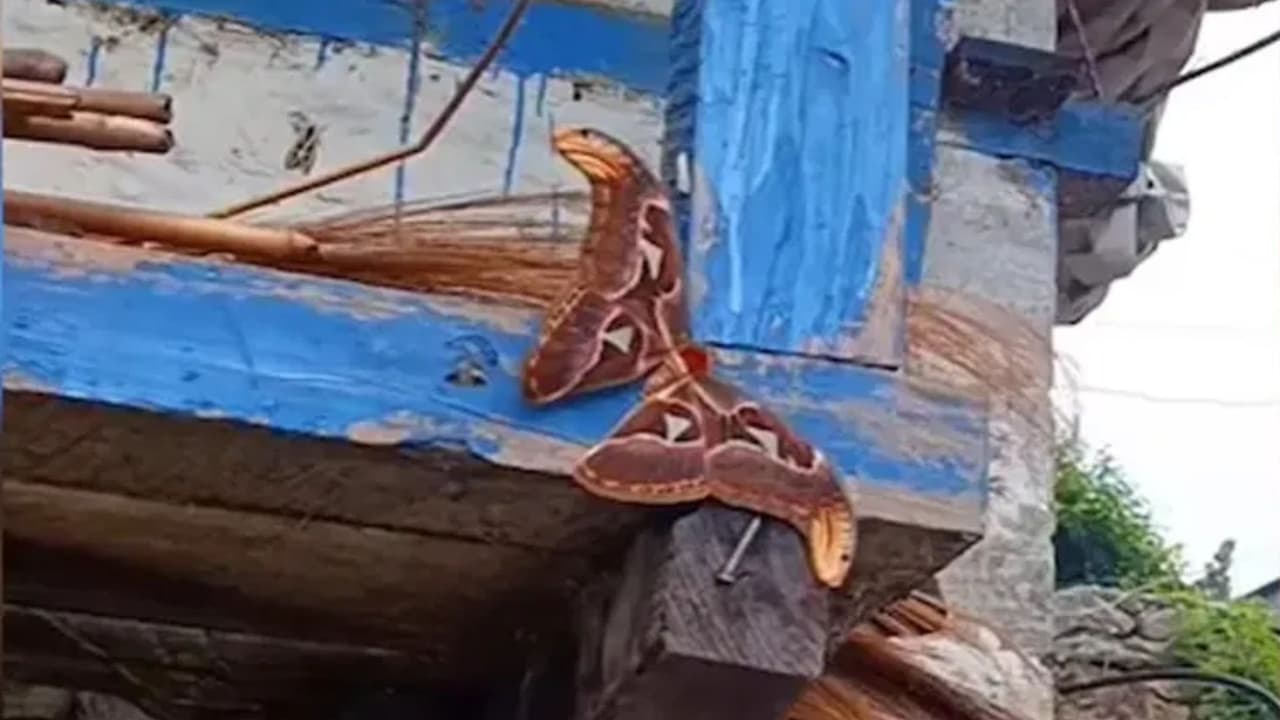
A viral photo appearing to show a two-headed snake is actually the Atlas Moth. This creature is not a snake but one of the world's largest moths. Its wingtips are cleverly patterned to resemble cobra heads, a remarkable example of mimicry used to frighten away predators.
Social media is full of bizarre photos and videos, but every now and then, a post emerges that leaves people genuinely stunned. One such image is currently taking the internet by storm. At first glance, it appears to show a terrifying two-headed snake resting on a piece of wood, prompting alarmed reactions from viewers.
The image has sparked widespread curiosity online, with many users wondering whether the creature is a rare species of snake or something even more mysterious. However, the truth behind the viral photo is far more fascinating than it initially appears.
Not a Snake at All
Despite its frightening appearance, the creature in the image is not a venomous snake. In fact, it is completely harmless. A closer look reveals that it is actually an Atlas Moth, one of the largest moth species in the world.
Known scientifically as Attacus atlas, the Atlas Moth possesses an extraordinary natural defense mechanism. The tips of its wings are shaped and patterned in a way that closely resembles the head of a cobra, creating a convincing illusion that can easily fool both predators and humans.
Nature’s Clever Survival Strategy
This remarkable adaptation helps the moth protect itself from danger. When birds, lizards, or other predators approach, they often mistake the snake-like wing patterns for a real cobra and stay away.
Scientists refer to this survival technique as “mimicry,” a phenomenon in which one species evolves to resemble another in order to avoid predators. The Atlas Moth is considered one of the most impressive examples of mimicry found in nature.
Giant Wings, Short Life
The Atlas Moth is native to the tropical and subtropical forests of Southeast Asia. It is famous for its enormous wingspan, which can exceed 25 centimetres, making it one of the largest moths on Earth.
Even more surprisingly, adult Atlas Moths do not have functioning mouths. They survive entirely on energy stored during their caterpillar stage and typically live for only one to two weeks after emerging from their cocoons.
Internet Fascinated by Nature’s Illusion
The viral image has attracted massive attention online, with viewers expressing amazement at nature’s creativity. Many users noted that what appears dangerous at first glance can sometimes be nothing more than a clever survival tactic.
As the photo continues to circulate across social media platforms, the Atlas Moth serves as a stunning reminder that nature often creates illusions far more impressive than fiction.
Check out the video here
