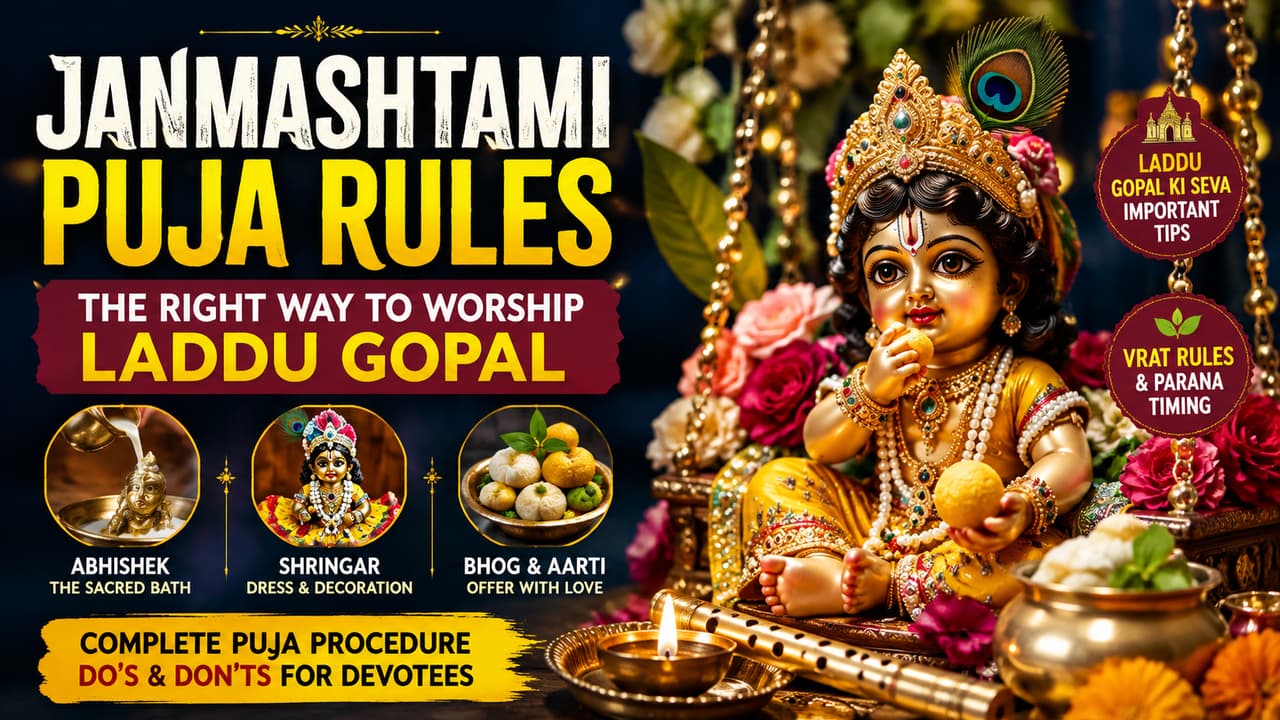
Janmashtami 2026 is all about welcoming Lord Krishna with devotion and proper rituals. From Laddu Gopal’s abhishek and shringar to bhog, aarti and fasting, know the traditional puja rules devotees should follow.
Janmashtami 2026 will be celebrated on September 4, with devotees observing a fast and worshipping Bal Krishna at midnight. From Laddu Gopal’s abhishek to bhog and aarti, know the traditional puja procedure and key rules.
How To Perform Janmashtami Puja At Home
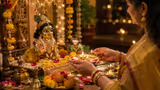
Janmashtami puja traditionally centres around the midnight birth celebration of Lord Krishna. Begin by cleaning the house and puja area, taking a bath and wearing clean clothes. Place the Laddu Gopal idol on a clean chowki or decorated swing and prepare the puja items.
Devotees traditionally perform the detailed Krishna puja during Nishita Kaal, the midnight period associated with Krishna’s birth. The ritual may include meditation, invocation, offerings, flowers, incense, lamps, naivedya and aarti as part of the Shodashopachara puja.
Related Articles

Laddu Gopal Abhishek, Shringar And Bhog
At midnight, devotees ceremonially bathe Laddu Gopal. Panchamrit, traditionally prepared with milk, curd, ghee, honey and sugar, is used for the abhishek. After the bath, rinse the idol with clean water and dress Bal Gopal in fresh clothes.
The idol can then be decorated with a crown, flute, jewellery, flowers and peacock feathers before being placed in a swing. Makhan-mishri, laddus, fruits, milk, curd and other sattvic preparations can be offered as bhog. Tulsi leaves are traditionally added to Krishna’s offerings.
Janmashtami Vrat Rules And Mistakes To Avoid
Those observing the traditional fast generally avoid grains on Janmashtami. The fast is usually broken according to the prescribed Parana time, which varies according to the local panchang and the prevailing tithi and nakshatra.
Devotees are also advised not to rush through the midnight puja, miss the Nishita Kaal worship or consume regular grain-based food during the vrat. Maintaining a peaceful atmosphere and avoiding anger, arguments and negative behaviour are also considered important during the observance.
Since rituals can differ between families and sampradayas, devotees should follow their established traditions and check their local panchang for exact timings.