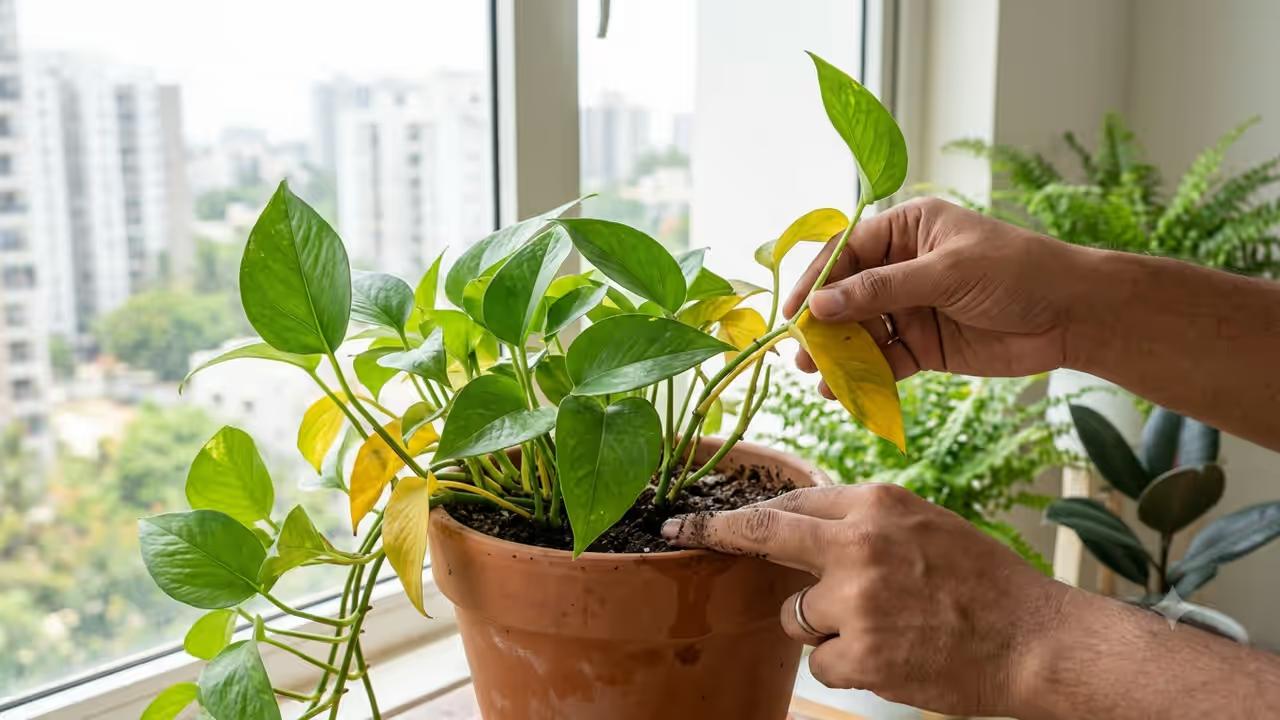
Money plant leaves turning yellow can indicate underlying issues with watering, light, drainage, or root health. By checking these seven crucial factors, including pot size and pest infestations, you can easily identify the problem. Making simple adjustments to its growing environment can help your plant recover and thrive again.
Money plants are popular indoor plants in Indian homes because they are relatively easy to maintain and can grow in soil or water. But when their glossy green leaves start turning yellow, it can be a sign that something in their growing conditions needs attention. Before throwing away your money plant, check its watering routine, sunlight, roots and overall growing environment. Yellow leaves do not always mean the plant is dying. In many cases, a few simple changes can help it recover.
Here are seven things to check if your money plant leaves are turning yellow.
1. Are You Watering It Too Often?
Overwatering is one of the first things to check when money plant leaves turn yellow. When the soil remains wet for too long, the roots may struggle to get enough oxygen, increasing the risk of root rot.
Related Articles

Check the soil before watering. If the top layer is still wet, wait until it begins to dry. Make sure excess water can drain freely from the pot and never leave the plant sitting in a tray filled with water. If the soil smells unpleasant or the stems become soft, inspect the roots for signs of rot.
2. Is Your Money Plant Getting Enough Light?
Money plants tolerate lower-light conditions, but they generally grow better with bright, indirect light. A plant kept in a very dark corner may develop slow growth, pale foliage or yellowing leaves.
Move the pot closer to a bright window where sunlight is filtered through a curtain or does not fall harshly on the leaves. Avoid suddenly placing an indoor plant under intense direct sunlight, as this can scorch its foliage. Observe the plant over the next few weeks to see whether new growth looks healthier.
3. Does the Pot Have Proper Drainage?
Even if you water carefully, a pot without drainage holes can trap excess moisture around the roots. This can leave the soil waterlogged and contribute to yellowing leaves. Check whether water can escape from the bottom of the container. If the plant is growing in a decorative pot without drainage, consider using a nursery pot with holes inside the outer planter. Empty any collected water after watering. Choose a pot that suits the size of the root system. An excessively large pot can hold more moisture than the plant needs.
4. Are the Roots Healthy?
Yellow leaves accompanied by soft stems, wilting or persistently wet soil may indicate root trouble. Gently slide the plant out of its pot if you suspect a problem. Healthy roots are generally firm, while rotten roots may appear dark, mushy or smell unpleasant. If root rot is present, trim away affected roots with clean scissors and repot the plant in fresh, well-draining potting mix. Avoid damaging healthy roots during the process. If most of the root system is badly damaged, take healthy stem cuttings as a backup before attempting recovery.
5. Has the Plant Outgrown Its Pot?
A money plant that has been growing in the same container for a long time may become root-bound. Roots can circle the inside of the pot, leaving less room for healthy root growth. Look for roots emerging through drainage holes, tightly packed roots or soil that dries unusually quickly. If these signs are present, move the plant into a container only one size larger, using fresh, well-draining potting mix. Repotting is not necessary just because a few leaves turn yellow. Check the roots and soil first before making changes.
6. Is the Plant Getting Too Much Fertiliser?
Adding extra fertiliser may seem like a way to restore green leaves, but too much can damage the roots and cause yellow or brown leaf edges. If you have recently fertilised the plant heavily, stop feeding it temporarily and check whether the pot drains properly. Where the growing medium allows it, excess soluble fertiliser can sometimes be flushed out with water, provided the pot has adequate drainage. Resume feeding only when the plant is growing actively, following the fertiliser label. Avoid applying fertiliser to a severely stressed plant until the underlying problem is addressed.
7. Are Temperature Changes or Pests Affecting It?
Sudden temperature changes, cold drafts from air conditioners and exposure to hot, dry air can stress money plants. Keep yours away from strong air-conditioning airflow, heaters and sudden temperature extremes.
Inspect the undersides of leaves and the stems for pests such as spider mites, mealybugs or scale insects. Fine webbing, cotton-like clusters, sticky residue or small bumps may indicate an infestation. If pests are present, isolate the plant from nearby plants and clean affected leaves. Use a suitable houseplant pest treatment according to its label, testing a small area first when appropriate.
What Should You Do With Yellow Money Plant Leaves?
A completely yellow leaf will generally not turn green again. Once the cause of the yellowing has been addressed, remove fully yellow or badly damaged leaves with clean scissors. Leave healthy green leaves in place so the plant can continue making food.
Avoid changing the watering routine, location, pot and fertiliser all at once. Make adjustments based on what you find and watch for healthier new growth.
Can a Money Plant Recover From Yellow Leaves?
Yes, a money plant can often recover if the problem is identified early and its roots and stems remain healthy. A few older leaves turning yellow occasionally may be part of normal leaf ageing. If several leaves turn yellow in a short period, or the plant develops soft stems, a foul smell or widespread wilting, investigate the roots and growing conditions promptly. With suitable light, careful watering and proper drainage, your money plant may produce fresh, healthy leaves again. Before giving up on it, find out what it is telling you.