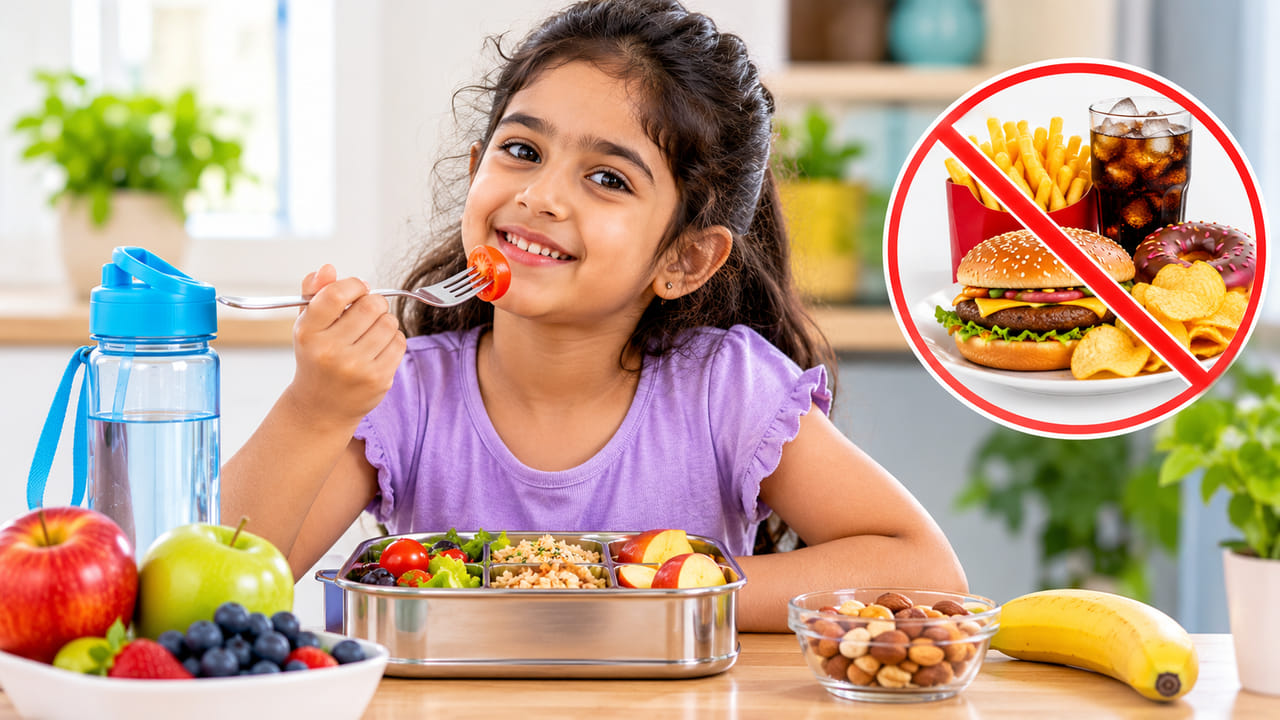
What your child eats can influence their blood sugar and overall health. Discover simple food swaps, healthier lunchbox ideas and everyday nutrition habits that can support children's growth and reduce Type 2 diabetes risk.
Healthy eating habits begin in childhood. What goes into a child's lunchbox, what they snack on after school and what they drink through the day can influence their nutritional health, weight and blood sugar levels. With children increasingly exposed to packaged snacks, sugary drinks and sedentary routines, everyday food choices deserve closer attention.
This does not mean putting children on restrictive diets or avoiding every food they enjoy. The focus should be on building balanced meals and making small changes that children can follow without feeling deprived.
Start with the right food combinations
A meal containing only simple carbohydrates can cause blood sugar levels to rise quickly. Choosing complex carbohydrates and pairing them with protein and fibre can help slow digestion and support better blood sugar control.
Related Articles

For instance, instead of serving plain rice, combine it with dal, vegetables, curd or an egg. Whole grains such as wheat, millets and brown rice can also be included in place of refined flour and highly processed cereals. Adding legumes, pulses, fish or eggs provides protein and makes meals more balanced.
Make flavourful food without relying on sugar
Children often develop food preferences early. Reducing added sugar gradually can help them get accustomed to natural flavours. Cinnamon, cardamom and nutmeg can add sweetness and aroma without adding sugar. Ginger, mint and tulsi can bring freshness to regular beverages.
Homemade chutneys can replace sugary sauces and jams, while fresh fruit can be offered instead of packaged desserts. These changes can make everyday meals more nutritious without compromising on taste.
Rethink snacks and drinks
Packaged juices, sweetened milk drinks, biscuits and confectionery can add considerable amounts of sugar to a child's diet. Water, whole fruits, unsweetened curd, nuts and homemade snacks are better everyday alternatives. Whole fruit is preferable to fruit juice because it retains its fibre. Encourage children to drink water throughout the day to stay adequately hydrated.
Small changes matter more than strict restrictions
Parents can begin with simple swaps: replace refined flour with whole wheat or millets, include vegetables in every main meal, reduce added sugar and avoid making processed snacks a daily habit. Regular physical activity and adequate sleep also support healthy weight and metabolic health.
Childhood diabetes needs medical attention, and healthy eating alone cannot prevent every form of diabetes, particularly Type 1 diabetes, which is an autoimmune condition. However, balanced eating habits, regular activity and maintaining a healthy weight can help reduce the risk of Type 2 diabetes.
The aim is not to make children count calories or fear certain foods. It is to help them develop eating habits that support their health as they grow.
-This article is authored by Aruna Mallya, Senior Dietician, KMC Hospital, Dr. B R Ambedkar Circle, Mangalore