Imagine this: you're enjoying your beautiful garden, and suddenly you spot a snake. It's scary, right? But there's a reason why snakes are often drawn to flower pots, and it's not just about the plants. Here's what you need to know.
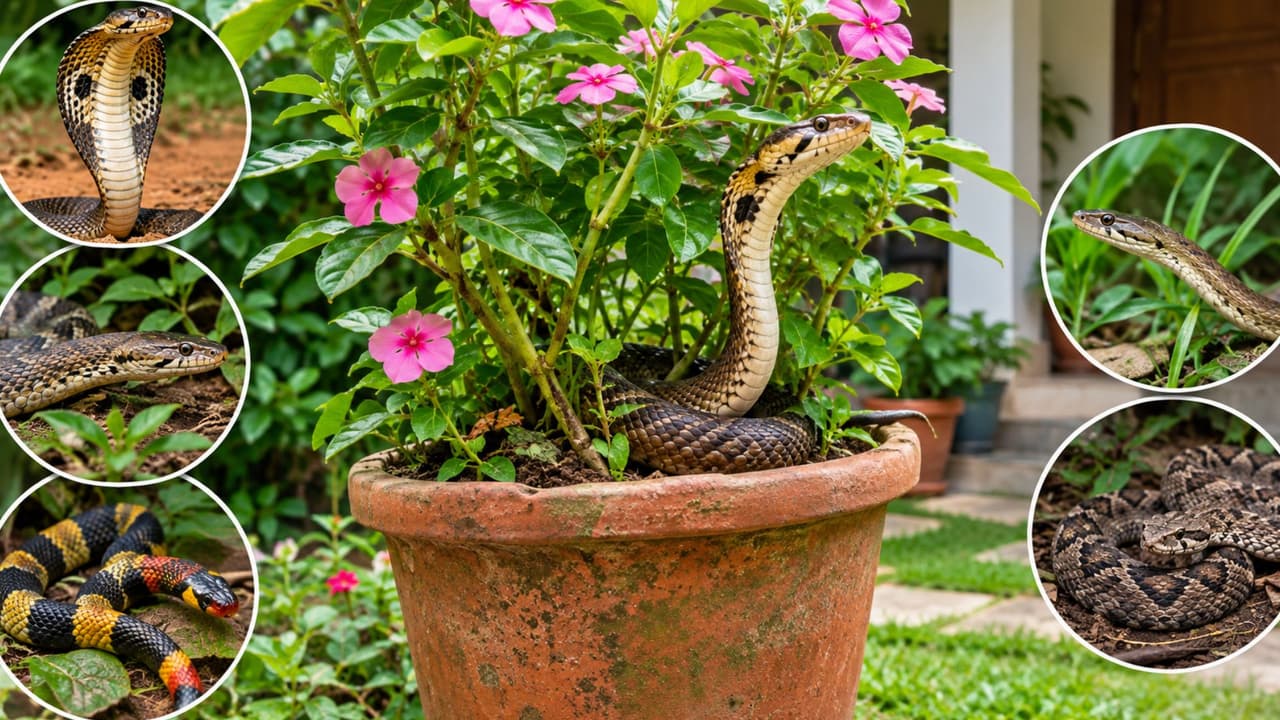
A lovely home garden with rows of flower pots is a beautiful sight. But if a snake suddenly shows up, it can be quite a scare. However, the plants themselves aren't the reason snakes appear near your pots. It's the cool, moist soil, the shade, and the small insects and reptiles living there that attract them. For small snakes, a flower pot with loose, damp soil can be like a mini-ecosystem. So, before you panic, it's good to know which snake you might be looking at.
1. Brahminy Blind Snake
This is one of the most common snakes found in flower pots, which is why it's also called the ‘flowerpot snake’. It's tiny, usually not growing more than 15 cm long. Many people mistake it for an earthworm because of its shiny black body. This snake loves to burrow in loose, moist soil and feeds on ant and termite eggs and larvae. The most important thing to know is that it's completely non-venomous.
2. Common Wolf Snake
This is another snake you might find in your garden or around flower pots. It has a brown or grey body with light-coloured bands, which often leads people to mistakenly think it's a baby Krait. This causes a lot of unnecessary panic. But the Common Wolf Snake is non-venomous. It hunts small reptiles like lizards and geckos and usually hides in cool, shady spots during the day, especially under pots or in dense plants.
Related Articles

3. Common Vine Snake
You can easily spot a Vine Snake because of its thin, green body and pointed nose. It's usually found on taller plants or creepers. It blends in perfectly with the leaves while hunting for small lizards and frogs. Technically, this snake has mild venom, but it's considered low-risk for humans. Its fangs are at the back of its mouth, making it difficult for it to deliver an effective bite to a person. Still, it's never a good idea to handle any snake.
4. Checkered Keelback
If your garden has pots that are watered frequently, or is near a drain or a small pond, you might see a Checkered Keelback. You can identify it by the checkerboard-like pattern on its body. This snake loves damp areas and feeds on frogs, tadpoles, and small fish. While it's non-venomous, it can put on a scary show when threatened. It flattens its neck and hisses loudly, which can make it look like a cobra, causing people to misidentify it.
5. Indian Rat Snake
The Indian Rat Snake, also known as Dhaman, is more likely to appear in homes with large gardens or those next to empty plots or bushy areas. It's larger than the other snakes on this list and moves very quickly. It won't just stay near one flower pot but will roam the area looking for food like rats, lizards, and birds. The Indian Rat Snake is also non-venomous.
What Should You Do if You See a Snake in Your Garden?
First, don't panic and try to catch or kill it. Even if you think it's non-venomous, it's not safe to handle it yourself. Just give the snake some space to leave. If you can't identify it, it's best to call a local snake rescue team or a wildlife helpline. When you're gardening, it's a good habit to wear gloves, check under pots before you lift them, and be careful when moving plants around.