Cutting saturated fat from foods like butter and cheese may not lower death risk for most people, a major review suggests. Benefits appear mainly in high-risk groups when saturated fats are replaced with healthier polyunsaturated fats.
For decades, butter, cheese, and red meat have been cast as dietary villains blamed for heart disease and early death. But a major new review suggests that for millions of people, cutting back on saturated fat may not deliver the life-extending benefits long promised especially for those at low to moderate risk of heart disease.
The findings are prompting fresh debate among nutrition experts about whether current dietary advice needs a rethink.
What the Research Found
The review analysed data from 17 large clinical trials involving more than 66,000 participants, each lasting at least two years. Researchers compared diets lower in saturated fat with diets where saturated fat was replaced by carbohydrates, protein, or healthier fats.
Related Articles

Overall, reducing saturated fat reliably lowered total cholesterol and “bad” LDL cholesterol changes traditionally linked to better heart health. However, for people with low baseline cardiovascular risk, these improvements did not translate into fewer heart attacks, strokes, or deaths over five years.
Clear benefits were mainly seen among high-risk individuals, and only when saturated fats were replaced with polyunsaturated fats — such as those found in nuts, seeds, and oily fish rather than simply cutting fat intake.
Why Cholesterol Isn’t the Whole Story
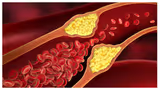
Saturated fat is known to raise LDL cholesterol by interfering with the liver’s ability to clear it from the bloodstream, allowing fatty plaques to build up in arteries. This process increases the risk of heart attacks and strokes.
Yet the new analysis suggests that lowering cholesterol alone may not be enough to reduce major health outcomes in lower-risk populations, at least in the medium term.
The researchers concluded that reducing saturated fat offers little or no mortality benefit over five years for most people, while higher-risk groups may see meaningful protection against heart attacks and strokes.
Experts Urge Caution, Not a Free Pass
Despite the findings, experts warn against abandoning existing dietary guidelines. Professor Nita Forouhi of the University of Cambridge stressed that the analysis did not assess outcomes over 10 years or longer, which is the timeframe commonly used to estimate heart-disease risk.
She also highlighted that not all saturated fats act the same, noting that fats from red and processed meats may have different effects from those found in fermented dairy products like cheese and yogurt.
Other experts point to evidence showing that diets high in saturated fat can quickly harm health markers, including raising liver fat and worsening cholesterol levels. By contrast, replacing saturated fats with polyunsaturated fats has been shown to improve heart and metabolic health.
The takeaway, experts say, is not that butter and cheese are harmless but that what replaces saturated fat matters more than cutting it alone. A balanced diet focused on whole foods and healthier fats remains key.