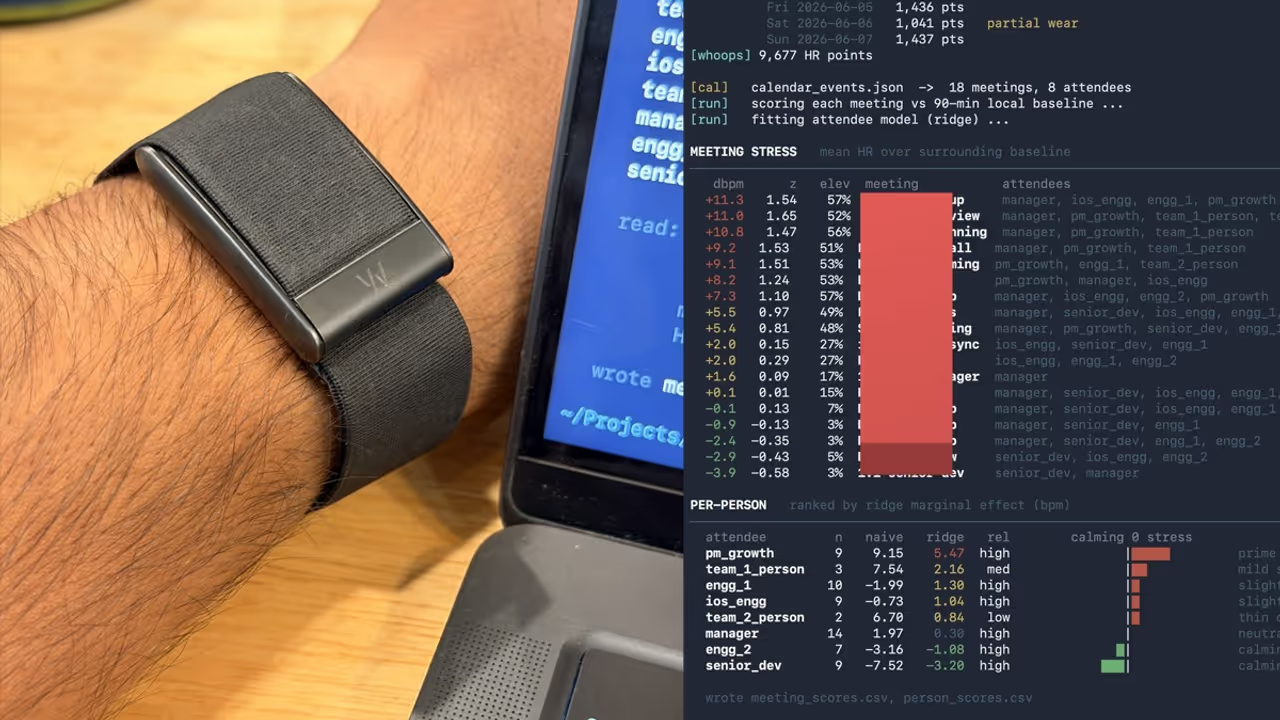
A Bengaluru-based software developer has gone viral for creating a program that matches spikes in his pulse rate with his work calendar. By linking his Whoop fitness tracker data, he created a 'leader board' to determine which coworkers stress him out the most during meetings.
A Bengaluru-based software developer has gone viral after disclosing that he created a program that matches spikes in his pulse rate with entries on his work calendar to determine whose coworkers stress him out the most during meetings. The experiment was published on X by Pankaj, a software developer from Bengaluru, who described how he linked data from his Whoop fitness tracker to his work schedule to determine which meetings caused the largest physiological reactions.
"I hooked my whoop to my work calendar to find which coworker gives me the most stress," he said.
Pankaj claims that the effort started when he was able to get minute-by-minute heart-rate measurements by reverse-engineering the wearable device's data stream. He then compared those readings to meeting attendees and calendar activities. "I was able to connect spikes with Cal events and attendance then reverse engineer Whoop to pull heart rate per minute thanks to Fable," he continued.
Related Articles

He jokingly referred to the outcome as a "leader board" that ranked coworkers according to how stressful their meetings seemed to be. "I now have a leader board, and I consider it every day," he remarked.
A Look At Viral Post
The post included a photograph of the Whoop fitness tracker on his wrist, along with another image showing snippets of code and what appeared to be a blurred ranking list of colleagues linked to heart-rate spikes.
Social Media Reactions
Social media users were immediately drawn to the peculiar side project, and many of them reacted with a mixture of suspicion and laughter.
One user made a light-hearted suggestion that Pankaj commercialise the system as a workplace analytics tool, claiming that businesses might use it to determine which employees cause the most stress before deciding whether to fire them.
Others questioned if stressed coworkers could be reliably identified using heart-rate data alone. A commentator noted that a variety of outside circumstances, such as ascending stairs before a meeting, eating sweet foods, exercising, or even the amount of time since the last meal, might affect heart rate.
While the project was clearly shared in a lighthearted manner, it also sparked discussion around the growing popularity of wearable devices and the creative ways people are using personal health data beyond fitness tracking.