
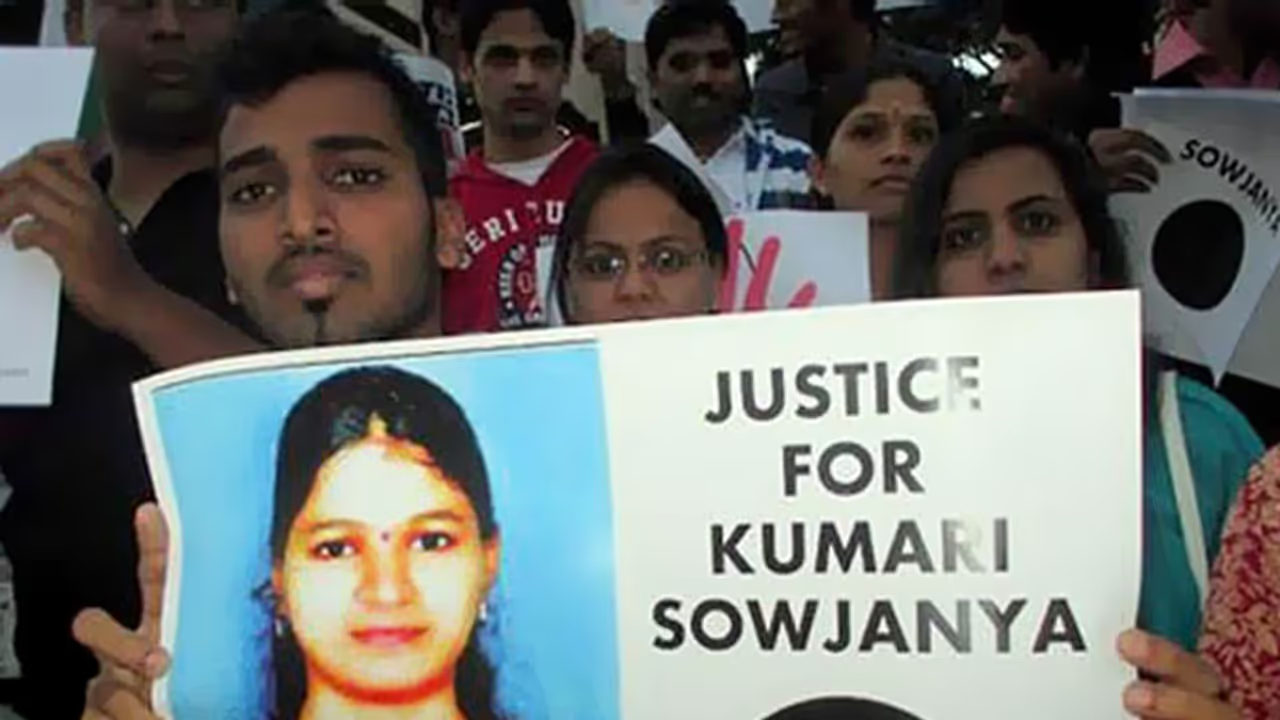
The tragic case of Sowjanya, a young girl from Karnataka, India, who was brutally raped and murdered in 2012, highlights the deep flaws in the system that is meant to protect women and deliver justice.
International Women’s Day is a time to celebrate women’s achievements and advocate for gender equality. However, it also serves as a stark reminder of the injustices and challenges that women across the world continue to face. The tragic case of Sowjanya, a young girl from Karnataka, India, who was brutally raped and murdered in 2012, highlights the deep flaws in the system that is meant to protect women and deliver justice.
Even after more than a decade, her killers remain unpunished, exposing the failure of the law-enforcement agencies and the judiciary. Her story is not just about seeking justice for one girl—it is about demanding a society where women can live free of fear and where the legal system works effectively to punish those who commit crimes against them.
In a way, the gruesome event in Kolkata on August 9, 2024, that shook the people’s conscience when a 31-year-old trainee woman doctor at the city’s RG Kar Medical College and Hospital was raped and murdered closely resembles the Dharmasthala incident. Even though a civic volunteer of the Kolkata Police was arrested in the case, the public, by and large, believe that the real perpetrators and the masterminds have gone scot-free.
Marred by Investigation Failures
On October 9, 2012, 17-year-old Sowjanya, a Pre-University student at Sri Dharmasthala Manjunatheshwara College, went missing on her way home. Her body was found the next day near the Nethravathi river, with clear evidence of sexual assault and murder. The brutality of the crime shook Karnataka, triggering protests and demands for justice.
However, from the very beginning, the case was riddled with inconsistencies, cover-ups and investigative failures. Instead of conducting a thorough and transparent inquiry, the Karnataka Police quickly arrested a local labourer, Santhosh Rao, as the prime suspect. Many, including Sowjanya’s family, believed he was just a scapegoat, while the real culprits were being shielded.
Amid mounting public pressure and protests, the case was handed over to the CID, but the investigation remained inadequate. Eventually, in November 2013, the CBI took over, raising hopes of a fair and unbiased probe. However, these hopes were soon dashed.
How the System Failed Sowjanya
Despite having better resources and expertise, the CBI, too, failed to deliver justice. Their investigation did not lead to any significant breakthroughs and the case dragged on for years. In June 2023, the CBI special court acquitted Rao, citing lack of evidence. The judgment further fuelled suspicions that the real perpetrators had been protected and that the investigation deliberately mismanaged.
This series of failures reflects a deep-rooted problem in India’s justice system, particularly when it comes to crimes against women. Key concerns include:
- Flawed Investigations: Evidence is often mishandled, destroyed, or deliberately tampered with, making it difficult to convict the actual criminals
- Delays in Justice: Legal proceedings take years, forcing victims’ families to relive the trauma without any closure
- Political and Institutional Interference: Powerful individuals often influence investigations, preventing the truth from being revealed
The Sowjanya case is not an isolated incident. It represents the thousands of cases where justice remains elusive due to a weak legal system, inefficient law enforcement and societal indifference towards crimes against women.
This Case Matters for All Women
The failure to secure justice for Sowjanya sends a dangerous message—that crimes against women can, and often do, go unpunished. It reinforces the fear and helplessness that many women feel when they step out alone. This is why Sowjanya’s case is not just about one girl—it is about ensuring that no woman has to suffer a similar fate.
Every day, countless women and girls face harassment, assault and even murder. The statistics are alarming:
- India reports more than 30,000 rape cases annually, but conviction rates remain low
- Over 90% of rapists are known to the victims, yet legal proceedings rarely provide justice
- Victim-blaming and social stigma discourage many survivors from coming forward
These numbers highlight an urgent need for action.
A Call for Collective Action
If we truly want to honour Sowjanya’s memory, we must ensure that her case becomes a turning point in the fight for women’s safety and justice. This requires action at multiple levels:
- Legal Reforms: There must be stricter laws ensuring faster trials and harsher punishments for rapists and murderers
- Stronger Law Enforcement: The police need to be held accountable for mishandled investigations and officers must be properly trained to handle crimes against women
- Awareness & Social Change: Society must reject the victim-blaming culture and create an environment where survivors feel safe to report crimes
- Public Pressure: Cases like Sowjanya’s must not be forgotten. People must continue demanding justice and holding the authorities accountable
This International Women’s Day, let Sowjanya’s story remind us why we cannot stay silent.
Turning the Tragedy into Hope
Despite the heartbreak, Sowjanya’s case can be a beacon of hope. It can inspire us to demand real changes which ensure that no other girl meets the same fate. Justice delayed is justice denied—but that does not mean we stop fighting. By standing together, raising our voices and pushing for systemic changes, we can create a world where women are not just survivors, but empowered individuals who live free of fear.
This International Women’s Day, let us make a pledge to fight for justice, safety and equality—for Sowjanya and for all women. Her story must not be forgotten. Let it be a wake-up call for our society to finally take action.
Also read: Sowjanya's Rape & Murder case; A Sustained Justice System | Opinion
(The author of this article is an award-winning Science Writer and a Defence, Aerospace & Political Analyst based in Bengaluru. He is also Director of ADD Engineering Components, India, Pvt. Ltd, a subsidiary of ADD Engineering GmbH, Germany. You can reach him at: girishlinganna@gmail.com)
