
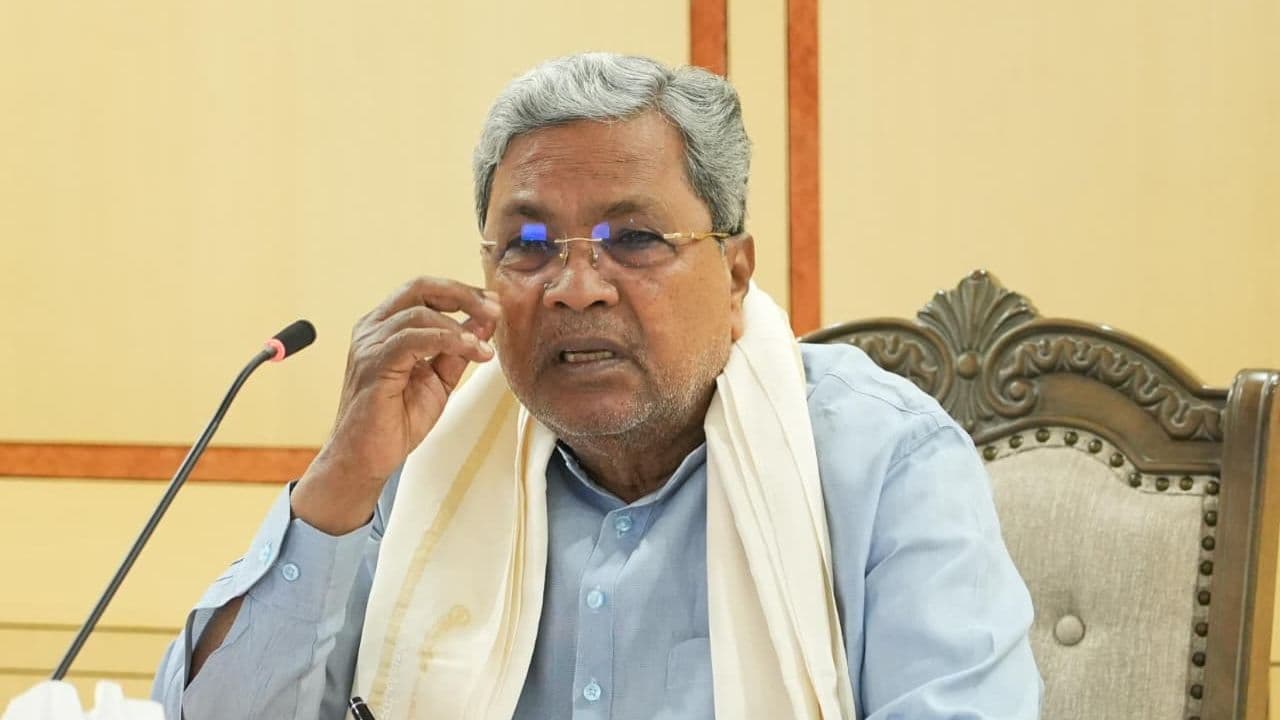
Karnataka's government has reversed a 2022 hijab ban, now allowing students to wear limited faith-based symbols like hijabs and janeu with uniforms. However, Chief Minister Siddaramaiah clarified that saffron shawls are not permitted, stating only pre-existing religious practices are allowed.
A fresh political and social debate has erupted in Karnataka after Chief Minister Siddaramaiah clarified that saffron shawls would not be permitted in schools, days after his government revoked the controversial 2022 hijab restriction order. The clarification came amid growing criticism from the BJP and threats by some right-wing groups to wear saffron shawls in educational institutions.
The Congress-led Karnataka government recently withdrew the February 2022 order introduced by the previous BJP administration, which had enforced strict uniform rules and effectively banned the hijab in classrooms. The new guidelines now allow students to wear “limited traditional and faith-based symbols” along with prescribed uniforms in schools and pre-university colleges. These include hijab, sacred thread (janeu), rudraksha beads, Shivadhara, and turbans.
However, Siddaramaiah drew a clear line on saffron shawls. Speaking to reporters in Mysuru, he said, “Saffron shawls are not allowed. Those shawls cannot be worn.” He further clarified that only practices already in existence would continue to be permitted and that “nothing new can be introduced.”
Also Read: Karnataka Hijab Row: Govt Scraps Uniform Rule, Hijab And Janeu Return To Schools
The issue quickly snowballed into a political flashpoint, with the BJP accusing the Congress government of indulging in “appeasement politics.” BJP leaders argued that classrooms should remain free from religious signalling and questioned why hijabs were allowed while saffron shawls were barred.
The hijab controversy first gained national attention in 2022 when protests erupted across Karnataka after Muslim students were denied entry into classrooms for wearing hijabs. The row later escalated into a larger debate around religious freedom, secularism, and dress codes in educational institutions.
The Siddaramaiah government’s latest move is being viewed as a significant reversal of the previous BJP government’s stance. Supporters of the decision say it restores inclusivity and protects students’ right to practice their faith, while critics fear it could reopen communal tensions in educational spaces.
Responding to criticism, Siddaramaiah maintained that the policy applies equally to all recognised religious practices already followed by students and insisted that the government’s intention was not to encourage new religious displays in schools.
