
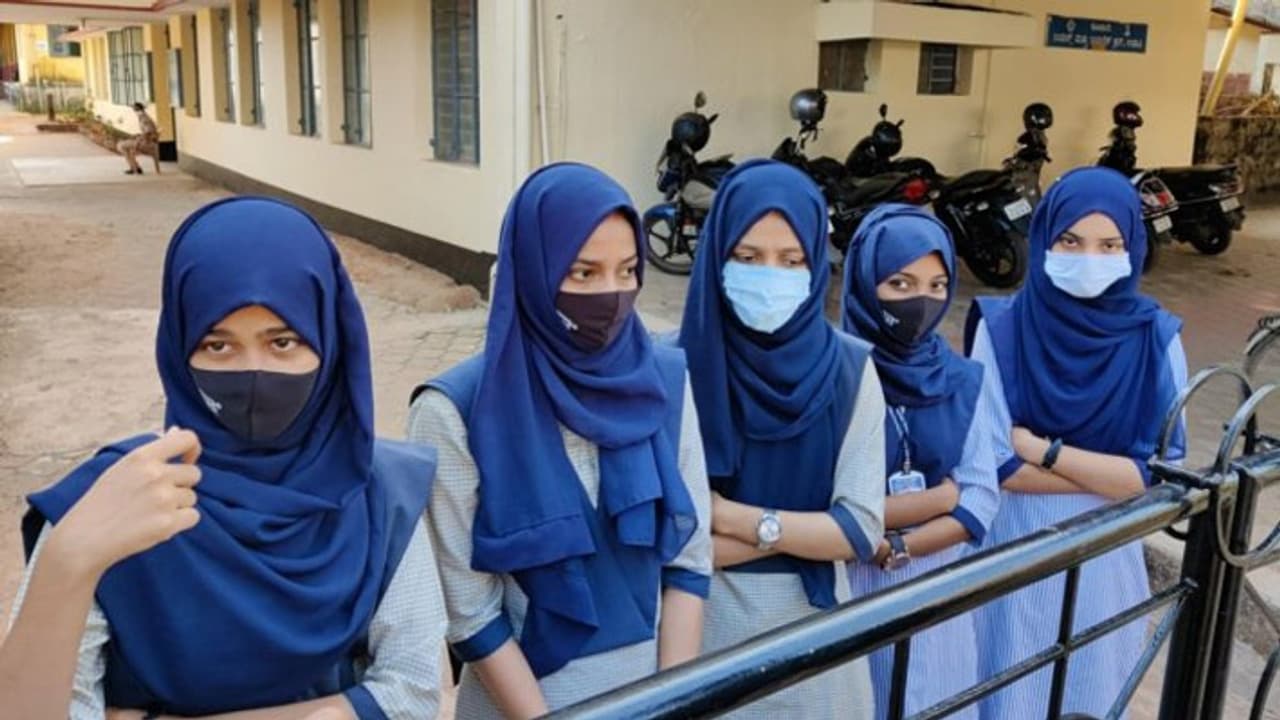
The Karnataka government has reversed a 2022 order, now allowing students in schools and pre-university colleges to wear religious symbols like the hijab and turban with their uniforms. This new policy is conditional, requiring that the symbols do not interfere with discipline, safety, or identification.
Religious Symbols Back in Schools as Govt Revokes 2022 Dress Code Order
In a major policy reversal, the Siddaramaiah-led Karnataka government has officially withdrawn the controversial 2022 uniform dress code order introduced during the BJP regime. The move allows students in government, aided, and private schools, along with pre-university colleges, to wear religious and traditional symbols alongside their prescribed uniforms.
The new order effectively removes the earlier restriction that barred visible religious identifiers in classrooms. Students can now wear symbols such as the hijab, turban, janeu, rudraksha, Shivadhara, and Peetha while attending classes and examinations.
New Clause Raises Questions Over Discipline and Identity
While revoking the strict uniform-only mandate, the government has introduced a key condition. Religious symbols will be permitted only if they do not interfere with discipline, safety, or student identification.
This caveat is expected to place fresh responsibility on school administrations, which may now have to decide where the line lies between maintaining discipline and respecting religious freedom. The ambiguity surrounding implementation could potentially trigger new debates within educational institutions.
Minister Says Student’s Distress Prompted Policy Shift
Education Minister Madhu Bangarappa revealed that a recent incident involving a student played a crucial role in the government’s decision.
According to the minister, on April 24, a student was allegedly asked to remove his janeu (sacred thread), leaving both the child and his family deeply upset. Bangarappa said religious customs — whether linked to earrings, hijab, or sacred threads — should never become obstacles to a child’s education or future.
The government has now clarified that no student should be denied entry into classrooms or examination halls for wearing permitted religious symbols.
Also Read: Karnataka defends lifting hijab ban to prioritise student's education
Opposition Hits Out as Hijab-Saffron Shawl Debate Returns
The decision has reignited political tensions across Karnataka. BJP MLA Bharat Shetty accused the Congress government of using the issue to divert attention from administrative failures.
Meanwhile, leaders from the Vishwa Hindu Parishad (VHP) argued that if hijabs are allowed, Hindu students should also be permitted to wear saffron shawls — the very demand that intensified the 2022 hijab controversy.
The earlier dispute had erupted after Muslim students sought permission to wear hijabs in classrooms, prompting counter-protests from students wearing saffron shawls. With the latest order, concerns are once again emerging over whether the state is heading toward another round of polarisation in educational spaces.
Government Cites Constitutional Values Amid Ongoing Legal Battle
The Karnataka government issued the revised order under provisions of the Karnataka Education Act, 1983. Officials said educational institutions are not merely learning centres but “constitutional spaces” where diversity and individual identity must be respected.
The government also noted that it studied dress code practices followed in Kendriya Vidyalayas before finalising the revised guidelines.
However, the larger legal battle over the hijab issue remains unresolved, with the matter still pending before the Supreme Court. Authorities have instructed officials to implement the new policy in a “secular and neutral” manner to ensure that no student faces discrimination on religious grounds.
Also Read: Karnataka govt allows religious symbols with school, college uniforms
