A comparison of public transit costs across major Indian cities reveals significant disparities in commuting expenses. For a 15-km one-way trip, commuters in India's most expensive metropolis need a monthly salary of at least Rs 70,400 to keep travel costs under 5% of their income.
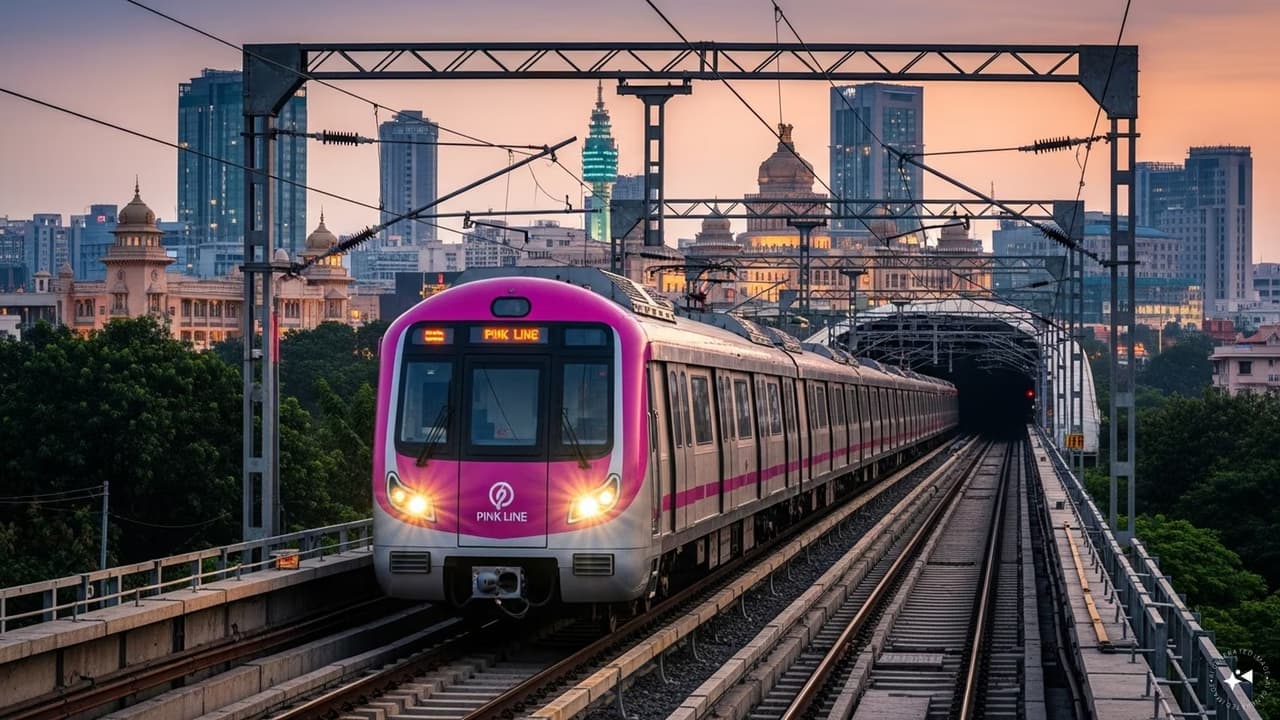
A comparison of public transit costs across major Indian cities shows that people with a lot more money need to be in Bengaluru to use the Namma Metro as their main daily transportation option. This is not the case in other major Indian cities. A person who takes the Namma Metro to commute 15 km one way needs a minimum monthly take-home pay of about Rs 70,400 to keep their daily journey costs below 5% of their net monthly earnings, according a report by The Hindu.
This makes Bengaluru, India's biggest tech hub and metropolis, the most expensive place to take the train to work, more expensive than Delhi, Mumbai, Chennai, and Kolkata.
For a daily commuter covering a 15-km one-way trip (30 km round trip) over 22 working days per month, along with a estimated 2-km last-mile connection at both ends:
Related Articles

Monthly Commute Cost: Approximately Rs 3,520.
Impact on Earnings: For someone earning Rs 20,000/month, commuting consumes nearly 18% of their monthly income.
At a Rs 50,000/month salary, metro commuting accounts for 7% of net earnings. To hit the ideal personal finance benchmark where travel costs remain ≤5% of net income, earnings must reach at least Rs 70,400 per month.
Bengaluru Vs Delhi Vs Mumbai Vs Kolkata
| City | Approx. Monthly Commute Cost (15-km One Way) |
| Delhi | Rs 2,772 |
| Mumbai | Rs 1,980 |
| Chennai | Rs 2,200 |
| Bengaluru | Rs 3,520 (Rs 70,400 / month) |
| Kolkata | Rs 1,760 |
Why Is Bengaluru Costlier Than Other Cities?
Lack of Suburban Rail Infrastructure: Cities like Mumbai and Kolkata have long-standing suburban rail networks with lower fares that help them. On the other hand, Bengaluru relies mostly on its roads and rapid transit system, but it doesn't have a suburban rail backbone to support it.
Last-Mile Connectivity Costs: Higher auto-rickshaw or feeder costs for the first and last miles of journey make workers' overall out-of-pocket travel costs much higher.
Why Is Metro Most Preferred In Bengaluru?
Even though it's more expensive, Namma Metro is still the best option for thousands of commuters in Bengaluru because the roads are so crowded and travel times are hard to predict. If you want to travel the same distance as an auto-rickshaw or cab, which can cost more than ₹14,000 a month, the metro is still faster, safer, and more reliable.