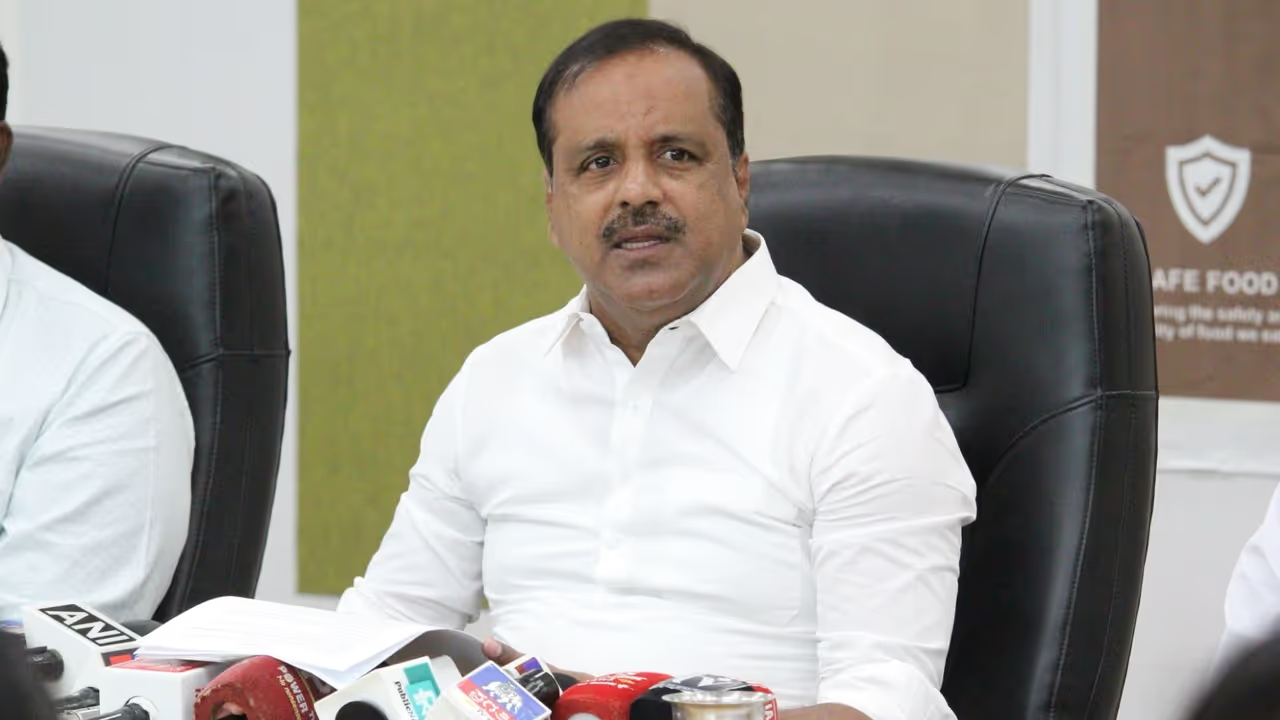
Karnataka plans to establish affordable IVF centres in four districts, starting with Lady Goschen Hospital in Mangaluru. Each centre is expected to cost ₹5 crore, with operations likely to begin in 2–3 months.
The Karnataka government has decided to establish In Vitro Fertilisation (IVF) centres in government hospitals across four districts to make infertility treatment more accessible and affordable, particularly for people from economically weaker sections. Health and Family Welfare Minister UT Khader announced that the first centre will be established at Lady Goschen Hospital in Mangaluru, followed by facilities in Bengaluru, Mysuru and either Hubballi or Belagavi.
The initiative aims to support couples who cannot afford the high cost of fertility treatment at private hospitals and ensure that quality reproductive healthcare reaches a wider section of society. Each centre is expected to cost approximately ₹5 crore, and the project is likely to be launched within the next two to three months.
IVF Centres To Be Established In Four Districts Speaking to reporters on Saturday, Minister U.T. Khader said the government had taken the decision after recognising the difficulties faced by couples seeking infertility treatment, particularly those from economically weaker backgrounds. Many individuals have been waiting for access to such medical services and have also faced social stigma associated with infertility.
Related Articles

The first government IVF centre will come up at Lady Goschen Hospital in Mangaluru. The government subsequently plans to establish similar facilities in Bengaluru and Mysuru, with the fourth centre proposed in either Hubballi or Belagavi.
IVF Centres To Be Established In Four Districts
Speaking to reporters on Saturday, Minister UT Khader said the government had taken this decision after recognising the difficulties faced by couples seeking infertility treatment, particularly those from economically weaker backgrounds. Many people have been waiting for access to such medical services and have also faced social stigma associated with infertility.
The first government IVF centre will be established at Lady Goschen Hospital in Mangaluru. The government subsequently plans to set up similar facilities in Bengaluru and Mysuru, while the location of the fourth centre is yet to be decided between Hubballi and Belagavi.
The initiative is expected to reduce the financial burden on couples who would otherwise have to depend on private hospitals for fertility treatment.
Government Aims To Make IVF Treatment Affordable
The Minister pointed out that IVF treatment at private hospitals can cost several lakhs of rupees, making it unaffordable for many families. Through the proposed government facilities, the state aims to provide quality infertility treatment at affordable rates.
The project is currently in its final stages of preparation. Each IVF centre is expected to require an investment of approximately ₹5 crore. An expert committee has also been constituted to oversee the initiative and facilitate its implementation.
The government expects the centres to become operational within the next two to three months.
Private Hospitals Did Not Come Forward Under AB-ARK Scheme
Khader explained that provisions for infertility treatment had previously been included under the AB-ARK (Arogya Bhagya/Arogya Karnataka) scheme. However, private healthcare providers did not come forward to offer the required services under the initiative.
Following this, the government decided to establish IVF facilities directly within government hospitals instead of relying on private providers.
The move is expected to expand access to assisted reproductive services and provide financial relief to couples who cannot afford treatment in the private healthcare sector.
Centre Caps Prices Of 137 Cancer-Related Drugs
Responding to a question about the pricing of essential medicines, the Minister also spoke about the Union Government's decision to regulate the prices of cancer-related drugs.
He said the Union Ministry of Health determines which medicines are classified as cancer-related. Approximately 137 such drugs have been identified, and a 30% price cap has been imposed on them.
Instructions have been issued to finalise the revised prices by November, and the necessary procedures are currently underway.
The move is aimed at regulating the cost of essential cancer medicines and reducing the financial burden on patients undergoing treatment.