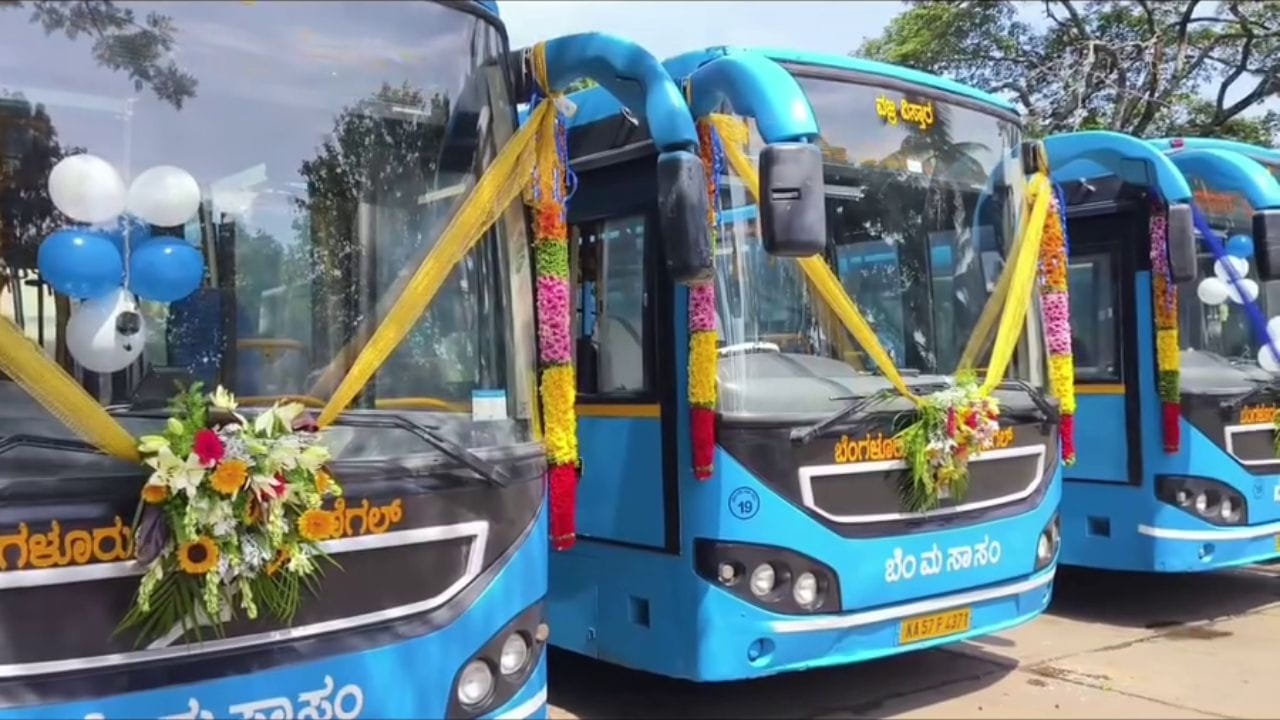
BMTC has invited tenders for 200 new mini-buses in Bengaluru to improve last-mile connectivity to Namma Metro stations. The proposed conductorless buses will feature digital payment facilities.
Bengaluru commuters could soon benefit from improved public transport connectivity, particularly in areas where large buses find it difficult to operate. The Bengaluru Metropolitan Transport Corporation (BMTC) has invited tenders for 200 new mini-buses to strengthen last-mile connectivity to Namma Metro stations and improve access to densely populated neighbourhoods. The proposed fleet will comprise 7-metre and 11-metre non-AC, BS-VI diesel buses. Designed to operate without conductors, the buses are expected to feature digital ticketing and payment facilities, making boarding and travel more convenient for passengers.
BMTC Invites Tenders For 200 Non-AC Mini-Buses
BMTC has invited bids for 200 non-AC, BS-VI diesel mini-buses as part of its efforts to improve public transport services across Bengaluru. The proposed fleet will include 100 buses measuring 7 metres in length and another 100 measuring 11 metres.
The shorter buses are intended to navigate narrow roads, older neighbourhoods and congested residential areas where conventional BMTC buses may face operational challenges. The longer variants could be deployed on routes with higher passenger demand.
Related Articles

The tender process also requires the submission of designs covering bus layouts, seating arrangements, tyre specifications and door placement. The designs will be reviewed and approved as part of the procurement process.
Conductorless Buses To Feature Digital Payment Facilities
One of the key features of the proposed mini-buses is their conductor less operating system. Passengers are expected to use digital ticketing and payment facilities instead of relying on conductors to issue tickets and collect fares.
According to the proposal, passengers may be able to pay using digital payment platforms such as Google Pay, PhonePe and Paytm, as well as National Common Mobility Card (NCMC) cards.
Tap-to-pay terminals are proposed near the bus doors to make fare payment and ticket validation easier. The system is expected to reduce boarding time and make daily commutes more convenient.
Mini-Buses To Improve Metro Feeder Services
The proposed mini-buses are primarily intended to strengthen Metro feeder services in Bengaluru. They will help passengers travel between Namma Metro stations and nearby residential areas, commercial centres, IT parks, markets and hospitals.
The buses are also expected to connect terminal Metro stations with surrounding neighbourhoods. Their smaller size could make it easier to operate on narrow roads and in densely populated localities where larger buses may not be suitable.
Improved feeder services could encourage more commuters to use public transport instead of depending on private vehicles or auto-rickshaws to reach Metro stations.
What Are The Technical And Design Features Of The New BMTC Mini-Buses?
The proposed fleet will consist of two bus sizes to cater to different road conditions and passenger requirements.
The 7-metre buses are intended for narrow roads, older neighbourhoods and routes with frequent sharp turns. The 11-metre variants could serve routes with higher passenger volumes and wider roads.
Since the buses will operate without conductors, their internal layouts will be particularly important. The placement of entry and exit doors, step heights, seat spacing and grab handles for standing passengers will be considered to ensure passenger safety and smooth boarding.
All 200 buses are proposed to be non-AC, BS-VI diesel models. This choice is expected to support cost-effective maintenance and reliable daily operations while helping BMTC manage operating costs.
How Will The New Mini-Buses Improve Last-Mile Connectivity In Bengaluru?
Last-mile connectivity remains an important part of Bengaluru's public transport network. While Namma Metro connects several parts of the city, commuters often need additional transport to reach their homes, workplaces and other destinations from Metro stations.
The proposed mini-buses could bridge this gap by providing feeder services to residential neighbourhoods, IT parks, markets and hospitals. They may also help reduce dependence on private two-wheelers, cars and auto-rickshaws for short journeys between Metro stations and nearby destinations.
If implemented effectively, the new fleet could improve access to public transport, make Metro journeys more convenient and strengthen BMTC's role in Bengaluru's integrated urban transport network.