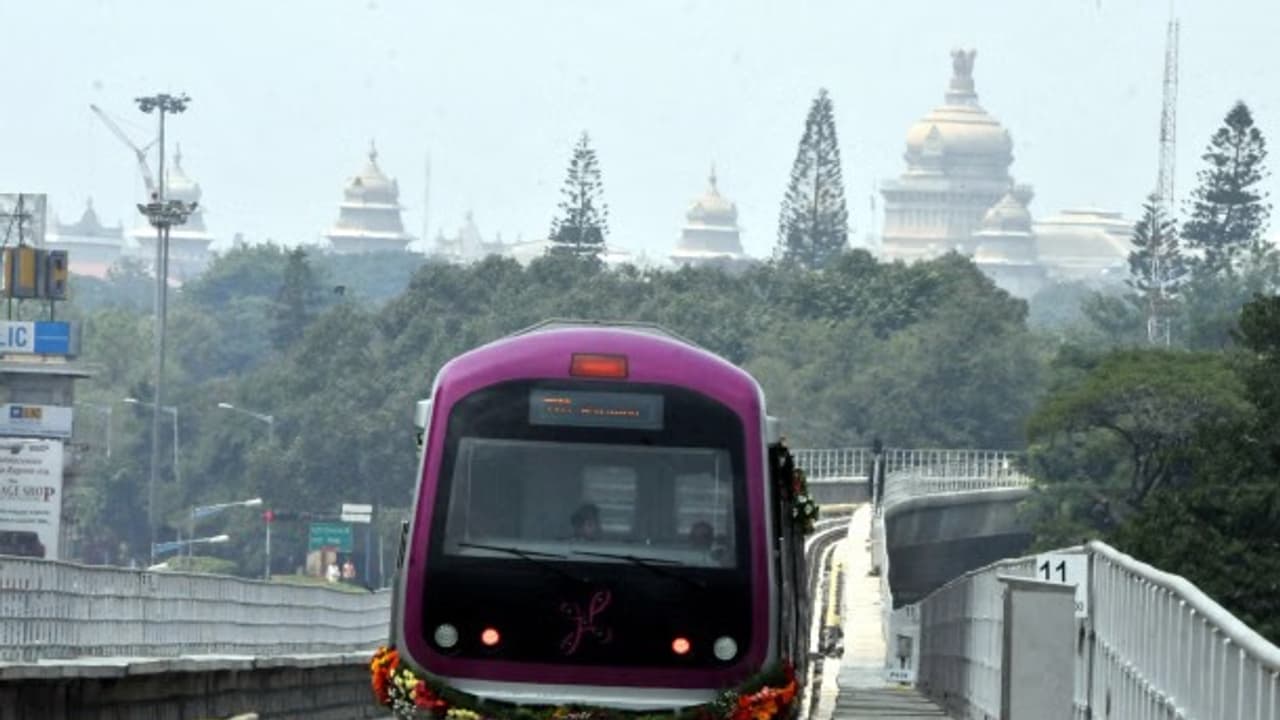
Bengaluru's Namma Metro has reported around 15 technical glitches over the past year across the Green, Purple and Yellow Lines. With nearly 11 lakh daily passengers affected by disruptions, BMRCL is planning alternative transport and maintenance measures.
Frequent technical glitches on Bengaluru's Namma Metro have left commuters frustrated, with around 15 disruptions reported over the past year across the Green, Purple and Yellow Lines. The repeated breakdowns have affected thousands of daily passengers who depend on the metro for faster and more reliable travel across the city. With around 11 lakh passengers using Namma Metro every day, commuters are raising concerns over maintenance and calling for a more permanent solution to recurring technical problems.
The Bengaluru Metro Rail Corporation Limited (BMRCL) has reportedly taken steps to minimise the impact of such disruptions, including coordinating with the Bengaluru Metropolitan Transport Corporation (BMTC) to arrange additional buses when metro services are affected.
Technical Glitches Reported On Green, Purple And Yellow Lines
Technical problems have been reported across multiple Namma Metro corridors, including the Green, Purple and Yellow Lines.
Related Articles

The Green Line, which connects Madavara and Silk Institute, has reportedly witnessed the highest number of technical glitches. The Purple Line, which runs between Whitefield and Challaghatta, and the Yellow Line, connecting R.V. Road and Bommasandra, have also experienced disruptions.
When technical issues occur, train services can be delayed or temporarily suspended, forcing passengers to wait at stations for extended periods. These disruptions are particularly inconvenient for daily commuters, office-goers and students who rely on Namma Metro to reach their destinations on time.
BMRCL Plans Alternative Transport Arrangements
To reduce passenger inconvenience during metro disruptions, BMRCL has held discussions with BMTC on providing alternative transport.
Under the proposed arrangement, BMTC officials will be informed as soon as a metro service is disrupted. Additional BMTC buses could then be deployed along the affected route, depending on the situation and passenger demand.
BMRCL is also considering a short-loop train operation when required. Under this arrangement, trains would operate between stations on either side of the affected section instead of suspending services across the entire corridor.
Officials Asked To Replace Faulty Spare Parts
BMRCL has also directed senior officials to ensure that technical problems are reported promptly and that necessary spare parts are replaced without delay.
Officials said measures are being taken to minimise inconvenience to passengers whenever technical issues occur. The focus is also on identifying and addressing problems before they result in major disruptions to train services.
Passengers Raise Maintenance Concerns
Despite the alternative arrangements being planned, frequent technical glitches have left several passengers dissatisfied. Some commuters have questioned whether inadequate maintenance could be contributing to the recurring problems.
With Namma Metro now serving around 11 lakh passengers every day, commuters have called for greater priority to be given to regular maintenance, technical inspections and the timely replacement of ageing or faulty components.
For thousands of Bengaluru residents, the metro is a crucial alternative to the city's congested roads. Frequent disruptions not only cause delays but can also undermine passenger confidence in the reliability of the public transport network.
Need For A Permanent Solution
While deploying additional BMTC buses and introducing short-loop services could provide temporary relief, passengers are seeking a long-term solution to recurring technical problems.
With Namma Metro continuing to expand and passenger numbers rising, regular maintenance, timely technical inspections and preventive measures will be crucial to ensuring reliable services. Commuters expect BMRCL to address the underlying causes of the glitches rather than relying only on alternative arrangements after disruptions occur.