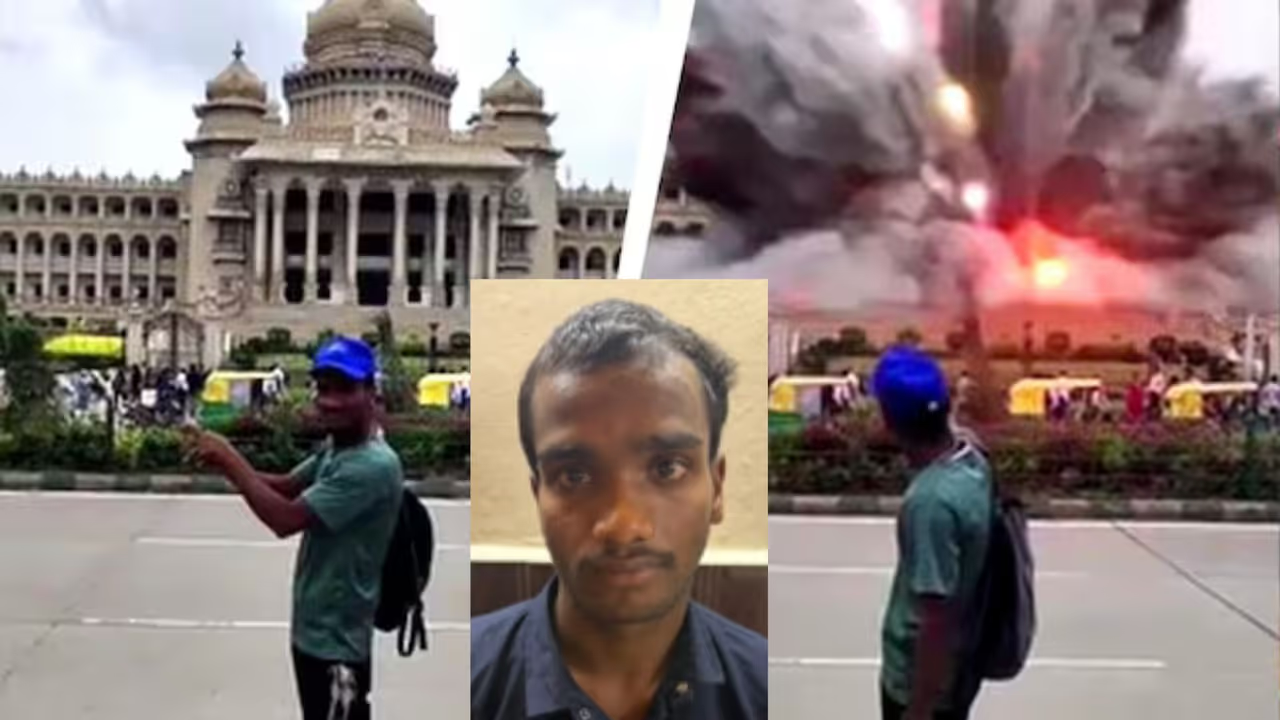
A migrant worker from Bihar has been arrested in Bengaluru for allegedly posting an AI-generated video falsely depicting a bomb blast at Vidhana Soudha. The video circulated on Instagram, raising concerns about online misinformation.
An AI-generated video falsely depicting a bomb blast at Karnataka’s Vidhana Soudha in Bengaluru has raised concerns about the growing misuse of artificial intelligence on social media. Police have arrested a 25-year-old man from Bihar for allegedly creating and sharing the misleading video on Instagram. The incident highlights the dangers of manipulated digital content, the spread of misinformation and the potential consequences of using AI tools to create fabricated scenes that could trigger public panic.
The accused, identified as Hazarat Ali, is a native of Koshkipur in Araria district of Bihar. According to the police, he moved to Bengaluru a few months ago and worked in pipe-related jobs. He allegedly posted the video through the Instagram account jnx__king__h_g, falsely claiming that Vidhana Soudha had been blown up in a bomb attack.
AI-Generated Video Creates Concern
According to the available information, Ali allegedly recorded a video of himself in front of Vidhana Soudha and used artificial intelligence tools to edit it to depict a simulated explosion. The manipulated clip portrayed a fictional blast at the seat of Karnataka’s state legislature, making the footage appear alarming to viewers.
Related Articles

The video circulated on social media, highlighting how easily AI tools can be misused to create realistic but misleading visuals. Such content can confuse the public, spread fear and undermine trust in authentic news and digital information.
Police Register FIR After Social Media Monitoring
The Vidhana Soudha police registered a First Information Report (FIR) on Tuesday after a social media monitoring officer came across the video. The police subsequently arrested Ali in connection with the alleged creation and circulation of the misleading clip.
The case highlights the role of social media monitoring in identifying potentially harmful online content. Authorities face growing challenges in addressing digital material that may cause public alarm or falsely portray threats to important government buildings.
Misuse of AI Raises Questions About Online Responsibility
Artificial intelligence has made video editing and content creation more accessible than ever. While these tools offer significant benefits in areas such as education, entertainment and communication, their misuse can have serious consequences when fabricated scenes are presented as real events.
AI-generated images and videos can also be used to spread misinformation, impersonate individuals or damage reputations. Without proper context or verification, viewers may struggle to distinguish manipulated content from genuine footage.
Social Media Users Call for Accountability
The incident has renewed discussions about accountability for misleading content shared online. While freedom of expression remains important, fabricating a terror-related incident involving a prominent government building can create unnecessary fear and confusion.
The case also underscores the importance of verifying videos before sharing them and reporting suspicious content through appropriate channels. Social media platforms, users and law enforcement agencies all have a role to play in limiting the spread of manipulated material.
Need for Greater Awareness of AI-Generated Content
The alleged Vidhana Soudha blast video serves as a reminder that realistic-looking digital footage cannot always be taken at face value. Greater public awareness, responsible use of AI tools and timely action against unlawful content are essential to prevent misinformation from spreading.
As AI technology continues to evolve, the challenge for authorities and society will be to encourage innovation while ensuring that digital tools are not misused to create public panic or mislead citizens.