Bengaluru’s Greater Bengaluru Authority (GBA) is exploring AI-powered Digital Twin technology to improve civic planning. The system could help officials monitor roads, drains, water pipelines and other infrastructure to identify potential problems early.
The Greater Bengaluru Authority (GBA) is exploring the use of artificial intelligence (AI)-powered Digital Twin technology to identify, analyse and address the city’s civic and infrastructure challenges. The technology could help officials study urban infrastructure through detailed digital models, monitor existing conditions and identify potential problems before they escalate. The initiative aims to support data-driven planning and improve the management of Bengaluru’s roads, drainage systems, water pipelines and other public infrastructure.
The GBA organised a workshop and seminar at Town Hall on Monday to discuss the implementation of the technology. Engineers from RV College of Engineering joined GBA engineers to explore how Digital Twin technology could be adopted for urban infrastructure planning and civic administration.
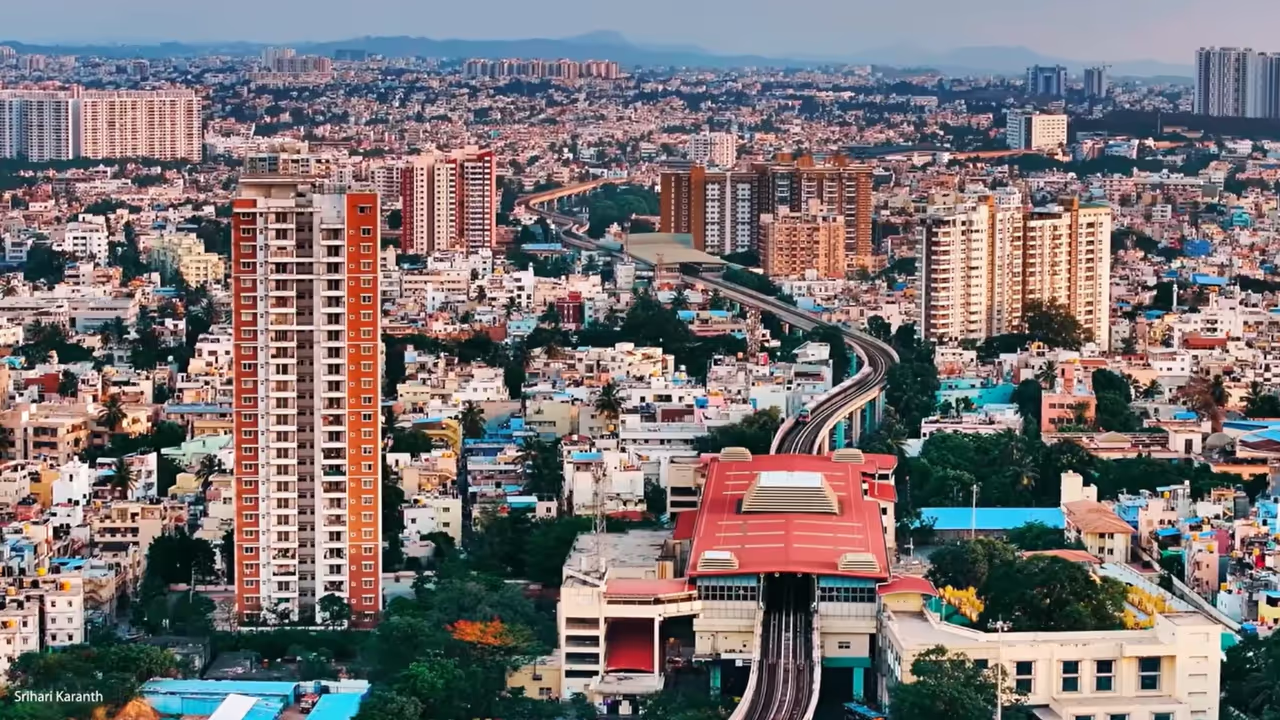
As part of the proposed initiative, officials plan to collect and integrate three-dimensional (3D) digital data on the city’s infrastructure, including roads, buildings, drains, drinking water pipelines, power grids, streetlights, lakes and parks. According to the GBA, this information could help officials monitor infrastructure, analyse data and identify potential problems in advance.
Related Articles

Using Digital Twin Technology for Civic Planning
The Central Government has issued guidelines on the use of artificial intelligence to promote citizen-centric governance. Against this backdrop, South City Corporation Commissioner K.N. Ramesh explained that the civic body was taking steps towards adopting Digital Twin technology.
The Traffic Police department is already using the technology. B-SMILE CEO Nitish highlighted its potential to help officials plan infrastructure projects more scientifically through data analysis and 3D modelling.
South City Corporation Chief Engineer Basavaraj Kabade explained the technology’s practical applications. He said Digital Twin technology could be particularly useful in planning white-topping works, flyover construction, flood management, streetlight installation, footpath improvements, junction development, stormwater drain maintenance and disaster management.
What Exactly Is Digital Twin Technology?
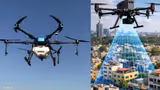
A Digital Twin is a virtual representation of a physical asset or infrastructure, created using digital data. In an urban setting, it can provide a detailed 3D model of roads, drainage networks and other infrastructure, helping officials understand how different systems function and interact.
For instance, if a road frequently experiences waterlogging, officials could use the Digital Twin to examine its elevation, slope, drainage system, rainfall data and water flow. Analysing these factors could help identify where water accumulates and determine the infrastructure improvements needed to address the problem more effectively.
By integrating data from different civic systems, Digital Twin technology could help officials make informed decisions, improve infrastructure planning and address recurring urban problems more efficiently.