A stunning discovery from asteroid Bennu could rewrite the story of life's origins. Learn how amino acids formed in the extreme cold of space, not warm water.
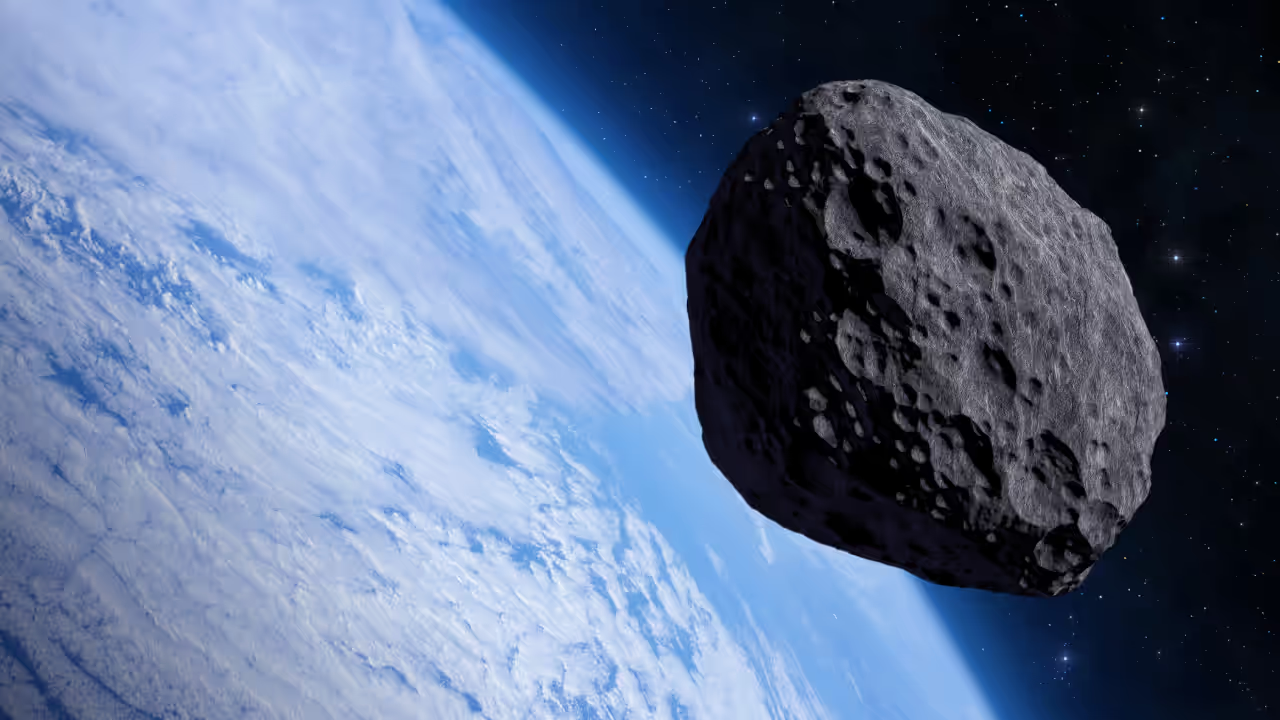
Scientists have discovered how the fundamental components of life were formed on an ancient asteroid, a finding that may alter our understanding of the origins of life. In 2023, NASA’s OSIRIS-REx mission returned 121.6 grams of dust and rock from an asteroid named Bennu. This asteroid was formed around 4.6 billion years ago and orbits the Sun at a distance much farther than Earth. When scientists analyzed the samples, they found amino acids, small molecules that link together to create proteins, which are necessary for all living organisms.
New Origin Clues
Previously, many scientists thought amino acids could only form in warmer environments where liquid water was available. However, researchers at Pennsylvania State University found that the amino acids on Bennu formed in a completely different way. Their findings show that these molecules developed in extremely cold conditions, as ice in space was exposed to radiation during the early stages of the Solar System.
Key Molecule Glycine
The Bennu samples also included sugars, an unusual sticky material, and various types of amino acids. The team paid special attention to glycine, the simplest amino acid. Glycine is significant because it can combine with other molecules to create more complex amino acids and eventually proteins. Finding glycine in space supports the idea that some of the essential building blocks of life may have formed long before Earth was capable of supporting life.
Related Articles

Life From Space
To determine how these molecules were created, researchers looked at small variations in their atoms, called isotopes. They compared the Bennu samples with material from the Murchison meteorite, which landed in Australia in 1969. The two sets of samples showed clear chemical differences, indicating they were formed in different areas of the Solar System under very different conditions.
This discovery shows that amino acids can form in multiple ways, which suggests that the raw materials for life may be common in space. It also raises the possibility that these materials were delivered to planets like Earth by icy asteroids millions of years ago.
Source: Daily Mail - Science & Tech