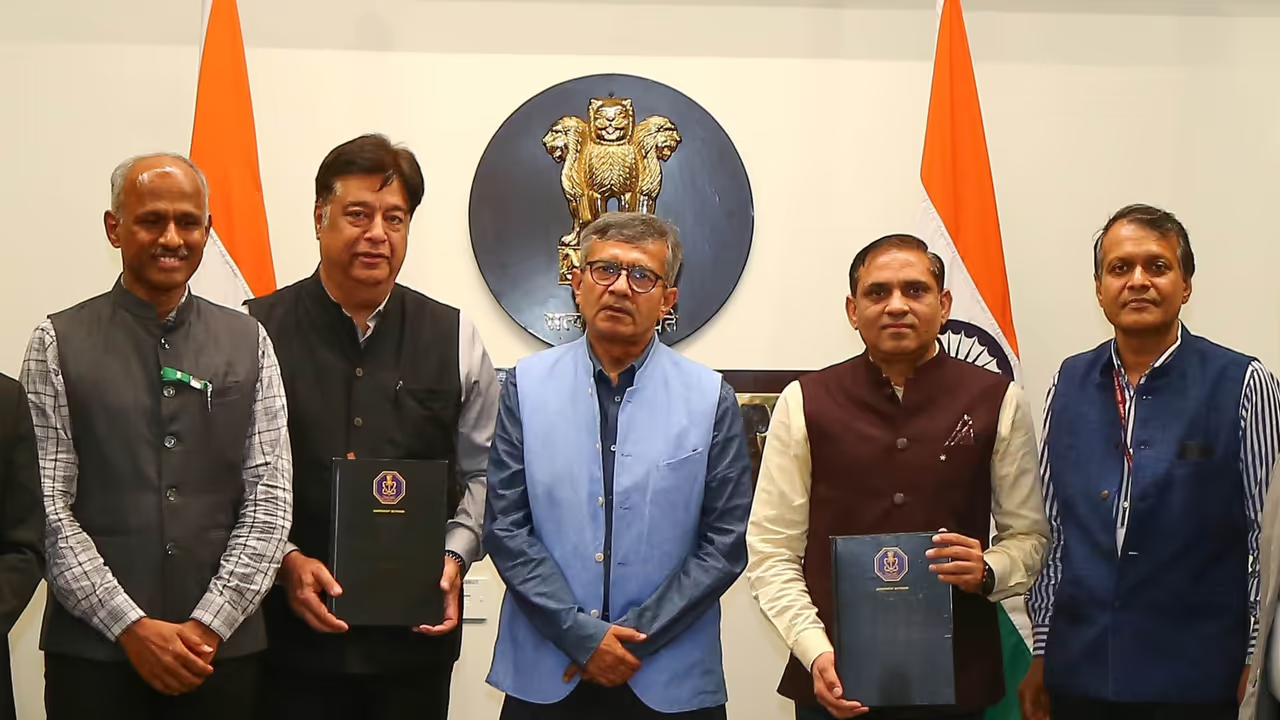
The Ministry of Defence has signed a ₹449 crore contract for 20 ECGNSS jammers for the Indian Navy. The indigenous systems can disrupt and spoof enemy satellite navigation signals, strengthening naval operations in complex threat environments.
New Delhi: The Ministry of Defence on Wednesday inked a contract with Bengaluru-based Accord Software and Systems Private Limited (ASSPL), for the procurement of 20 enhanced capability global navigation satellite system (ECGNSS) jammers for the Indian Navy at a cost of Rs 449 crore.
As per the contract, the system should have minimum 75 percent indigenous content.
The system’s capabilities include degrading the satellite signal acquisition and tracking performance of the adversary GNSS receiver and signal spoofing or deceptive jamming.
Related Articles

A defence official said that its entry into service would pave the way for safe operations by the ships of the Indian Navy in a multi-threat environment.
“It marks a critical milestone in the ongoing efforts to bolster defence capabilities and indigenise advanced military technology.”
What Is an ECGNSS Jammer?
Modern warfare increasingly relies on satellite-based navigation. Systems like GPS, Russia’s GLONASS, and China’s BeiDou guide everything from warships and missiles to troop movements.
GNSS jammers work by overwhelming satellite navigation receivers with powerful radio signals that drown out signals from these satellite constellations, rendering the receiver unable to calculate position or time accurately.
The ECGNSS Jammer takes this a step further. Beyond simple signal disruption, GNSS spoofing maliciously manipulates a user’s position and time data and jamming is often used first to force the receiver out of its satellite signal lock, after which false signals are fed to mislead the target system entirely.
In practical terms, these systems are capable of degrading an adversary’s satellite signal tracking, and can also execute deceptive jamming, making enemy platforms believe they are somewhere they are not.
In general warfare contexts, jamming delivers denial of service while spoofing aims at deception, tricking a receiver into computing a false navigation solution.
For the Indian Navy, operating in complex, multi-threat maritime environments, such capabilities are critical.