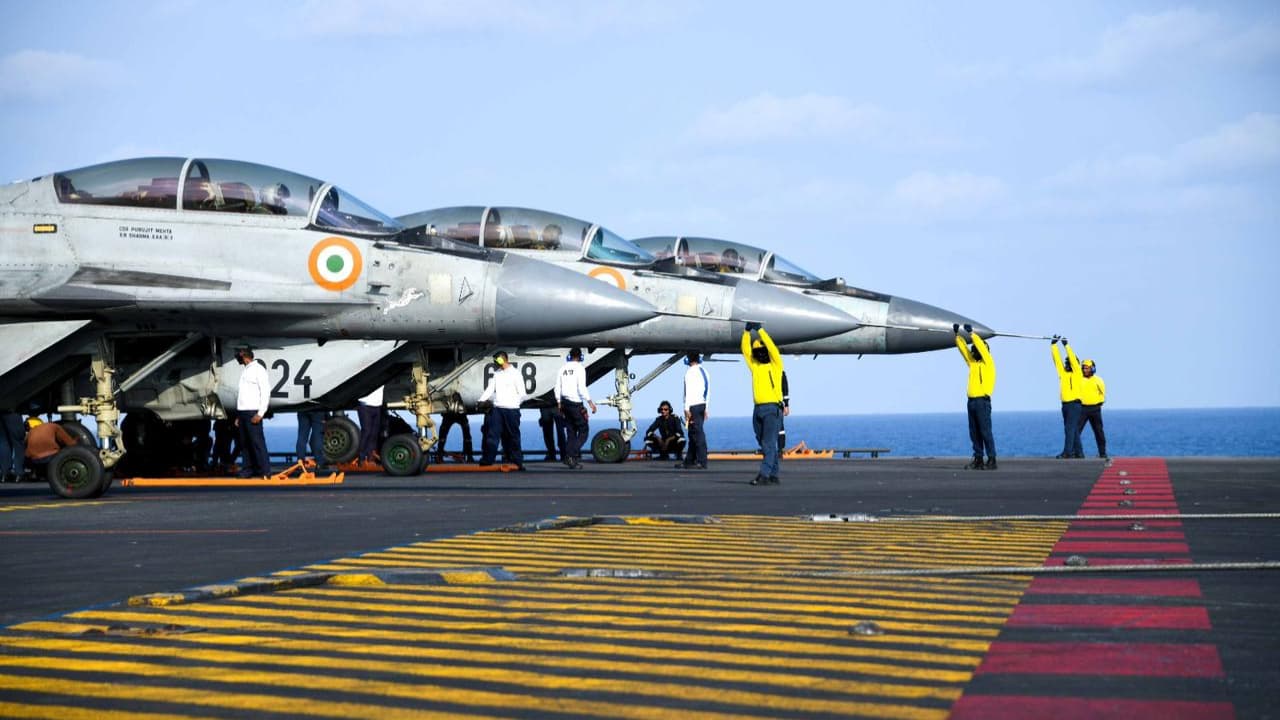
The Indian Navy has invited domestic defence firms to develop and manufacture indigenous 80mm aero rockets for its MiG-29K fleet. The move aims to reduce import dependence and strengthen the government's Atmanirbhar Bharat defence initiative.
New Delhi: The Indian Navy has formally invited domestic defence companies to design and manufacture an 80-mm aero rocket, an unguided air-to-ground weapon currently imported from abroad. India looks to cut its dependence on foreign suppliers for frontline ammunition.
The rocket is used aboard MiG-29K/KUB carrier-based fighter jets, Russia-origin twin-engine aircraft that serve as the strike force on INS Vikramaditya, India’s only operational aircraft carrier.
Launched from B8M-1 pod launchers, the weapon can pierce armoured vehicles while scattering lethal fragments against softer targets such as radar stations, parked aircraft, and infantry.
Related Articles

The navy has indicated it plans to procure 273 live rockets and 2,400 practice rounds once a prototype clears development and testing. Induction is tentatively scheduled for 2026-27.
“If inducted, the home-grown rocket must last at least 15 years and work in temperatures ranging from -60°C to +60°C – covering everything from Arctic-adjacent high-altitude operations to tropical naval conditions.”
According to the Expression of Interest (EoI) issued last week, the complete rocket weighs 11.3 kg, measures roughly 1.54 metres in length, and reaches a speed of 600 metres per second.
Its effective firing range should be 1.3– 4.0 km. The 0.9-kg explosive warhead can punch through 400-mm of armour at a direct angle and produces at least 400 metal fragments – each weighing about 3 grams – on detonation.
The rocket must be fully sealed for use at altitudes of up to 20,000 metres and certified to operate from aircraft flying as high as 17,500 metres. A practice variant with identical flight characteristics but no warhead is also required for pilot training.
The move is the latest in a series of steps by the armed forces to wean themselves off imports for battlefield consumables.
Under the government’s Atmanirbhar Bharat policy, defence procurement rules now favour domestically developed systems, and both the Army and Air Force have run similar indigenisation drives for rockets, missiles, and ammunition in recent years.