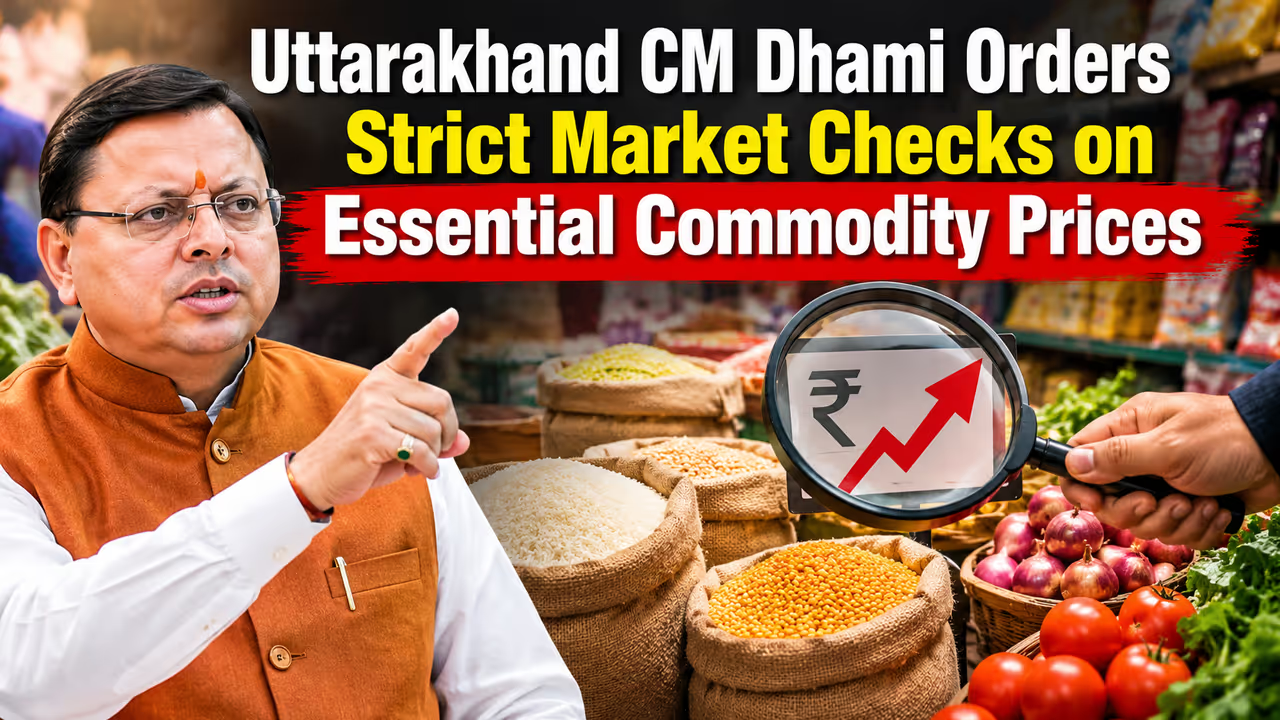
Uttarakhand CM Pushkar Singh Dhami has ordered strict monitoring of essential commodity prices, stock and supply, with regular market inspections and action against hoarding, black marketing and overcharging.
There are plans by the government of Uttarakhand to tighten the regulation of prices of essential commodities. The chief minister of Uttarakhand, Mr Pushkar Singh Dhami, has instructed the top-ranking officers of the government to keep an eye on the availability and prices of essential commodities in the state. The idea behind this is to make sure that people buy essential commodities at regulated prices.
The chief minister has also instructed authorities to crack down on the practice of black marketing, hoarding, and profiteering. Authorities should not allow traders to create artificial shortage and charge exorbitant prices from the consumers.
Essential Commodities in Uttarakhand: Prices and Availability to be Monitored Closely
The government authorities like Food and Civil Supplies department will have to keep an eye on the market. The authorities will need to ensure that there is sufficient availability of essential commodities and that traders are not using artificial scarcity to charge excessive prices.
Related Articles

Government will monitor changes in demand and supply. If there is a sudden rise in demand for certain essential commodities or supplies are disrupted at certain places, then authorities will need to respond immediately.
Price Control Uttarakhand: Measures Taken to Curb Hoarding & Black Market Practices
CM Dhami has clearly stated that there must not be any artificial shortage created by traders or businessmen. Hoarding, black marketing, and other activities leading to undue profiteering shall be closely monitored.
Holding back the stock may lead to reduced availability and hence increased prices. It is expected from the administration to detect such situations and act before consumers end up paying exorbitant prices for essential commodities.
Order to Inspect Markets Across Districts
Orders have been passed to district administrations for conducting market inspection on a routine basis. While conducting these inspections, both prices and availability of the stock with traders will be seen.
It is also required from the authorities to check the difference between prescribed/justifiable prices and market prices. Complaints related to overcharging will also be looked into immediately.
Market inspection will help authorities determine whether a particular commodity is indeed in shortage or availability of the commodity is being artificially reduced although there is enough stock available.
Monitoring Demand and Supply Receives Priority
Changes in the demand-supply equation can also have an effect on the market prices. As a result, the authorities have been instructed to continuously monitor the factors.
In cases where demand increases, there would be a requirement for the departments to ensure sufficient supply. In case of any decrease in the supply levels in a particular area, necessary steps need to be taken by the authorities.
Protecting Households from Budgetary Pressures
CM Dhami has stated that increased prices of essential commodities can have an impact on the budget of households. It can lead to pressure on the consumers.
Therefore, the emphasis of the state government in this context would be on improving the effectiveness of price monitoring and enforcement processes. Regular inspection of stocks and taking action against complaints would be considered crucial.
In general, it needs to be noted that the government has clearly indicated that monitoring of the market has to go beyond mere paper works. The district authorities have to be involved on ground so that any hoarding or black marketing practices do not result in additional burden for the consumers.