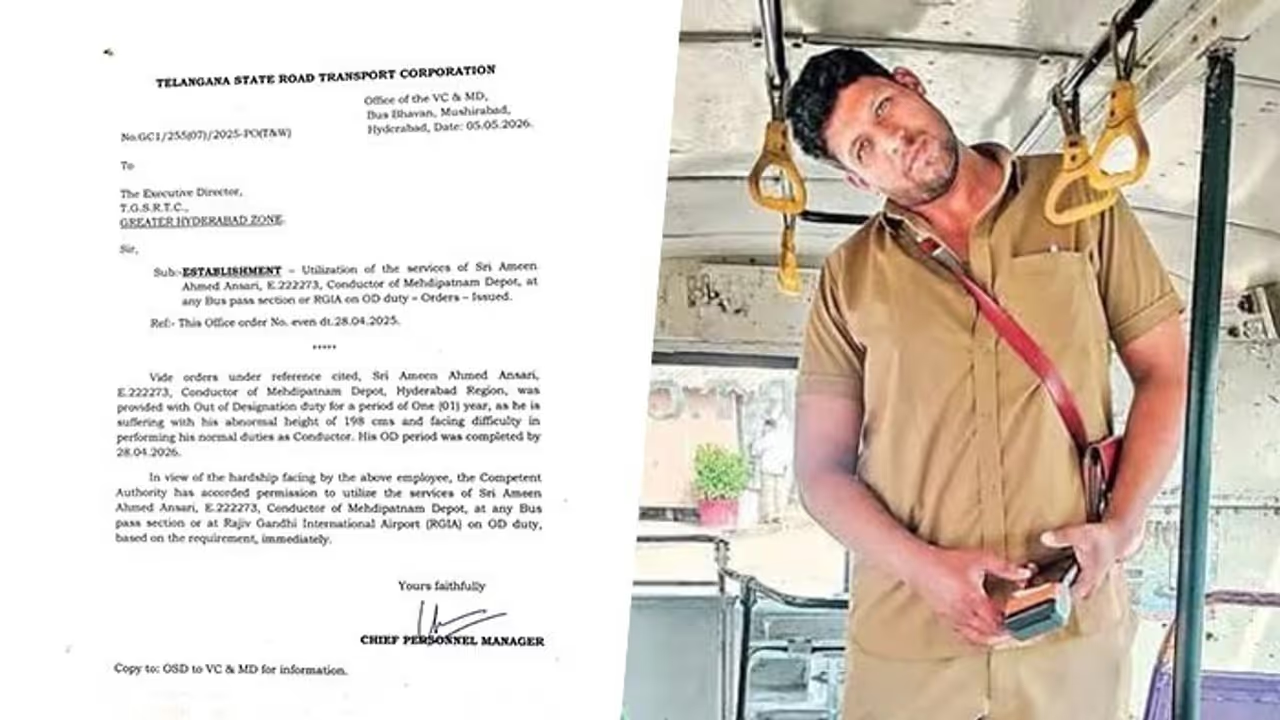
A 6-foot-6-inch TGSRTC conductor, Ameen Ahmed Ansari, has been reassigned to alternative duties after his height made it physically difficult to work inside buses. This decision came after he experienced severe neck and back pain, prompting the corporation to place him on "Out of Designation" duty.
The Telangana State Road Transport Corporation (TGSRTC) has reassigned a conductor to alternative duties after his unusual height made it difficult for him to carry out regular work inside buses. Ameen Ahmed Ansari, a conductor assigned to the Mehdipatnam depot, was allowed to continue working under Out of Designation (OD) duty by an official order issued on May 5 from the corporation's headquarters at Bus Bhavan in Mushirabad, Hyderabad.
Ansari, who stands 198 centimetres (6 feet 6 inches) tall, was previously placed on OD duty for a year after it was determined that he could not safely carry out his usual duties inside RTC buses. It was physically taxing for him since conductors must routinely navigate tight aisles and work in situations with little headroom.
But Ansari went back to his normal position when his original OD duty time expired on April 28 and was not immediately extended. Because he had to bend all the time while working inside the buses, he had serious neck and back discomfort during this time.
Related Articles

TGSRTChas now immediately resumed his OD duties in light of his condition and the difficulties caused by his height. According to the new instruction, depending on operational needs, his services may be used in positions that are more physically comfortable for him, including at the Rajiv Gandhi International Airport or Bus Pass Sections.
The ruling sparked online discussions on employee welfare and workplace flexibility, with many pointing out how employment roles—particularly in public transportation—are sometimes created with typical physical assumptions that might not be suitable for everyone.
A number of people praised the company's action, seeing it as a useful illustration of meeting worker needs without sacrificing output. The case has also highlighted the significance of ergonomics in public sector employment, with some proposing that role flexibility and infrastructure should change to better accommodate employees with a range of physical characteristics.