
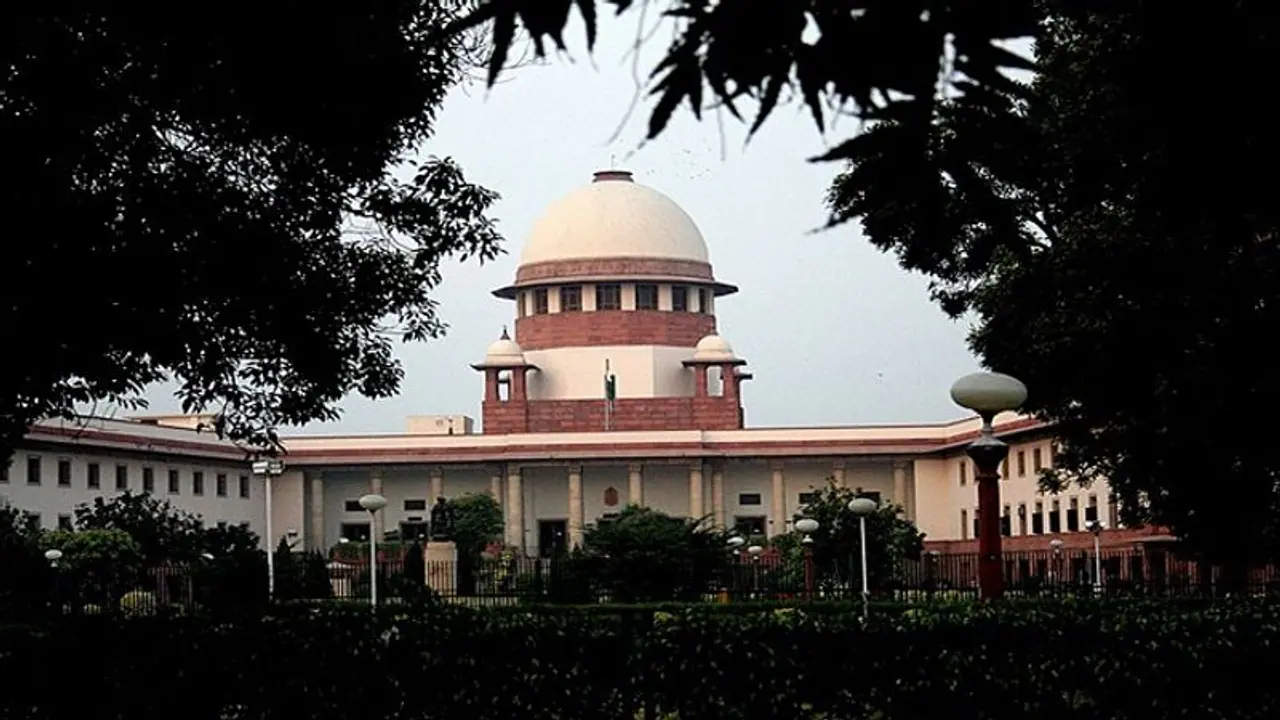
On the issue of CAA alone, a bench comprising Chief Justice Uday Umesh Lalit, justices S Ravindra Bhat and Bela M Trivedi has scheduled a hearing on October 31 for 232 petitions, mostly PILs. The bench led by CJI Lalit had previously said that the CAA petitions would be referred to a three-judge bench.
Supreme Court is scheduled to hear around 240 PILs, including a large batch of petitions challenging the constitutional validity of the contentious Citizenship (Amendment) Act (CAA), on Monday, October 31, 2022, when it reopens after a nine-day Diwali vacation.
On the issue of CAA alone, a bench comprising Chief Justice Uday Umesh Lalit, justices S Ravindra Bhat and Bela M Trivedi has scheduled for hearing 232 petitions, mostly PILs, on October 31.
Earlier, the bench headed by CJI Lalit, who is set to leave office on November 8, stated that the CAA petitions would be referred to a three-judge bench.
The 2019 amended law, which seeks to grant Indian citizenship to non-Muslim migrants from Pakistan, Bangladesh, and Afghanistan who arrived in the country before 2014, has been met with harsh criticism from opposition parties, leaders, and other entities due to the exclusion of Muslims.
The Indian Union Muslim League filed the first petition in this case (IUML). The Supreme Court stated in January 2020 that it would not stay the operation of the Citizenship (Amendment) Act without first hearing from the Centre.
The top court had also restrained high courts in the country from proceeding with pending petitions on the issue, requesting a response from the central government in four weeks to a batch of pleas challenging the CAA.
The IULML has claimed that the Act violates the fundamental right to equality by granting citizenship to a subset of illegal immigrants based on religious grounds.
Several other petitions have been filed by Congress leader Jairam Ramesh, RJD leader Manoj Jha, Trinamool Congress MP Mahua Moitra, and AIMIM leader Asaduddin Owaisi challenging the constitutional validity of the amended law.
The Muslim body Jamiat Ulama-i-Hind, the All Assam Students Union (AASU), the Peace Party, the CPI, the NGO 'Rihai Manch,' advocate M L Sharma, and law students have also challenged the Act in the Supreme Court.
Aside from the CAA petitions, the Supreme Court is also scheduled to hear a PIL filed by advocate Ashwini Upadhyay, according to the list of businesses on its website.
It requests that the Centre and the states make draught legislation available on government websites and in the public domain at least 60 days before they are introduced in Parliament and state legislatures.
The CJI-led bench will also hear another PIL requesting the establishment of special anti-corruption courts in each district to hear cases involving various economic offences, such as money laundering and tax evasion, within a year.
The Supreme Court would also hear a petition requesting that the Centre declare the Law Commission a "statutory body" and appoint the chairperson and panel members.
On October 31, a PIL seeking a direction to the Election Commission to remove party symbols from ballots and electronic voting machines (EVMs) and replace them with the age, educational qualification, and photograph of candidates is scheduled for the hearing.
(With inputs from PTI)
Also Read: Ahead of elections, Gujarat govt forms panel to implement Uniform Civil Code
Also Read: Supreme Court grants 4 weeks time to cure defects of over 1,000 cases; check details
Also Read: 'Acting as tool of RSS, Guv Khan has no such authority': Kerala CM on resignation order of 9 VCs
