
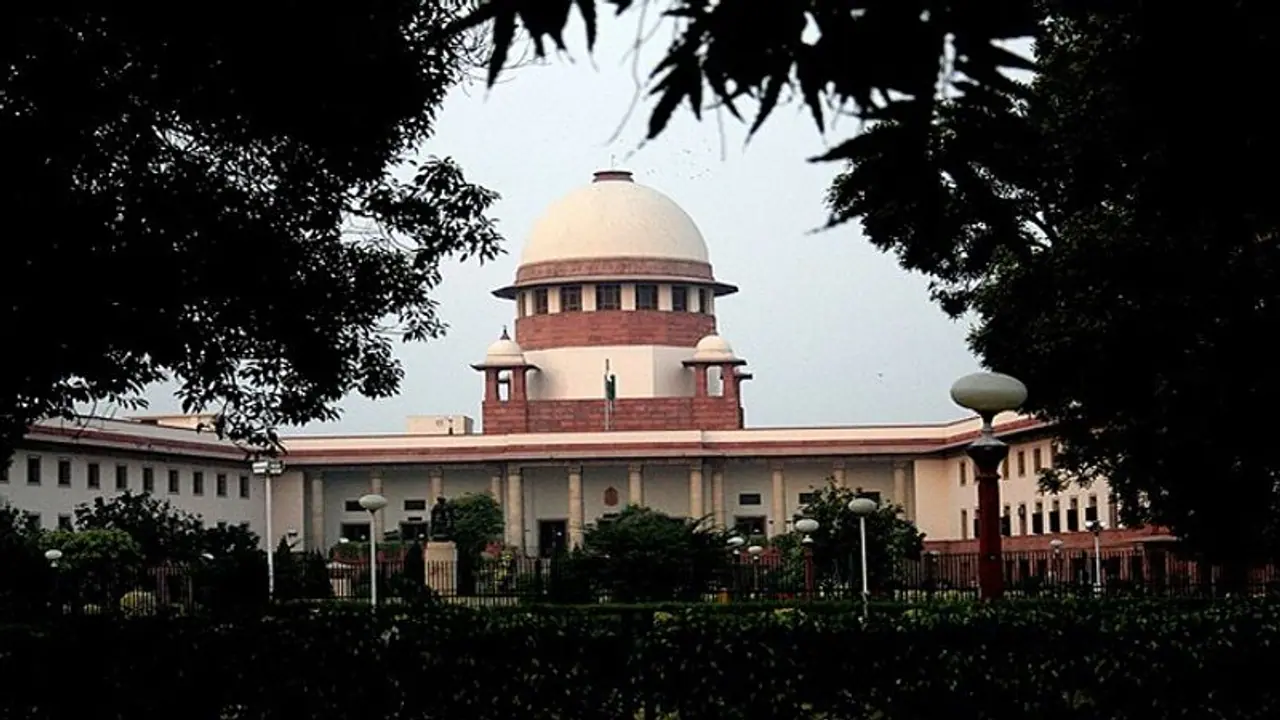
The special session held by the Supreme Court showcases its active involvement and dedication to addressing critical cases promptly. The case revolves around the complex decision of terminating the pregnancy of a rape survivor, underscoring the delicate nature of such legal considerations.
The Supreme Court on Saturday (August 19) expressed its disagreement with the decision made by the Gujarat High Court regarding a case involving a rape survivor who, at 26 weeks pregnant, had sought the termination of her pregnancy.
In this extraordinary session, a bench comprised of Justices BV Nagarathna and Ujjal Bhuyan expressed their dissent concerning the Gujarat High Court's management of the case. They highlighted multiple adjournments that they viewed as an unproductive use of valuable time.
Uttarakhand: Rishikesh-Badrinath road blocked after fresh landslide in Tehri Garhwal; check details
The petitioner's legal representative informed the apex court that the 25-year-old woman had initially approached the high court on August 7, and the case was taken up on the following day. Subsequently, on August 8, the high court issued an order to establish a medical board to assess the woman's pregnancy status and overall health condition. The medical board's findings were duly presented on August 10, as compiled by the medical college where the woman underwent examination.
The special session held by the Supreme Court showcases its active involvement and dedication to addressing critical cases promptly. The case revolves around the complex decision of terminating the pregnancy of a rape survivor, underscoring the delicate nature of such legal considerations.
In a specially convened session on Saturday, the Supreme Court examined the events that transpired in the case. The court noted that while the medical report had been officially received by the high court on August 11, an unexplained delay of 12 days occurred before the case was relisted on August 23. The apex court highlighted the urgency due to the critical nature of the situation and the need for prompt action, considering the circumstances.
The bench also drew attention to an important aspect of the petitioner's claim. According to the provided case status, the high court allegedly dismissed the petition on August 17. However, no reasons were given during the court proceedings, and the order had not yet been uploaded on the high court's website.
Given these discrepancies, the two-judge panel issued a directive. The Supreme Court instructed the secretary general of the court to communicate with the registrar general of the Gujarat High Court and confirm whether the contested order had been uploaded.
Expressing concern about the timeline, the bench questioned the Gujarat High Court. They inquired about the reasoning behind postponing the case until August 23, especially when the medical report had been available since August 10. The bench emphasized the significance of the time lost and the necessity for expediting the case's handling.
Justice Nagarathna stressed the urgency required in such cases and opposed any lackadaisical approach.
The Supreme Court was presiding over an appeal challenging a ruling made by the Gujarat High Court on August 17. The high court's decision rejected the plea for the termination of a 26-week pregnancy involving a rape survivor.
Advocate Vishal Arun Mishra presented the appeal on behalf of the petitioner, while advocate Shashank Singh represented the survivor before the Supreme Court.
The petitioner's legal representative informed the bench of the current status, revealing that the petitioner had reached 27 weeks and two days of pregnancy, nearing the 28th week.
Araria: Four more arrested in Bihar journalist murder case; 2 absconding
Importantly, the Medical Termination of Pregnancy (MTP) Act establishes a termination limit of 24 weeks for married women. However, specific categories, including rape survivors and other vulnerable groups such as differently-abled individuals and minors, are afforded a broader window under the law.
