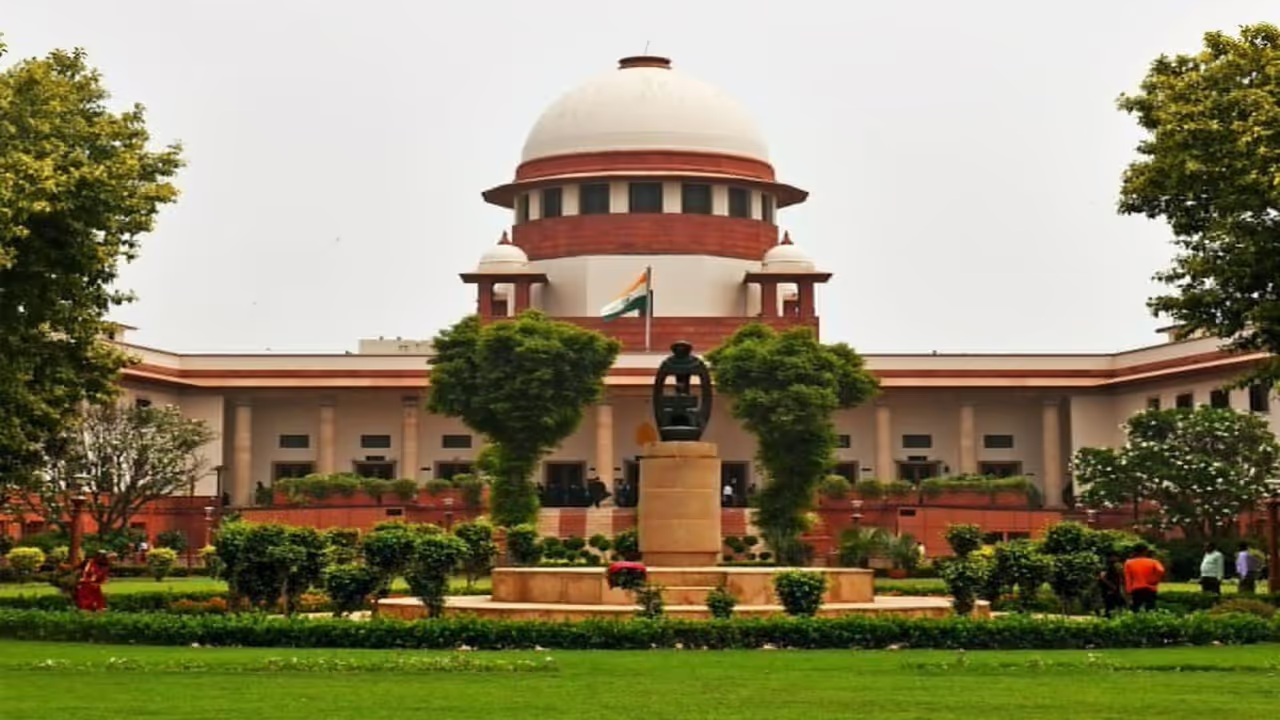
In 2025, India's Supreme Court continued to dominate its global counterparts as it received 75,280 cases - 51,357 civil and 23,923 criminal - and managed to dispose of 65,403 cases, accounting for an impressive 87% clearance rate.
In 2025, India's Supreme Court continued to dominate its global counterparts as it received 75,280 cases - 51,357 civil and 23,923 criminal - and managed to dispose of 65,403 cases, accounting for an impressive 87% clearance rate. In contrast; while thousands of petitions reach the US Supreme Court annually, it admits only 70–80 cases for full arguments. The UK Supreme Court, till December 29, received just over 200 cases and delivered judgments in around 50. In comparison, India’s Supreme Court delivered nearly 1,400 detailed judgments and passed thousands of orders to clear its docket.
The year 2025 also witnessed leadership churn at the top, with three Chief Justices - Justices Sanjiv Khanna, B R Gavai and Surya Kant - presiding over the court. Justice Surya Kant is set to remain CJI until his retirement in February 2027.
However, 2027 will mark another historic phase, as the Supreme Court is slated to see a record four Chief Justices in a single year - Justices Surya Kant, Vikram Nath (from February to September), BV Nagarathna (for 37 days) and PS Narasimha.
Related Articles

Justice First for the Vulnerable: CJI Surya Kant Redraws SC Priorities
In a decisive move to make justice more accessible to society’s most vulnerable, Chief Justice of India Surya Kant has revealed a new prioritisation framework to fast-track cases filed by socially, physically and financially disadvantaged citizens. The reform aims to ensure that petitions from those most in need no longer drown in the overwhelming flood of fresh filings before the Supreme Court.
Under the new system, four categories of cases will receive priority listing and hearing. These include petitions filed by disabled persons and acid attack survivors, senior citizens above the age of 80, individuals living below the poverty line, and litigants who approach the top court through legal aid services that offer free legal assistance.
The move addresses a long-standing concern that such cases routinely got buried amid the nearly 800 fresh matters listed every Monday and Friday - the two days when 16 Supreme Court benches scrutinise new petitions to decide whether they warrant detailed hearings.
A circular issued by the Supreme Court registry made the new requirements clear, stating, "Members of the Bar, parties-in-person and all stakeholders are required to invariably mention the relevant head... under which the matter actually falls, in all the fresh petitions to be filed... and submit an appropriate application/letter along with the documentary proof issued by an appropriate govt authority in this regard."
The registry has also urged advocates and litigants to furnish similar details in pending cases so that they can be reclassified appropriately. "This will enable the registry to prioritise listing of such cases," the circular added.