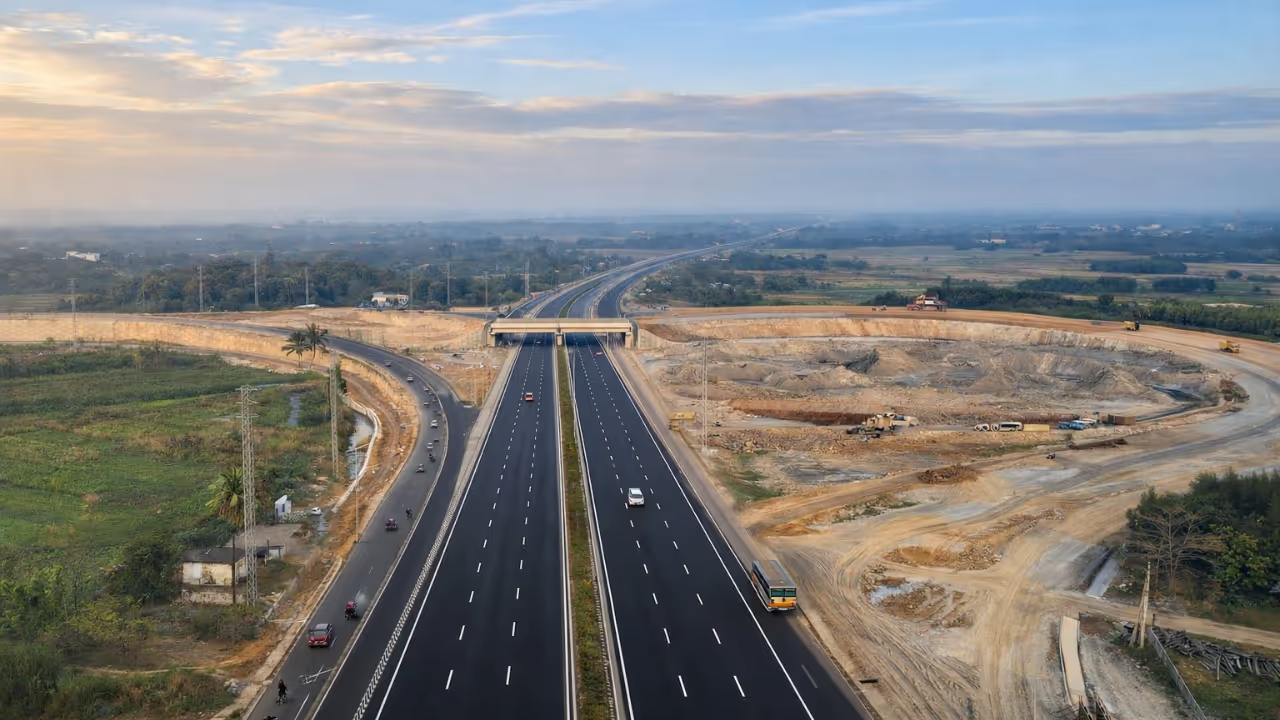
The 464 km Raipur–Visakhapatnam Economic Corridor, featuring a twin-tube tunnel under Udanti-Sitanadi Tiger Reserve, will cut travel time from 12 to 6–7 hours. Eco-friendly measures protect wildlife while boosting connectivity.
Travelling from Raipur to Visakhapatnam could soon take just half a day, thanks to the under-construction Raipur–Visakhapatnam Economic Corridor. Once completed, the 464 km, six-lane, access-controlled highway is expected to cut travel time from around 12 hours to just 6–7 hours, according to officials. The corridor is being hailed as a landmark infrastructure project for Chhattisgarh, combining rapid road construction with environmentally sensitive planning.

Eco-Friendly Tunnel Under Tiger Reserve
A key feature of the corridor is the 2.79 km twin-tube tunnel beneath the Udanti-Sitanadi Tiger Reserve. This is a first for Chhattisgarh’s highway network and has been designed to preserve the tiger corridor while enabling the highway to traverse difficult hilly terrain. Officials emphasised that the tunnel, along with other wildlife mitigation measures, demonstrates a strong commitment to eco-sensitive infrastructure development.
Corridor Designed for High-Speed Logistics
The Raipur–Visakhapatnam route is planned as a high-speed logistics spine connecting central India with Visakhapatnam port. With a total investment of Rs 16,491 crore, the project aims to boost freight movement, particularly of minerals such as iron ore, while also improving connectivity for tribal and aspirational districts including Dhamtari, Kanker, Bastar, and Kondagaon. Officials expect the reduced travel time to lower fuel consumption and emissions, making the route both economically and environmentally advantageous.
Related Articles

Wildlife Mitigation Measures
NHAI has incorporated extensive wildlife protection features along the corridor, including:
- 28 monkey canopies in the Udanti-Sitanadi area
- Eight elephant overbridges in the Dhamtari corridor
- 19 animal passages for tigers, bears, and other wildlife
- Additional underpasses and overpasses for animals
- Fencing at critical locations
- Camera-based monitoring systems
- Traffic impact attenuators to reduce fatalities in case of collisions
These measures are intended to allow the highway to operate efficiently while minimising its impact on local ecosystems.
Construction Progress and Timeline
The 125 km stretch of the corridor in Chhattisgarh is being developed in three phases:
- Jhanki–Sargi (42 km)
- Sargi–Vasanvahi (57 km)
- Vasanvahi–Marangpuri (25 km)
Construction has already surpassed 70% overall. Officials expect phased completion between April and November 2026. Full commissioning of the corridor will depend on the integration of remaining stretches with adjoining state sections.
Boost to Connectivity and Economic Growth
Once operational, the highway will not only reduce travel time significantly but also enhance freight and logistics efficiency, improve access to markets, and strengthen socio-economic development in tribal and underserved districts. The corridor is expected to provide safer, faster, and more sustainable travel, benefiting both commuters and businesses alike.