
Odisha Police has tightened security in Puri for Devasnana Purnima on June 29, expecting up to 4 lakh devotees. 79 platoons are deployed for crowd and traffic management to ensure a peaceful 'Snana Yatra' of Lord Jagannath.
Security Arrangements for Snana Yatra
Odisha Police has tightened security arrangements in Puri ahead of Devasnana Purnima on June 29, as a massive number of devotees are expected to participate in the 'Snana Yatra' of Lord Jagannath. Senior officials reviewed the preparations, focusing on crowd management, traffic regulation and overall security deployment for the annual religious event. Around 3-4 lakh devotees are expected to visit Puri for the Snana Yatra of Lord Jagannath, Lord Balabhadra, Devi Subhadra and Sudarshan.
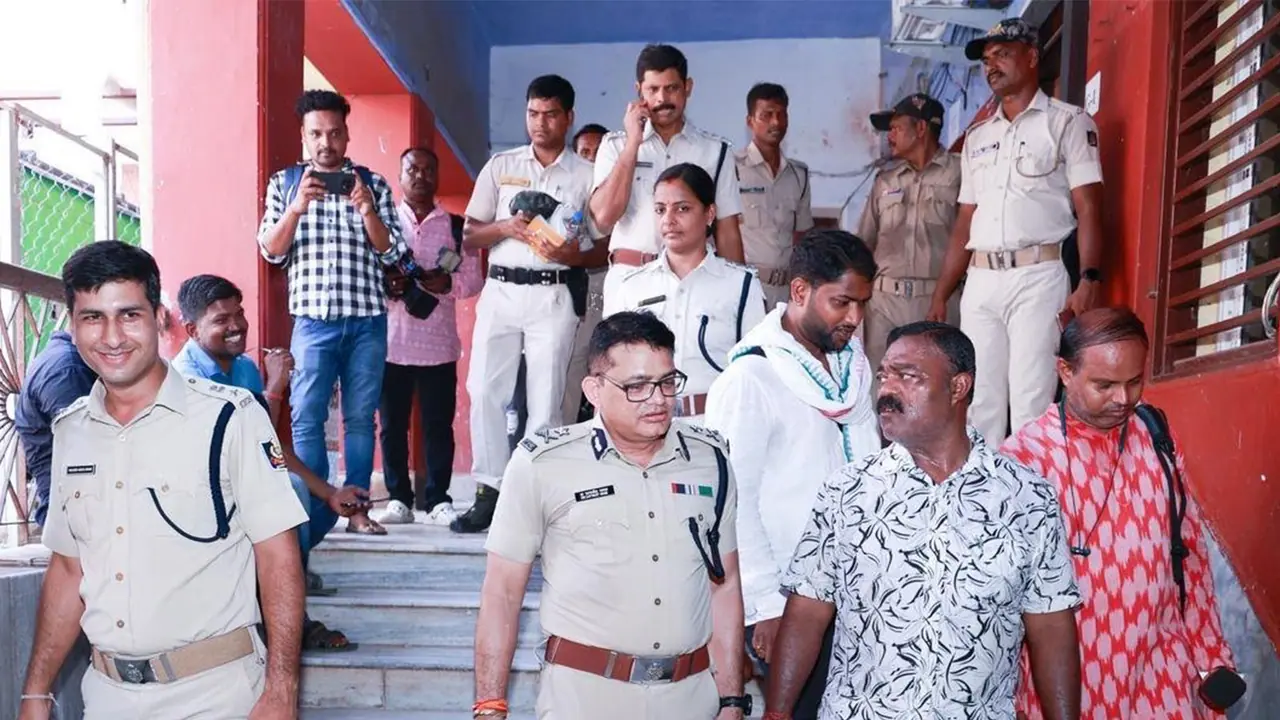
Inspector General of Police (IGP) Central Range Satyajit Naik and Puri Superintendent of Police (SP) Prateek Singh conducted a detailed review of the arrangements on the ground to ensure smooth and peaceful conduct of the festival. The Odisha Police has deployed 79 platoons of force, along with senior officers and specialised units to manage the large crowd. The deployment includes Quick Action Teams (QATs), sniffer dogs, rooftop surveillance teams and the Integrated Command and Control Centre (ICCC) monitoring for real-time coordination.
Traffic and Pilgrim Management
As per the officials' release, elaborate traffic management plans, designated parking zones, emergency response systems and pilgrim assistance measures have been put in place to facilitate the smooth movement of devotees and prevent congestion in and around the temple area.
Significance of Devasnana Purnima
Debasnana Purnima, also known as Snana Yatra, is celebrated on the full moon day of the Hindu month of Jyeshtha, which usually falls in June. This festival holds immense religious significance, as it is believed to be the birthday of Lord Jagannath. The deities are taken out in a grand procession from the sanctum sanctorum of the Jagannath Temple to the Snana Mandap, an elevated platform where the bathing ritual takes place.
The Grand Bathing Ritual
Lord Jagannath, along with his siblings Balabhadra and Subhadra, are brought out from the sanctum sanctorum to the Snana Mandap, a special bathing platform. On this day, the deities undergo a ceremonial bath with 108 pitchers of sacred water. After the bath, the deities are adorned in Gajanan Besa, which means they are dressed to resemble Ganesha, the elephant-headed deity. This unique attire, also known as Hati Besa, has deep symbolic meaning. On this day, the deities undergo a grand ritual bathing with 108 pitchers of sacred water, a practice believed to purify and honour them. This is one of the rare occasions when the deities are publicly visible, giving devotees a close view before the famous Rath Yatra.
The 'Anavasara' Seclusion Period
Following this bath, it is believed that the deities become unwell and are moved into a period of seclusion known as "Anavasara," where they are kept away from public view for about 15 days. This period is considered a time of recuperation, as the deities are believed to suffer from fever due to the extensive bathing ritual. During Anavasara, the deities are offered special medicinal preparations known as 'Phuluri Tela' to aid in their recovery. Devotees can have a glimpse of the 'Patti Dians' (painted images) of the deities during this time, instead of the actual idols.
Re-emergence for Rath Yatra
After the Anavasara period, the deities re-emerge for the grand Rath Yatra, where they are placed on their magnificent chariots and taken on a procession through the streets of Puri. This marks their annual journey to the Gundicha Temple, and it is one of the most celebrated and attended events, symbolising their blessing and grace upon all devotees.
During the period between the Snana Yatra and the Rathyatra, people from all across the world come to Puri to participate. (ANI)
(Except for the headline, this story has not been edited by Asianet Newsable English staff and is published from a syndicated feed.)