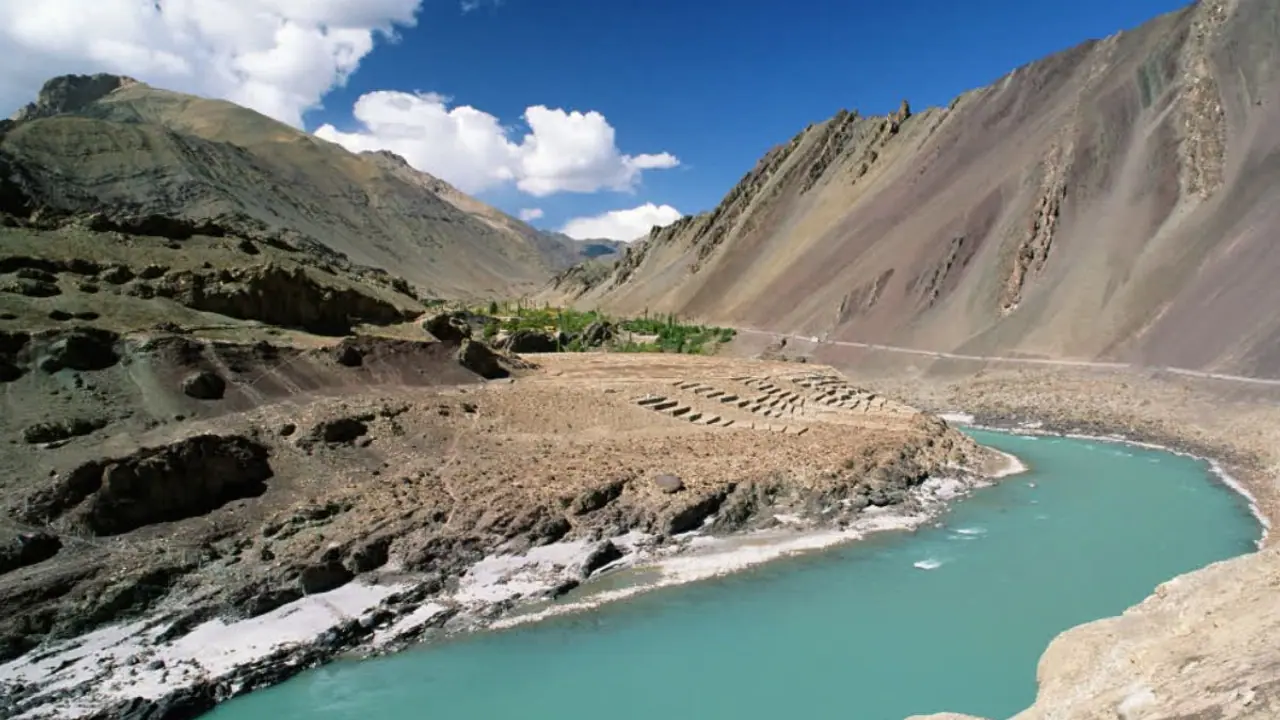
India is completing the Shahpur Kandi dam to stop surplus Ravi River water flowing to Pakistan. Under the 1960 Indus Waters Treaty, it has rights over the river. The project will improve irrigation in J&K and Punjab.
India is on the verge of a significant shift in transboundary water management that could dramatically affect its neighbour Pakistan. With the near completion of the Shahpur Kandi dam and barrage project on the Ravi River, Indian authorities are preparing to halt the surplus flow of water into Pakistan — a development with strategic, agricultural and geopolitical implications.
The Ravi River, one of the six rivers in the Indus River system, traditionally flows east to west from India’s Himachal Pradesh and Punjab, eventually entering Pakistan. Under the Indus Waters Treaty (IWT) of 1960, India retains rights over the “eastern rivers” — Ravi, Beas and Sutlej — while Pakistan has rights over the “western rivers” — Indus, Jhelum and Chenab. The treaty, brokered by the World Bank, has historically allowed both countries to use their respective allocations, even surviving multiple conflicts since its inception.
Shahpur Kandi Dam Nears Completion
However, due to inadequate storage and diversion infrastructure in the Indian segment of the Ravi basin, a significant portion of India’s water share historically flowed unused into Pakistan. That situation is now set to change as the Shahpur Kandi dam and barrage project — long delayed by bureaucratic and interstate disputes — nears completion and is expected to be operational by March 31, 2026.
Related Articles

According to officials, once the project is finished, India will be able to use more of its allocated water for irrigation and domestic purposes, significantly reducing the volume of surplus water running downstream into Pakistan. Jammu & Kashmir’s Water Resources Minister Javed Ahmed Rana confirmed the deadline, noting that the move will benefit drought-prone regions of Kathua and Samba districts, where access to reliable water has long been a challenge.
Once fully operational, the Shahpur Kandi system is projected to supply about 1,150 cusecs of water to Indian territories — more than enough to irrigate approximately 32,000 hectares of land in Jammu and Kashmir and over 5,000 hectares in Punjab — bringing long-awaited relief to farmers in these parched regions. The diversion will reinforce agricultural productivity, support drinking water needs, and promote groundwater recharge.
Indus Treaty Tensions Escalate
Authorities in India maintain that the measure remains well within the legal framework of the Indus Waters Treaty, which grants India full utilization rights over the Ravi’s waters. Indian officials stress that halting surplus flow is intended to curb “wastage” and optimise water resources for domestic benefit, not to escalate tensions with Pakistan.
Still, Pakistan views the development with apprehension. Though excess Ravi water represents a relatively small portion of its overall water supply, any reduction adds to the broader water stress facing the country, where agriculture, industry and urban supplies depend heavily on a stable flow from the Indus system. Pakistan has repeatedly accused India of “weaponising water” and has raised concerns at international forums, arguing that unilateral actions could destabilise the delicate hydrological balance between the two neighbours.
The backdrop to this shift is the suspension of the Indus Waters Treaty by India in 2025, following a terror attack in Pahalgam that New Delhi attributed to Pakistan-based militants. Although not formally terminated, placing the treaty in abeyance removed longstanding constraints on Indian development of hydropower and irrigation projects across key rivers in the Indus basin. This has allowed a faster pace of infrastructure work, including the acceleration of Shahpur Kandi and other dams.
In the local context, the new dam is expected to strengthen water security for Indian farmers and reduce the dependence on erratic monsoon rainfall. Improved irrigation systems could lead to higher cropping intensity and more stable agricultural output in formerly dry zones. However, experts note that even after the barrage is completed, only about 20 per cent of the Ravi’s flows will be directly utilisable through this project; a much larger share continues downstream and will require additional infrastructure to fully harness.
For Pakistan, the broader concerns centre on the future of water sharing and the Indus system overall. With roughly 80 per cent of its agricultural lands dependent on waters from the Indus basin, any significant new infrastructure that alters flows — especially if expanded beyond the eastern rivers — could have far-reaching effects on crop yields, food security, and rural livelihoods.
Overall, the imminent operationalisation of the Shahpur Kandi dam marks a pivotal moment in India-Pakistan water relations: while legally justified under the 1960 treaty, it signals a proactive shift by India to leverage infrastructure and resource management for domestic benefit, even as diplomatic strains and water security concerns escalate in the region.