India raises alarm as the Middle East war intensifies, warning of risks to one crore Indians in the Gulf, energy routes, and trade, while urging restraint, diplomacy, and an immediate end to the escalating conflict.
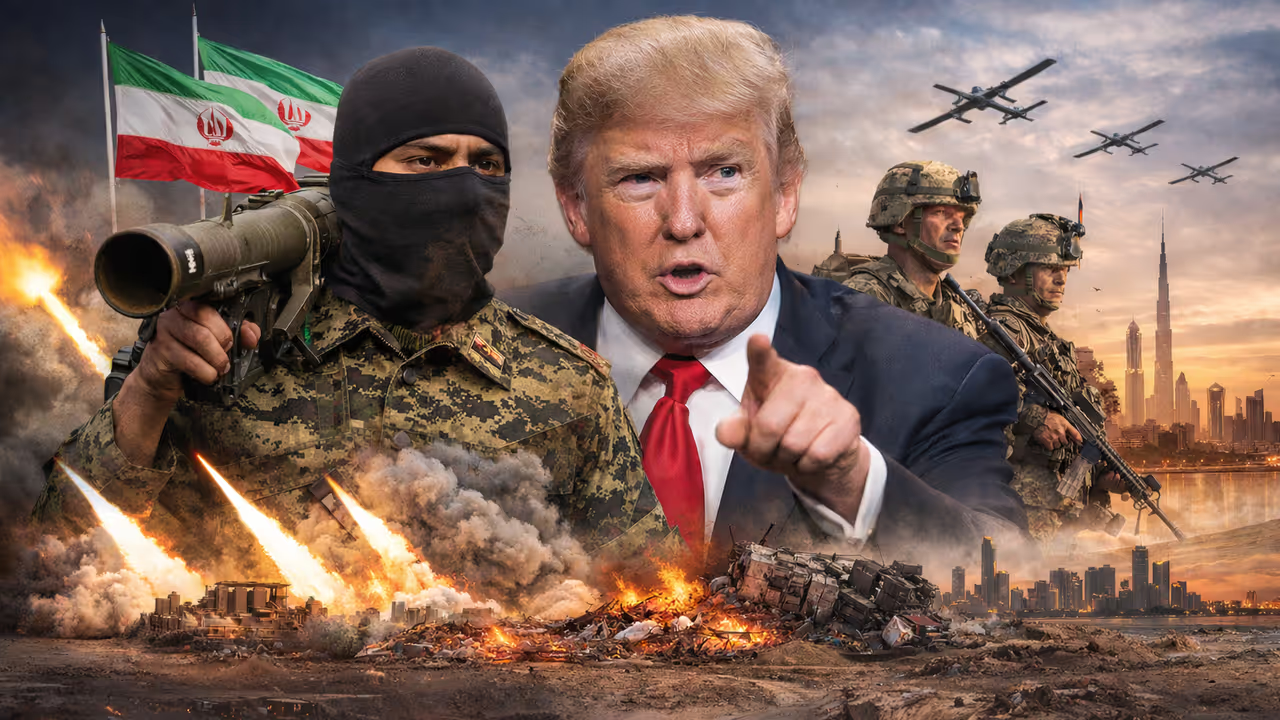
India has expressed deep concern over the rapidly escalating conflict across the Middle East, warning that the widening war could threaten the safety of millions of Indians living in the Gulf and disrupt key trade and energy routes vital for the country’s economy. In a statement issued Tuesday, the MEA said the situation had worsened significantly since the conflict began on February 28, when US and Israeli strikes on Iran triggered retaliatory attacks across the region.
“We had expressed our deep concern at the commencement of the conflict in Iran and the Gulf region on 28 February 2026. Even at that time, India had urged all sides to exercise restraint, avoid escalation and prioritize the safety of civilians. Unfortunately, in the holy month of Ramadan, the situation in the region has deteriorated significantly and continuously.”
Related Articles

Conflict spreads across the region
As fresh attacks were reported across multiple countries on Tuesday, the war appeared to be spreading beyond the initial flashpoints. Explosions were heard over Jerusalem after Israel detected missiles launched from Iran and moved to intercept them.
Meanwhile, loud blasts were reported in Tehran, including in the northern parts of the capital, with Iranian media also reporting explosions in Karaj and the central city of Isfahan. Israel said it had carried out strikes targeting Iran’s presidential office and the National Security Council building in Tehran.
The humanitarian toll has also mounted. Iran’s Red Crescent said more than 780 people have been killed nationwide since the strikes began, though the figure could not be independently verified.
India worried about citizens and economic fallout
India’s statement highlighted the scale of its stake in the region, pointing out that millions of Indians live and work across Gulf countries.
“There are almost one crore Indian citizens who live and work in the Gulf region. Their safety and well-being is of utmost priority. We cannot be impervious to any development that negatively affects them. Our trade and energy supply chains also traverse this geography. Any major disruption has serious consequences for the Indian economy. As a country whose nationals are prominent in the global workforce, India is also firmly opposed to attacks on merchant shipping. Already, some Indian nationals have lost their lives or are missing as a result of such attacks in the last few days.”
The government’s concern comes amid rising instability in shipping lanes and the broader economic impact of the conflict. Energy markets have already reacted sharply, with European gas prices jumping by 30 percent on Tuesday morning after earlier surges tied to supply disruptions. Brent crude also climbed, trading above $81 per barrel in Asian markets.
Attacks widen to infrastructure and diplomatic sites
Beyond military targets, the conflict has begun hitting infrastructure and diplomatic zones. Two drones struck the US embassy in Riyadh, causing a fire and forcing the mission to shut temporarily. The US embassy in Kuwait was also closed indefinitely following Iranian attacks.
In the United Arab Emirates, drones hit two Amazon data centres, disrupting cloud services in parts of the Middle East. Another facility in Bahrain was damaged by a nearby drone strike.
Elsewhere, debris from a drone interception sparked a fire in an oil industry zone in Fujairah in the UAE, while an Omani port was also targeted, hitting a fuel tank though officials said the damage was contained without casualties. Drone strikes were also reported in northern Iraq targeting a camp hosting Iranian Kurdish fighters.
Diplomatic calls for restraint grow
Amid the escalating violence, India reiterated that dialogue remains the only way forward and called for an early end to the conflict.
“In this background, India strongly reiterates its call for dialogue and diplomacy. We raise our voice clearly in favour of an early end to the conflict. Already, many lives have been regrettably lost and we express our grief in that regard.”
The MEA also said Indian missions across affected countries are actively assisting nationals on the ground.
“Indian Embassies and Consulates in the affected countries remain in close touch with Indian nationals and community organizations, issuing regular advisories as appropriate. They have also extended all possible help to those stranded by the conflict. The Embassies and Consulates will continue to be proactive in addressing various consular aspects of this conflict.”
Government monitoring situation closely
India confirmed it is engaging diplomatically with countries in the region and other partners as tensions continue to rise.
“We are in touch with the Governments of this region as well as other key partners. Prime Minister and External Affairs Minister have held discussions with their counterparts.”
“Government will continue to closely monitor the evolving situation and take relevant decisions in the national interest,” the statement added.
With the conflict now entering its fourth day and spreading across several Middle Eastern countries, New Delhi’s immediate focus remains on safeguarding its citizens and preventing wider economic disruption while continuing to push for de-escalation.