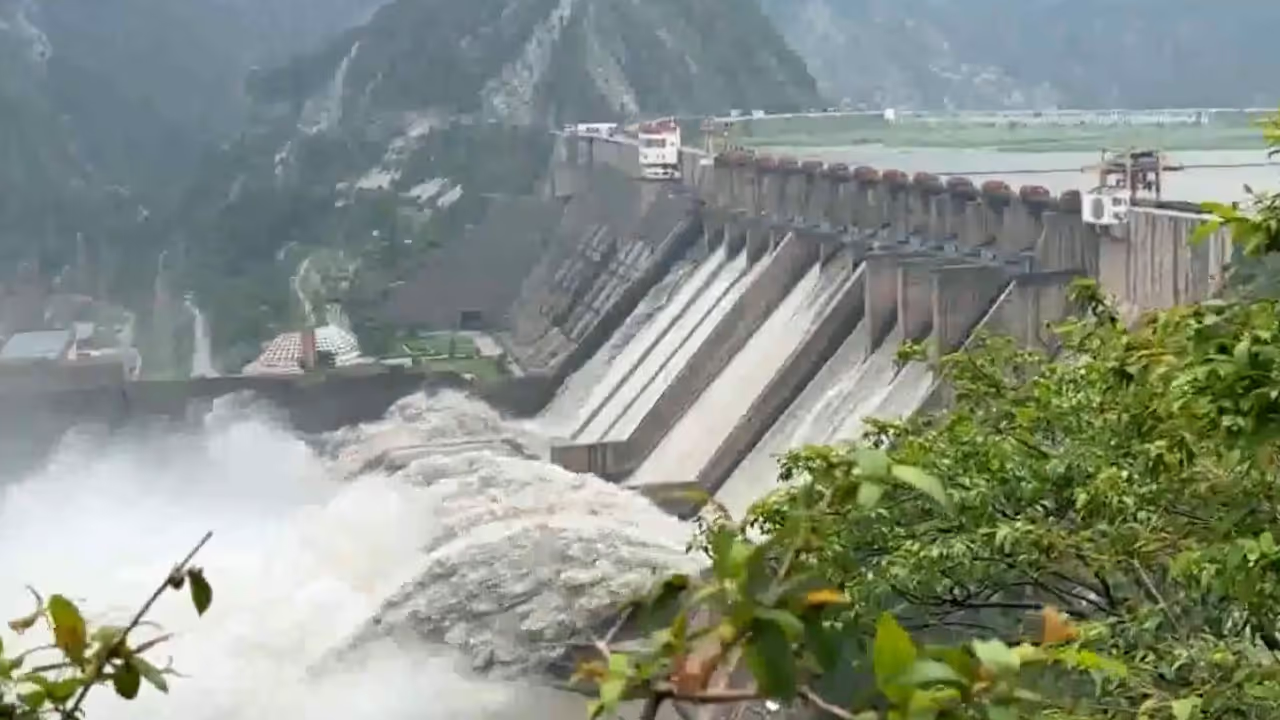
India is fast-tracking the Sawalkot Hydroelectric Project on the Chenab River in Jammu and Kashmir, following the suspension of the Indus Waters Treaty. This allows India to fully exercise its rights over western rivers.
The Government of India has taken a decisive step to fast-track the long-delayed Sawalkot Hydroelectric Project on the Chenab River in Jammu and Kashmir, marking a major push to boost power generation and optimise water resource utilisation following the suspension of the Indus Waters Treaty (IWT) with Pakistan. The move has strategic, economic, and geopolitical significance as India seeks to fully harness its legal rights over western river waters after decades of limited development.
State-owned National Hydroelectric Power Corporation (NHPC) has floated a tender worth ₹5,129 crore for the construction of the Sawalkot project in Ramban district, with the bid submission window scheduled from March 12 to March 20, 2026. The tender calls for the design, construction and associated works of the project, and bids will remain valid for 180 days. The project’s total construction timeline has been set at 3,285 days, indicating a multi-year build-out.
The Sawalkot Plant is designed to generate 1,856 MW of electricity, making it one of the largest hydropower plants in the Union Territory once completed. The run-of-the-river project is expected to significantly enhance electricity supply in Jammu and Kashmir and contribute power to the national grid, providing peaking capacity and grid stability for northern states.
Related Articles

Renewed momentum comes after India suspended the IWT in April 2025 — a response to a terror attack in Pahalgam that escalated tensions between India and Pakistan. The move effectively allows New Delhi greater flexibility to design and execute projects on western rivers such as the Chenab, Jhelum and Indus, subjects that were previously constrained by treaty provisions. Under the Treaty, India had non-consumptive rights over these rivers, mainly for hydropower, navigation and irrigation, but Pakistan historically exercised veto power over project design and implementation.
Officials say the Sawalkot project will also generate employment and spur infrastructure development in the region, particularly in the Ramban, Reasi and Udhampur districts. Beyond power, it signals a broader shift in India’s water security strategy, aiming to assert sovereign rights over river resources while meeting growing domestic energy needs.
Environmental clearances and expert committee recommendations have already been secured, and an Environmental Impact Assessment is planned post-commissioning to ensure ongoing compliance. Project proponents stress that the undertaking will balance ecological concerns with strategic development goals.
While the tender launch is an early but pivotal milestone, the project’s full execution will unfold over several years, making it a defining element of India’s future hydropower and regional development roadmap.