
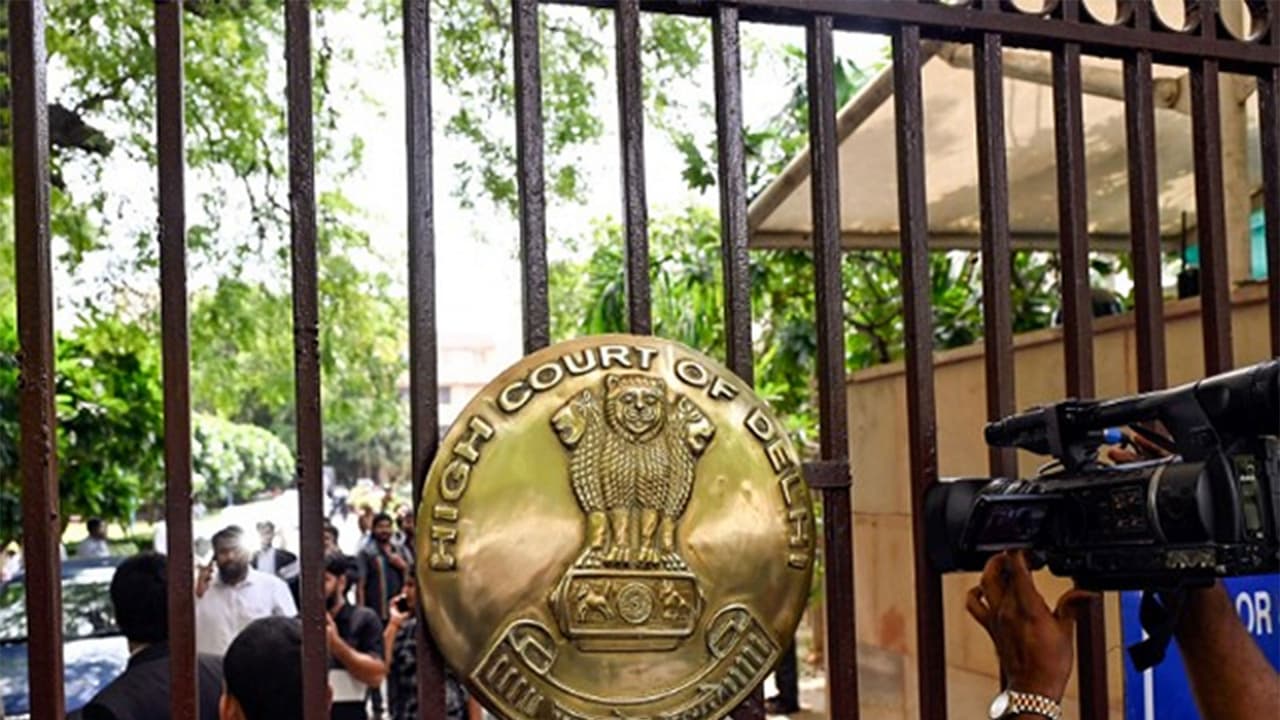
The Delhi High Court dismissed a Letters Patent Appeal against the rejection of an election petition challenging Manish Sisodia's 2020 victory, stating the proper forum is the Supreme Court. The appellant subsequently withdrew the plea.
HC Refuses to Entertain Appeal on Jurisdictional Grounds
The Delhi High Court has refused to entertain a Letters Patent Appeal (LPA) filed against the dismissal of an election petition challenging the 2020 Assembly election victory of Manish Sisodia from the Patparganj constituency. The matter came up before a Bench led by Chief Justice DK Upadhyaya and Justice Tejas Karia.
During the hearing, the Chief Justice questioned the maintainability of the appeal, observing that election petitions are governed by the Representation of the People Act (RPA) and asking under what provision an LPA could be filed. The Bench pointed out that if a party seeks to challenge an order passed in an election petition, the statutory appeal lies before the Supreme Court of India under Section 116 of the RPA. Confronted with this legal position, the appellant, Pratap Chandra, appearing in person, sought permission to withdraw the appeal.
According to the court record, the LPA challenged the January 17, 2026 judgment of a Single Judge dismissing the election petition. On being informed that the impugned order was appealable before the Supreme Court, the appellant withdrew the plea. The appeal was accordingly dismissed as withdrawn.
Background: Why the Original Petition Was Dismissed
Recently, a single-judge bench dismissed the election petition filed by Pratap Chandra seeking to set aside Sisodia's 2020 victory, holding that it lacked material facts and disclosed no legally sustainable cause of action. The petitioner, who had secured 95 votes in the election, alleged violations of the silence period under Section 126 of the RPA and suppression of criminal antecedents in Sisodia's nomination affidavit.
The Court held the allegations were vague and unsupported by essential material facts required under Section 83 of the Act. It emphasised that an election can be set aside only when alleged illegality is shown to have materially affected the result -- a requirement not met in the case.
'Silence Period' Violation Allegation
On the campaigning allegation, the Court observed that the photographs relied upon showed generic party hoardings without reference to Sisodia and did not establish authorisation, consent, or display within the prohibited 48-hour silence period.
Concealment of FIR Allegation
The Court also rejected the allegation of concealment of an FIR, clarifying that disclosure under Section 33A of the RPA is mandatory only where charges have been framed or cognisance taken by a competent court. Mere registration of an FIR does not trigger disclosure requirements. It further noted the absence of any pleading that Sisodia knew the FIR.
Calling an election petition a serious statutory proceeding rather than a forum for fishing inquiries, the Court concluded that the pleadings failed to meet mandatory legal requirements and dismissed the petition in its entirety.
(Except for the headline, this story has not been edited by Asianet Newsable English staff and is published from a syndicated feed.)