
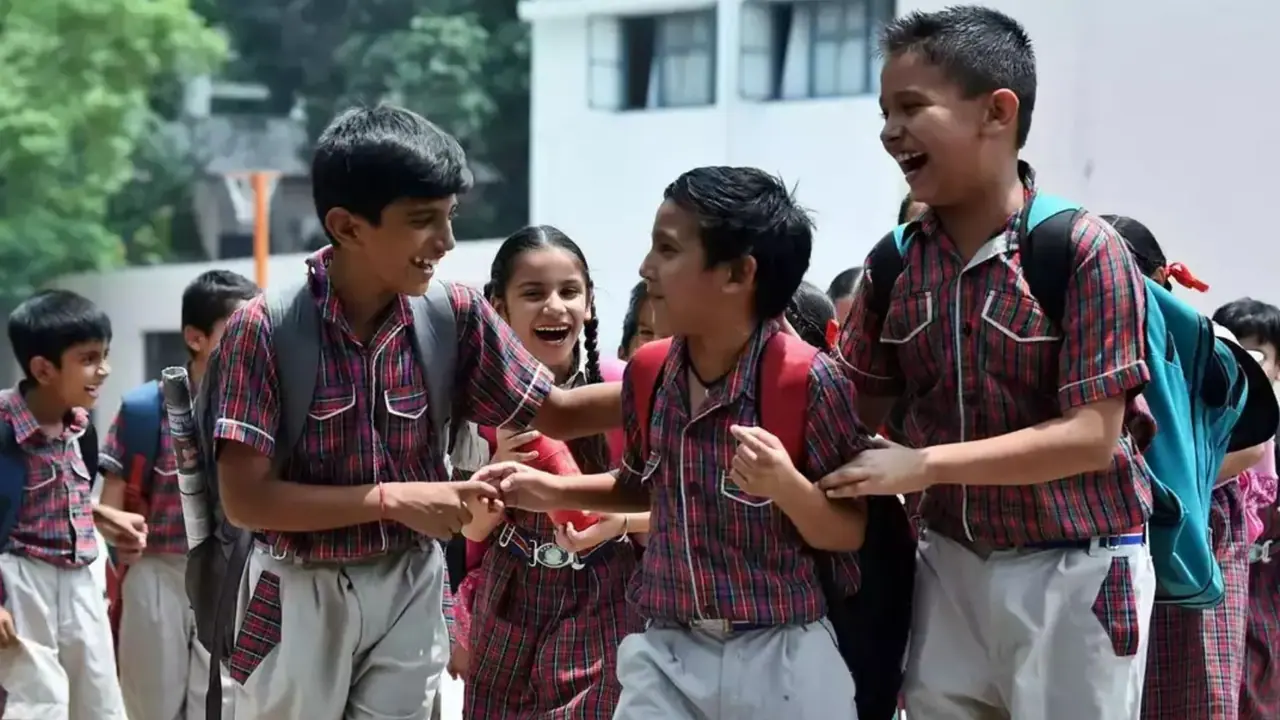
Severe April heatwaves in India are challenging the traditional school calendar. As temperatures rise to dangerous levels weeks earlier than usual, students face significant health risks. The customary May-June summer break is now misaligned with current climate patterns. Consequently, some states are closing schools early or changing timings.
April Heatwave Sparks a New Debate
India’s school calendar is facing fresh scrutiny as an unusually severe heatwave in April has pushed several states to reconsider when children should be in classrooms. Traditionally, schools across much of the country close for summer vacation in May and reopen in June. But with temperatures now climbing to dangerous levels weeks earlier than expected, many parents and education experts are asking whether the old academic schedule still makes sense in a rapidly warming climate.
In recent days, temperatures in parts of Odisha, Chhattisgarh, Rajasthan and central India have crossed 44 degrees Celsius, with the heat arriving well before the usual peak summer period. The sudden rise has created serious concerns for children travelling to school, especially in areas where classrooms lack cooling systems or proper ventilation. Morning assemblies, long commutes and afternoon classes have become increasingly difficult for students as schools struggle to protect them from extreme weather.
The issue has moved beyond temporary discomfort. Doctors have warned that children are especially vulnerable to heat exhaustion, dehydration and heatstroke, particularly when exposed for long hours. Parents in several cities have begun demanding a review of school schedules, arguing that the current vacation period was designed for an earlier climate pattern that no longer reflects present-day conditions.
The debate has now turned into a larger national question: should India continue following a traditional summer break calendar, or should school holidays be shifted to protect children from intensifying heatwaves?
States Begin Taking Emergency Measures
Odisha became one of the first states to take decisive action after temperatures remained dangerously high across multiple districts. The state government announced an early summer vacation for all government, aided and private schools beginning April 27. The decision came after mounting pressure from parents and health officials who warned that children were being exposed to unsafe conditions.
An official statement from the state government said: “Chief Minister Shri Mohan Charan Majhi has announced an early summer vacation keeping in view the severe heatwave currently sweeping through the state.”
Officials clarified that although regular classroom teaching would pause, scheduled examinations and certain administrative activities would continue under separate arrangements. The move was welcomed by families who had been concerned about children spending hours in classrooms during extreme daytime temperatures.
Other states have adopted different strategies. In parts of Delhi-NCR, schools have shifted start times to early morning to reduce exposure to the afternoon sun. Some districts in Uttar Pradesh have shortened school hours, while authorities in Chhattisgarh and Rajasthan are reviewing whether temporary closures may also become necessary if temperatures rise further.
These responses show that state governments are beginning to treat heatwaves as a serious educational challenge, not just a weather event. What was once handled through advisories is now forcing direct intervention in school operations.
Also Read: Odisha announces early summer vacation as heatwave grips the state
Why the Old Summer Calendar May No Longer Work
India’s school vacation system was built around a predictable climate pattern in which the hottest weeks usually arrived in May. Summer holidays were scheduled to coincide with that period, allowing students to avoid the worst temperatures while maintaining a stable academic year.
That pattern is changing. Weather experts say climate change is causing heatwaves to arrive earlier, last longer and become more intense. In many regions, April now feels like peak summer, with some areas experiencing conditions once seen only in late May or June.
For students, that means the most dangerous heat is arriving while schools are still fully operational. Many institutions, especially in smaller towns and rural areas, do not have air-conditioned classrooms or enough shaded spaces. School buses and public transport can become dangerously hot during afternoon travel. In some government schools, even drinking water access can become a concern during prolonged heat spells.
Parents say the calendar no longer matches reality. Families in cities such as Delhi, Bhubaneswar and Raipur have increasingly questioned why children are attending school in extreme heat only to begin vacation weeks later when monsoon clouds start arriving.
Education experts argue that the system may need structural change. Some suggest advancing summer holidays into April and using cooler weeks later in the year to make up academic time. Others propose longer monsoon breaks in regions where heavy rainfall already disrupts attendance. These ideas remain under discussion, but the conversation is becoming harder to ignore as temperatures continue to rise.
Could India Permanently Change School Vacations?
The idea of changing summer vacation timing nationwide is complex. India’s education system is managed differently across states, and any major shift would affect board examinations, teacher schedules, admission cycles and national entrance tests. A change in one part of the academic calendar can create ripple effects across the entire system.
Still, education planners say flexibility may become unavoidable. Some experts believe states should be allowed to tailor school calendars based on regional climate patterns instead of following a uniform national model. Coastal areas, northern plains and central India experience heat differently, and a one-size-fits-all calendar may no longer be practical.
Also Read: Summer vacations in West Bengal extended; schools to reopen on June 27
Health professionals also support the discussion. Pediatricians have warned that repeated exposure to high temperatures can affect concentration, hydration and physical wellbeing, especially in younger children. They argue that adjusting school schedules could become a public health measure rather than just an administrative change.
Critics caution that frequent changes could create confusion for parents and disrupt learning continuity. Rural schools with fewer resources may also struggle to adapt quickly. Yet supporters say the cost of doing nothing may be higher, especially as extreme heat becomes more common.
The April heatwave has turned what was once a seasonal inconvenience into a larger policy question. India now faces a choice between preserving a long-standing academic tradition or adapting to a climate that is changing faster than the school calendar. As heatwaves begin arriving earlier each year, the question is no longer whether schools are affected — it is whether the country is ready to redesign the system around a hotter future.
