
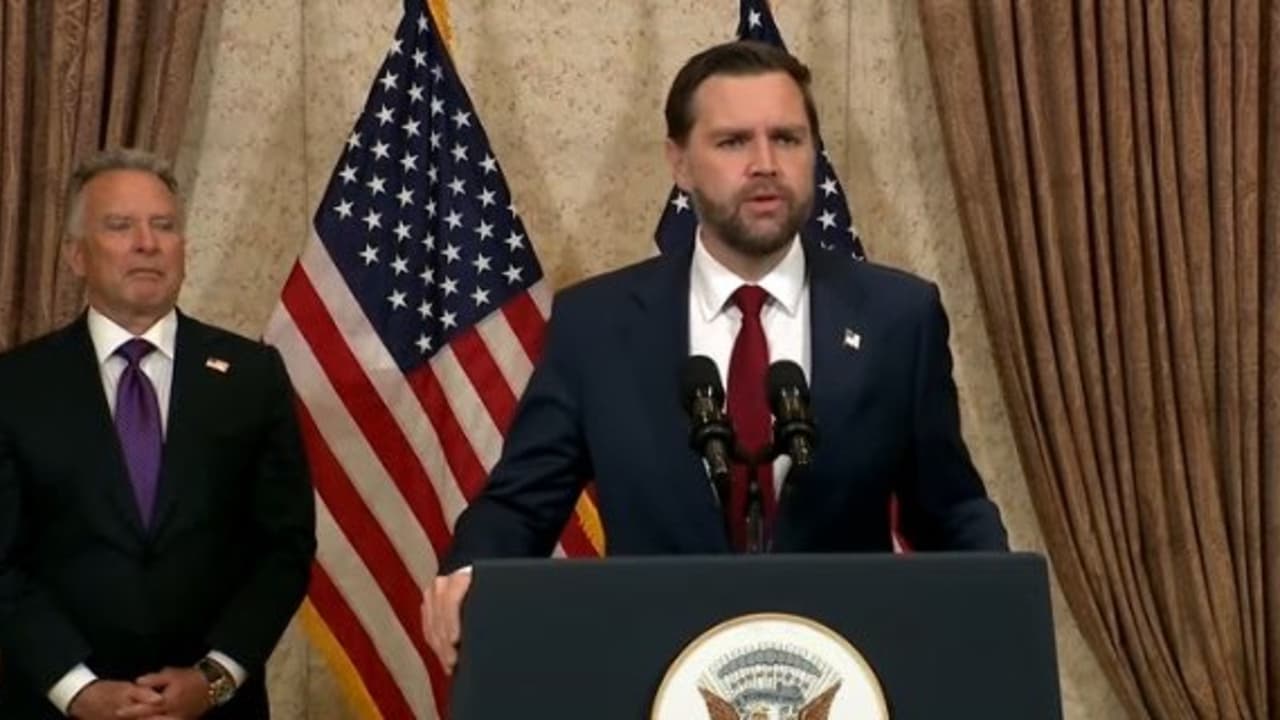
US Vice President JD Vance has accused Iran of “economic terrorism” for disrupting shipping in the Strait of Hormuz. Following the collapse of negotiations, the US has enforced a naval blockade on Iranian ports. Vance warned of a firm response to any interference, placing responsibility on Tehran.
US Vice President JD Vance has sharply escalated rhetoric against Iran, accusing Tehran of engaging in “economic terrorism” by disrupting shipping through the strategically vital Strait of Hormuz. His remarks come as the United States enforces a naval blockade targeting Iranian ports following the collapse of high-stakes negotiations.
In an interview with Fox News, Vance warned that Washington would respond firmly if Iran continues to interfere with global trade routes. “If the Iranians engage in economic terrorism, then we will follow the principle that no Iranian ships are getting out either,” he said, signalling a tit-for-tat approach.
The blockade marks a major escalation after talks between the two countries failed to produce a breakthrough. Vance noted that despite “a lot of progress” during negotiations, key disagreements remain unresolved, placing the responsibility for the next move squarely on Tehran.
He emphasised that the United States had clearly outlined its non-negotiable conditions. “The ball is in the Iranian court,” Vance said, adding that Washington had made its red lines explicit.
Also Read: ‘Don’t Interfere’: China Warns US Over Hormuz Blockade, Backs Iran Amid Rising Tensions
Among the primary US demands are control over Iran’s enriched uranium and a robust verification mechanism to ensure Tehran does not develop nuclear weapons. According to Vance, “There are two things… where the president… said we have no flexibility,” underscoring the firmness of the US stance.
Hormuz Blockade
The Strait of Hormuz remains one of the world’s most critical energy chokepoints, handling a significant share of global oil shipments. Any disruption in this region has immediate implications for global energy markets and economic stability. The US blockade aims to restrict Iran’s ability to leverage the strait for strategic or economic pressure.
Vance’s remarks also reflect growing concerns in Washington that Iran’s actions could destabilise international trade and energy flows. By framing Tehran’s moves as “economic terrorism,” the US is signalling a willingness to intensify pressure if necessary.
With tensions already high following military actions and failed diplomacy, the situation risks spiralling further. The blockade, coupled with strong warnings from US leadership, sets the stage for a prolonged geopolitical standoff with global consequences.
Also Read: US Deploys 15 Warships to Middle East for Potential Iran Blockade
